Insights
World Cup 2026: A Final Shot for Ronaldo, or Will Haaland Rewrite History?
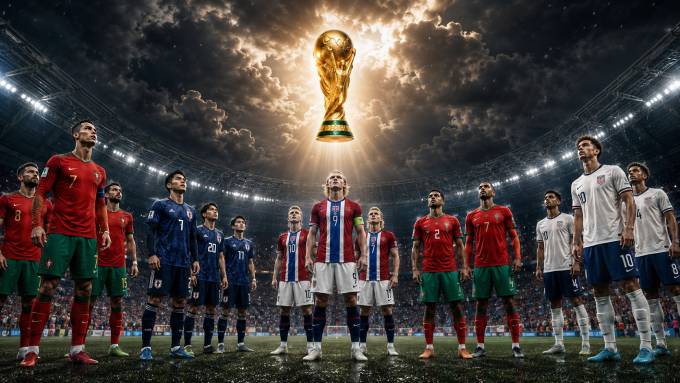
For almost a century, the World Cup has remained an exclusive club dominated by eight traditional powers. But the FIFA World Cup 2026 could change everything. With a new 48-team format, brutal travel demands, and uncertainty surrounding several established giants, the path has never looked more open for a nation chasing its first world title.
For decades, the World Cup has resisted revolution.
No matter how football evolved — whether through tactical innovation, globalization, or the rise of new financial superpowers — the game’s greatest prize almost always returned to the same hands. Only eight countries have ever lifted the trophy: Brazil, Germany, Italy, Argentina, France, Uruguay, England, and Spain.
That statistic has survived wars, generations, and the transformation of football into a multi-billion-dollar global industry. The World Cup has historically rewarded not only talent, but institutional memory, psychological resilience, and the ability to survive seven matches played under unbearable pressure.
Yet something about 2026 feels different.
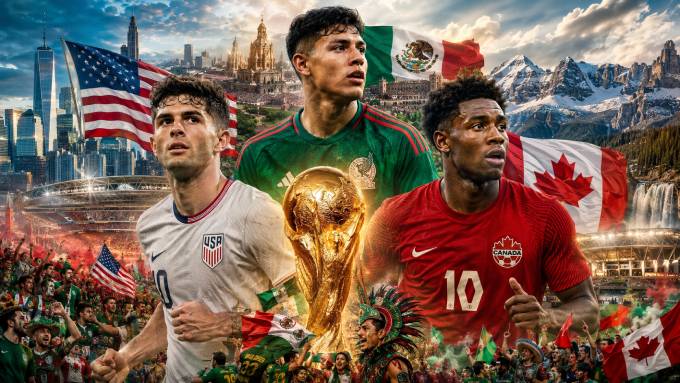
The tournament hosted across the United States, Canada, and Mexico will be the largest in history, expanding to 48 teams and introducing an entirely new competitive landscape. More matches. More travel. More fatigue. More opportunities for chaos.
And chaos is often where history changes.
Several traditional powers enter this cycle carrying flaws that would once have been unthinkable. Germany national football team remain inconsistent. Italy national football team are still searching for a true identity after years of decline. Even elite contenders such as France national football team and Argentina national football team face questions surrounding aging cores and physical sustainability over an expanded tournament.
At the same time, a new generation of ambitious challengers is emerging.
Some are built around golden generations. Others around tactical structure. A few simply possess players capable of bending reality for 90 minutes.
And perhaps that is why World Cup 2026 already feels less predictable than any edition in recent memory.
Portugal: Ronaldo’s Last Dance — But No Longer His Team Alone
If there is one nation outside football’s traditional champions most ready to break through, it may be Portugal national football team.
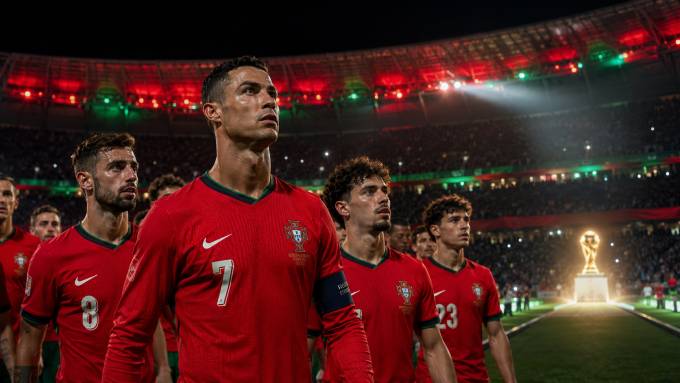
Ironically, that possibility arrives at the very moment when Cristiano Ronaldo is approaching the end of his international career.
World Cup 2026 is widely expected to be Ronaldo’s farewell on the global stage. But unlike previous tournaments, Portugal no longer revolve entirely around him. In fact, this may finally be the version of Portugal capable of winning because they are no longer dependent on one man.
The midfield is arguably the most balanced and technically sophisticated in the country’s history. Vitinha dictates tempo with extraordinary calmness under pressure. João Neves brings relentless energy and pressing intensity. Bruno Fernandes remains one of the most creative risk-taking passers in world football.
Behind them, Portugal suddenly look stable defensively — something that has often separated talented Portuguese teams from truly elite ones. Rúben Dias organizes the back line with authority, while Nuno Mendes provides explosive balance from the left flank.
Most importantly, Portugal now possess genuine squad depth. Injuries no longer destroy their structure. Rotations no longer weaken them dramatically. Over a month-long tournament played across enormous distances in North America, that may prove decisive.
For manager Roberto Martínez, this tournament could also redefine his legacy. His time with Belgium’s so-called golden generation ended in frustration and accusations of tactical naivety. But Portugal may offer him something Belgium never truly had: equilibrium.
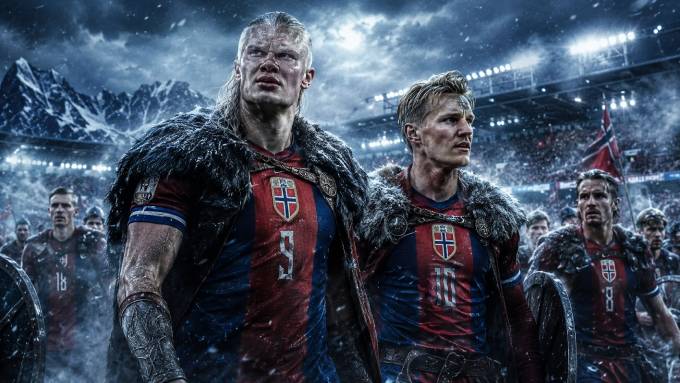
The Haaland Factor: Norway’s Impossible Dream Suddenly Feels Real
No emerging nation enters World Cup 2026 carrying more emotional momentum than Norway national football team.
For nearly three decades, Norway disappeared from football’s biggest stage. Then, almost suddenly, they returned armed with perhaps the most terrifying striker on the planet.
Erling Haaland changes the geometry of football matches. Defenders drop deeper. Midfields panic earlier. Entire game plans become distorted simply because of his presence.
That alone makes Norway dangerous.
But this team is no longer just “Haaland and hope.” Martin Ødegaard gives them intelligence and control between the lines, while Alexander Sørloth adds another physically dominant attacking option capable of overwhelming defenders already occupied with Haaland.
Norway tore through qualification, scoring goals at an astonishing rate and playing with a level of confidence rarely associated with previous generations.
Of course, they remain outsiders. Their defensive structure is still vulnerable against elite transitions, and tournament football punishes naïveté brutally.
But World Cups are often shaped by one unstoppable individual performance. And few players in world football are more capable of producing four weeks of destruction than Haaland.
The Netherlands: Forever Close, Never Complete
There is perhaps no country more haunted by World Cup history than Netherlands national football team.
From the brilliance of the 1970s “Total Football” revolution to the heartbreak of the 2010 final, Dutch football has repeatedly produced teams good enough to challenge anyone — but never quite enough to conquer the world.
World Cup 2026 offers another opportunity to finally escape that curse.
Under Ronald Koeman, the Dutch remain tactically disciplined and structurally strong. Their qualification campaign was ruthless, combining defensive solidity with attacking efficiency.
Yet the old concern remains unresolved: where is the elite striker capable of deciding the biggest matches?
Modern international football increasingly rewards efficiency over beauty. The Netherlands still create admiration. Whether they can create inevitability is another question entirely.
Morocco: No Longer a Surprise
When Morocco national football team reached the semi-finals in Qatar, much of the football world treated it as a miracle.
That framing no longer fits reality.
Morocco are no longer outsiders fueled by emotion. They are becoming a genuine football power with a clear identity, elite-level organization, and increasing squad depth.
Their defensive discipline remains exceptional, but what truly separates this generation is belief. They no longer enter matches hoping to survive against elite nations. They expect to compete equally.
The addition of young talents such as Ayyoub Bouaddi suggests Morocco’s rise may not be temporary.
And in a tournament where tactical organization often matters more than star power, Morocco may once again become a nightmare opponent.
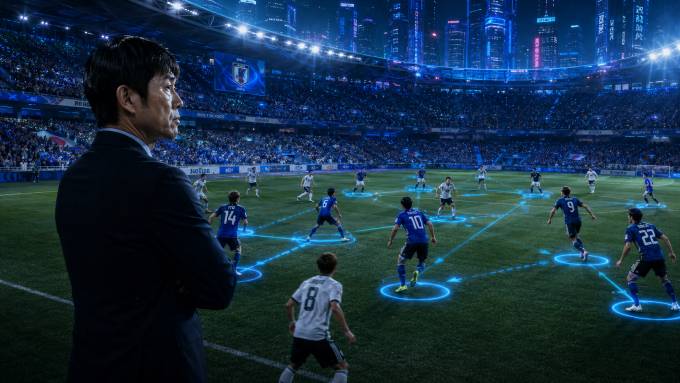
Japan and the Quiet Rise of Asian Football
Perhaps no nation has evolved more consistently over the past decade than Japan national football team.
Japan no longer play with the psychological inferiority that once defined Asian football against Europe’s elite. They now approach these matches with tactical confidence and technical sophistication.
Under Hajime Moriyasu, Japan have become one of the most structurally coherent teams in international football. Their pressing systems are intelligent, their movement synchronized, and their transitions increasingly ruthless.
A recent victory over England national football team reinforced the sense that Japan are no longer simply dangerous outsiders — they are genuine competitors.
The injury absence of Kaoru Mitoma hurts, but unlike previous eras, Japan now possess enough depth to absorb major losses.
If an Asian nation is ever going to reach a World Cup semi-final again — or perhaps even further — 2026 may represent the clearest opportunity yet.
The Brutality of the New Format
What makes World Cup 2026 uniquely unpredictable is not only the quality of the challengers, but the structure itself.
The expanded tournament introduces variables football has never fully experienced at this scale:
- Longer travel distances across North America
- Extreme climate variation between venues
- Increased physical load from additional knockout rounds
- Less recovery time between matches
- Greater potential for fatigue-driven upsets
Traditionally, elite nations survive because tournament football rewards depth and experience. But under these conditions, even giants may begin to crack physically by the quarter-final stage.
A single injury. One extra-time match. One exhausting cross-country trip.
Margins that once felt manageable may suddenly become catastrophic.
A World Cup Built for Disorder
Perhaps the most fascinating aspect of World Cup 2026 is psychological.
For decades, smaller nations entered tournaments believing history would eventually reassert itself. But recent football history has weakened that aura. Argentina lost to Saudi Arabia before winning the World Cup. Morocco reached the semi-finals. Croatia reached another deep run despite limited resources. Japan repeatedly eliminated or terrified European powers.
The gap still exists. But belief is changing.
And once belief changes, tournaments become dangerous.
That is why World Cup 2026 feels uniquely positioned for disruption. Maybe Ronaldo finally completes football’s greatest unfinished story. Maybe Haaland announces Norway to the world in unforgettable fashion. Maybe an African or Asian nation finally breaks through football’s final ceiling.
Or maybe one of the traditional giants restores order once again.
But for the first time in a long time, the World Cup feels genuinely open.