Insights
World Cup 2026: Opening Date, Schedule, Format & Key Rules Explained
The FIFA World Cup 2026 will be the most unique World Cup in history, featuring an expanded format, more teams, and matches across three countries. Here’s everything you need to know—from the opening match and full schedule to the competition format and key rules.
When and where is World Cup 2026?
The World Cup 2026 will kick off on June 11, 2026, and run until July 19, 2026, delivering over five weeks of elite international football.
The opening ceremony and first match will take place at the iconic Estadio Azteca in Mexico City—one of the most legendary stadiums in football history.
According to current plans, host nation Mexico is expected to play the opening match against South Africa, setting the tone for an electrifying tournament start.
A historic three-nation World Cup
For the first time ever, the World Cup will be co-hosted by three countries:
- United States
- Canada
- Mexico
Matches will be held across 16 host cities, with the majority located in the United States. This multi-country setup promises a diverse mix of cultures, fans, and football atmospheres like never before.
48 teams confirmed for World Cup 2026
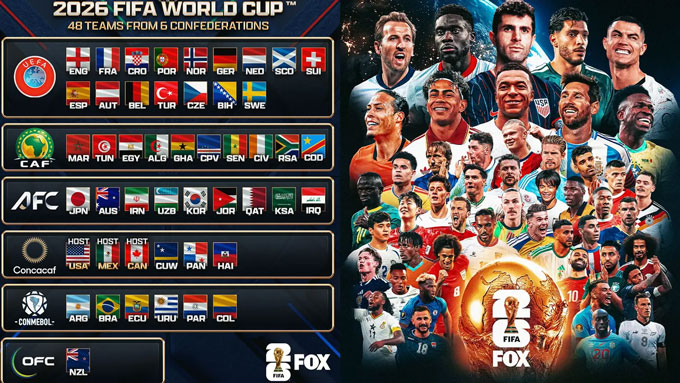
A total of 48 national teams will compete, making it the largest World Cup ever.
Confederation slots:
- AFC (Asia) – 9 teams: Australia, Iran, Iraq, Japan, Jordan, South Korea, Saudi Arabia, Qatar, Uzbekistan
- CAF (Africa) – 10 teams: Algeria, Ivory Coast, Cape Verde, Congo, Egypt, Ghana, Morocco, South Africa, Senegal, Tunisia
- CONCACAF – 6 teams: Canada, United States, Mexico, Curacao, Haiti, Panama
- CONMEBOL (South America) – 6 teams: Argentina, Brazil, Colombia, Ecuador, Paraguay, Uruguay
- UEFA (Europe) – 16 teams: Austria, Belgium, Bosnia & Herzegovina, Croatia, Czech Republic, England, France, Germany, Netherlands, Norway, Portugal, Scotland, Spain, Sweden, Switzerland, Turkey
- OFC (Oceania) – 1 team: New Zealand
World Cup 2026 group stage
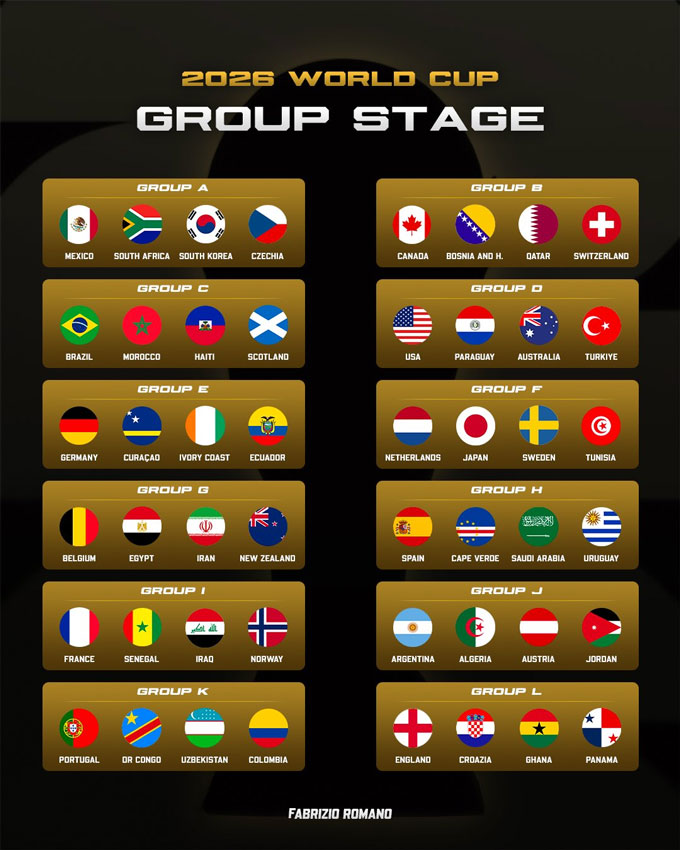
The 48 teams will be divided into 12 groups of 4 teams each.
Here is the complete group list:
- Group A: Mexico, South Africa, South Korea, Czech Republic
- Group B: Canada, Bosnia & Herzegovina, Qatar, Switzerland
- Group C: Brazil, Morocco, Haiti, Scotland
- Group D: United States, Paraguay, Australia, Turkey
- Group E: Germany, Curacao, Ivory Coast, Ecuador
- Group F: Netherlands, Japan, Sweden, Tunisia
- Group G: Belgium, Egypt, Iran, New Zealand
- Group H: Spain, Cape Verde, Saudi Arabia, Uruguay
- Group I: France, Senegal, Iraq, Norway
- Group J: Argentina, Algeria, Austria, Jordan
- Group K: Portugal, DR Congo, Uzbekistan, Colombia
- Group L: England, Croatia, Ghana, Panama
16 stadiums across North America
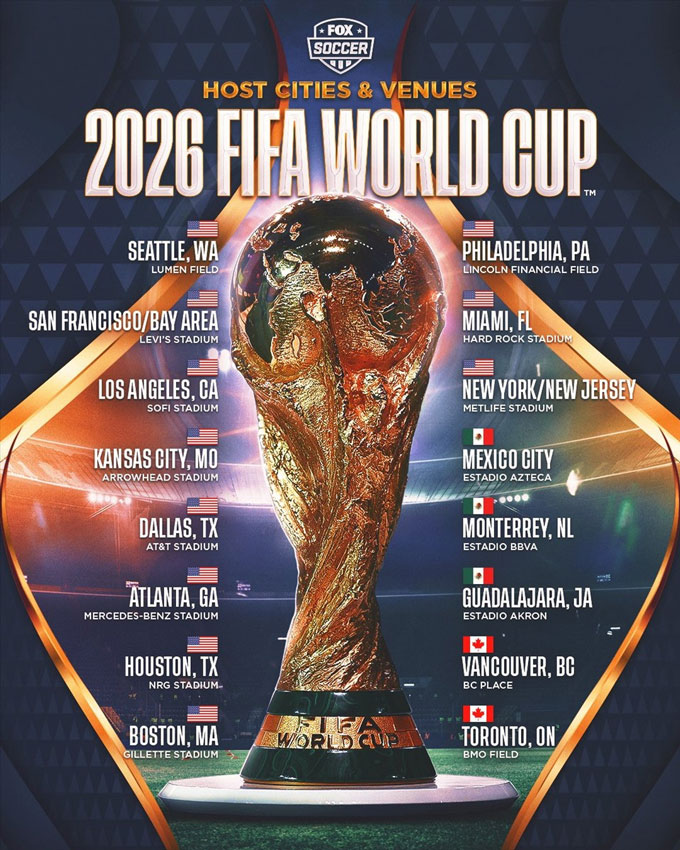
The tournament will be played in 16 stadiums across the three host nations.
United States (11 stadiums):
- AT&T Stadium (Arlington)
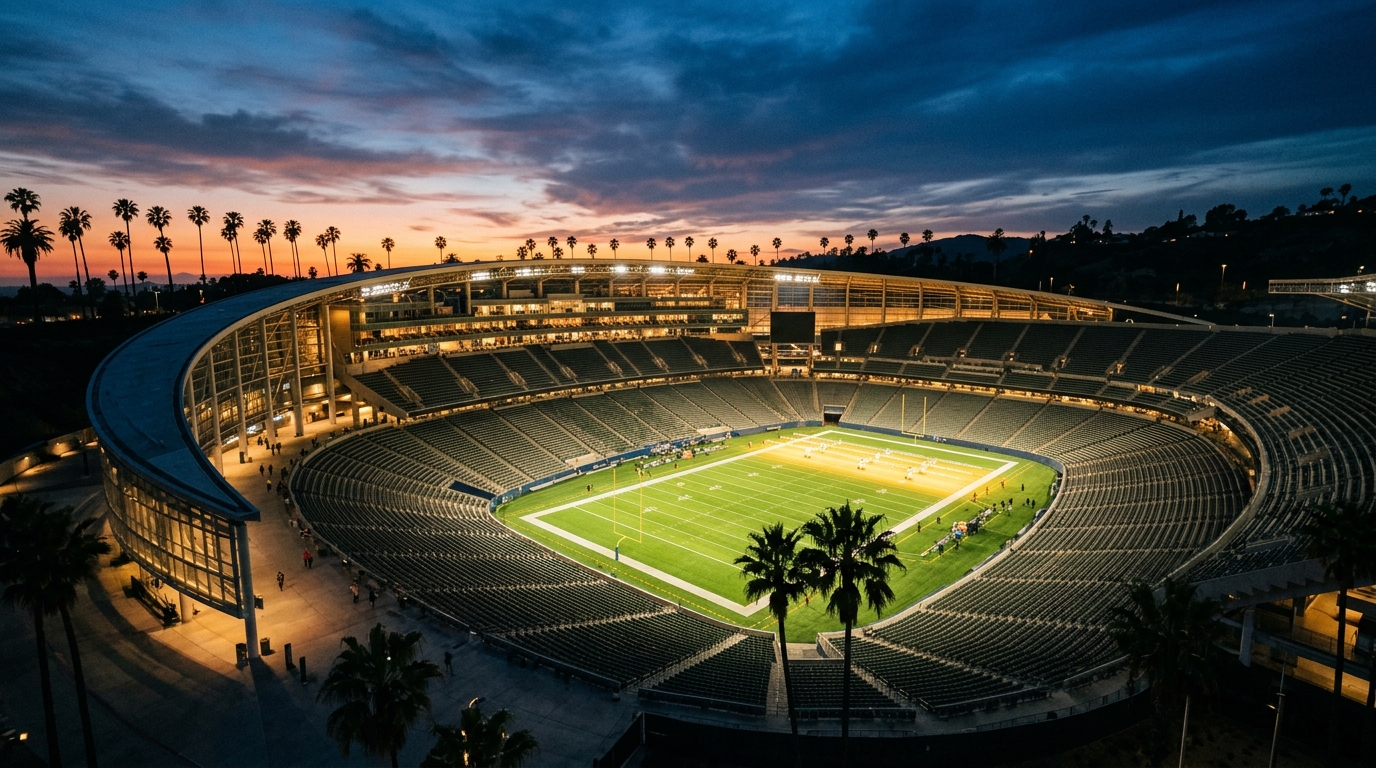
- SoFi Stadium (Inglewood)
- Mercedes-Benz Stadium (Atlanta)
- Levi’s Stadium (Santa Clara)
- Lumen Field (Seattle)
- NRG Stadium (Houston)
- Gillette Stadium (Foxborough)
- Lincoln Financial Field (Philadelphia)
- Hard Rock Stadium (Miami)
- MetLife Stadium (New Jersey)
- Arrowhead Stadium (Kansas City)
Mexico (3 stadiums):
- Azteca Stadium (Mexico City)
- BBVA Stadium (Monterrey)
- Akron Stadium (Guadalajara)
Canada (2 stadiums):
- BC Place (Vancouver)
- BMO Field (Toronto)
Full match schedule overview
The tournament will feature 104 matches, the highest ever in World Cup history.
- Group stage: June 11 – late June
- Knockout stage: begins June 28
- Final: July 19, 2026 (United States)
Teams reaching the final could play up to 8 matches, compared to 7 in previous editions—making squad depth and rotation more important than ever.
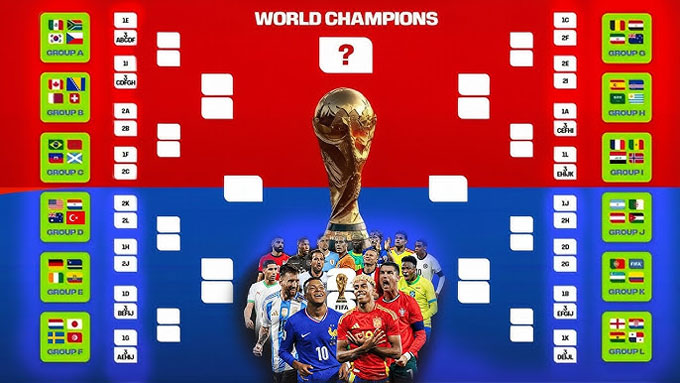
New competition format explained
The biggest change in World Cup 2026 is the expansion to 48 teams.
Group stage:
- 12 groups of 4 teams
- Each team plays 3 matches
- Top 2 teams from each group (24 teams) + 8 best third-placed teams advance
- Total: 32 teams qualify for knockout stage
Knockout stage:
- Round of 32 (new)
- Round of 16
- Quarter-finals
- Semi-finals
- Final
All knockout matches are single-elimination, increasing the drama and unpredictability.
Group stage tiebreaker rules
If teams are level on points, rankings are decided by:
- Points
- Goal difference
- Goals scored
- Head-to-head results
- Fair play points (cards)
- FIFA ranking
This system ensures fairness and consistency with previous tournaments.
Suspension & card rules
Key disciplinary rules include:
- A red card results in suspension for the next match
- Two yellow cards (in separate matches) also lead to suspension
- All yellow cards are cleared after the quarter-finals
This rule prevents players from missing the final due to accumulated yellow cards from earlier rounds.
Final thoughts
The FIFA World Cup 2026 is set to redefine international football with its expanded format, global hosting model, and record number of matches. Whether you're a casual fan or a hardcore follower, this tournament promises more excitement, more drama, and more football than ever before.