Football
5 Greatest Individual Performances in World Cup History
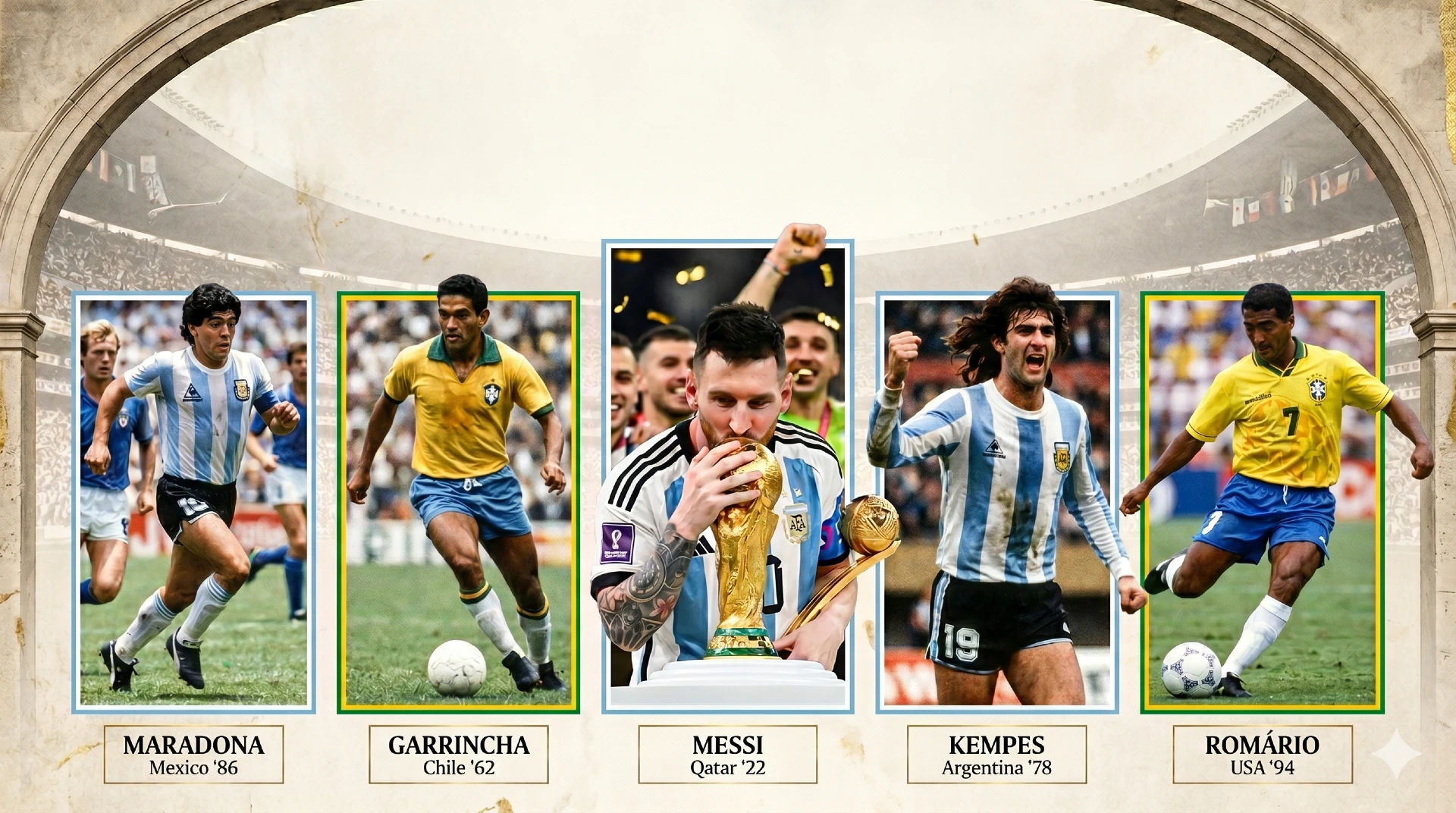
The FIFA World Cup is the grandest stage in football. Over nearly a century of competition, individual brilliance has shaped its legacy just as much as collective team strength. These are the five greatest individual performances in World Cup history — from Maradona's divine genius in 1986 to Messi's long-awaited coronation in 2022.
The FIFA World Cup is more than just a football tournament — it is the grandest theatre the sport has ever known. Since its inaugural edition in 1930, the World Cup has served as the ultimate proving ground for footballers who dream of etching their names into the annals of history. While championships are ultimately a team effort, certain tournaments have been defined not by squads or tactics, but by singular individuals who rose so far above the competition that the entire event seemed to orbit around them.
These are the rare performers who did not merely participate in a World Cup — they owned it. Their runs of form, their moments of genius, and their sheer force of will transformed entire tournaments into personal showcases. Nearly a century into this competition, five names stand above the rest when discussing the greatest individual performances in World Cup history.
Whether you are a lifelong football fan or a data-driven analyst who loves examining the numbers behind the beautiful game, these performances remain as awe-inspiring today as they were when they happened. Let us take an in-depth journey through each one.
1. Diego Maradona — Argentina, Mexico 1986
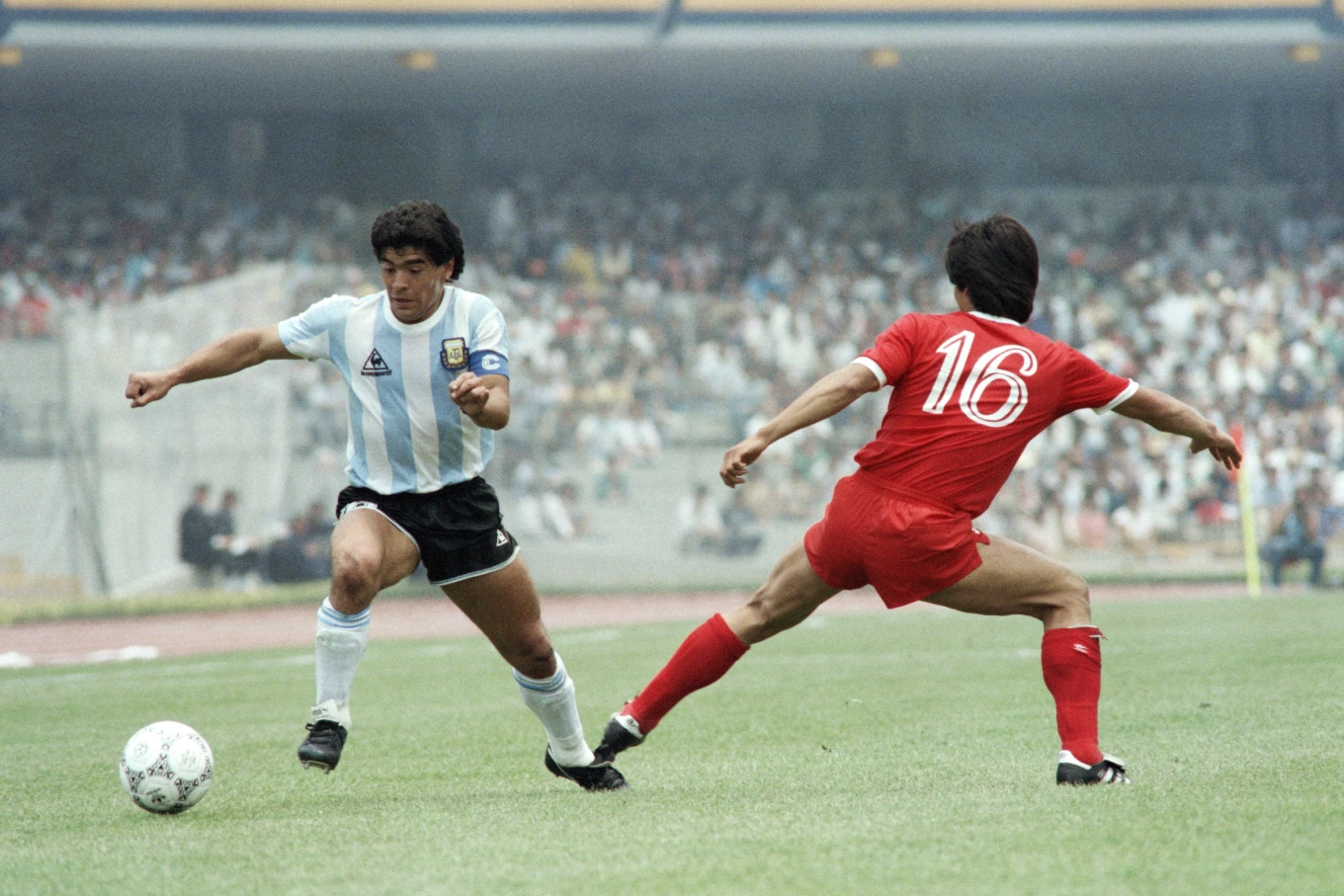
If there is one name synonymous with individual World Cup brilliance, it is Diego Armando Maradona. The 1986 World Cup in Mexico is widely regarded as the greatest single-tournament individual performance in the history of the sport, and with good reason.
At just 25 years old and at the absolute peak of his powers, Maradona carried Argentina on his shoulders from the opening whistle to the final celebration. The Argentine coaching staff built the entire tactical structure of the team around their number 10, and Maradona responded in kind with a performance that defied logic, physics, and at times, morality.
From the very first match — a 3-1 victory over South Korea — Maradona was already the most hunted man on the pitch. Defenders attempted every conceivable strategy to contain him: man-marking, zonal marking, tactical fouling, and in some cases, outright physicality. None of it worked. Not even close. Maradona glided past opponents as though they were training cones, combining explosive pace with impossible close control and an innate football intelligence that could not be coached or replicated.
What makes 1986 so extraordinary is the debate that still rages among football historians about which individual match was Maradona's finest. Maradona himself once claimed that his most complete individual performance was the Round of 16 victory over Uruguay — a match in which he reportedly did not lose a single one-on-one duel across the entire 90 minutes. That alone speaks volumes.
But it is the quarter-final against England that lives longest in collective memory, for two moments that could not be more different yet are equally iconic. In a match charged with political tension — coming just four years after the Falklands War — Maradona delivered one of football's most controversial and most celebrated moments within the space of four minutes.
His first goal, the infamous "Hand of God," saw Maradona punch the ball into the net with his left fist while the referee and linesmen failed to spot the infringement. It was brazen, audacious, and utterly illegal — yet even in retrospect, it seems somehow consistent with Maradona's larger-than-life persona. Minutes later, he produced what is almost universally regarded as the greatest goal ever scored. Receiving the ball inside his own half, he turned, accelerated, and proceeded to dribble past five England outfield players and goalkeeper Peter Shilton before rolling the ball into an empty net. The run covered approximately 60 metres. The dribbles numbered six. The time elapsed was approximately 11 seconds. No goal before or since has captured the imagination of the global football community in quite the same way.
Yet many tactical analysts and football scholars argue it was the semi-final against Belgium that most comprehensively showcased Maradona's genius. Against a well-organised Belgian defence, Maradona was utterly dominant. He controlled the tempo of the game, created chances at will, and delivered two stunning individual goals that were nothing short of masterclasses in technical excellence.
The statistics from Mexico 1986 remain staggering even by modern standards. Maradona completed 53 successful dribbles throughout the tournament — an astonishing figure that left the second-placed player 37 behind. He contributed directly to almost every meaningful moment in Argentina's run, finishing with five goals and five assists across seven matches. His tally of ten goal involvements in a single World Cup has never been equalled. In the final against West Germany, even with the great Lothar Matthäus assigned specifically to mark him, Maradona still found a way to set up Jorge Burruchaga for the 83rd-minute winner, sealing a 3-2 victory and Argentina's second World Cup title.
No statistical model, no data visualisation, no expected goals chart could ever fully capture what Maradona did in 1986. It was sport's equivalent of a force of nature.
2. Garrincha — Brazil, Chile 1962
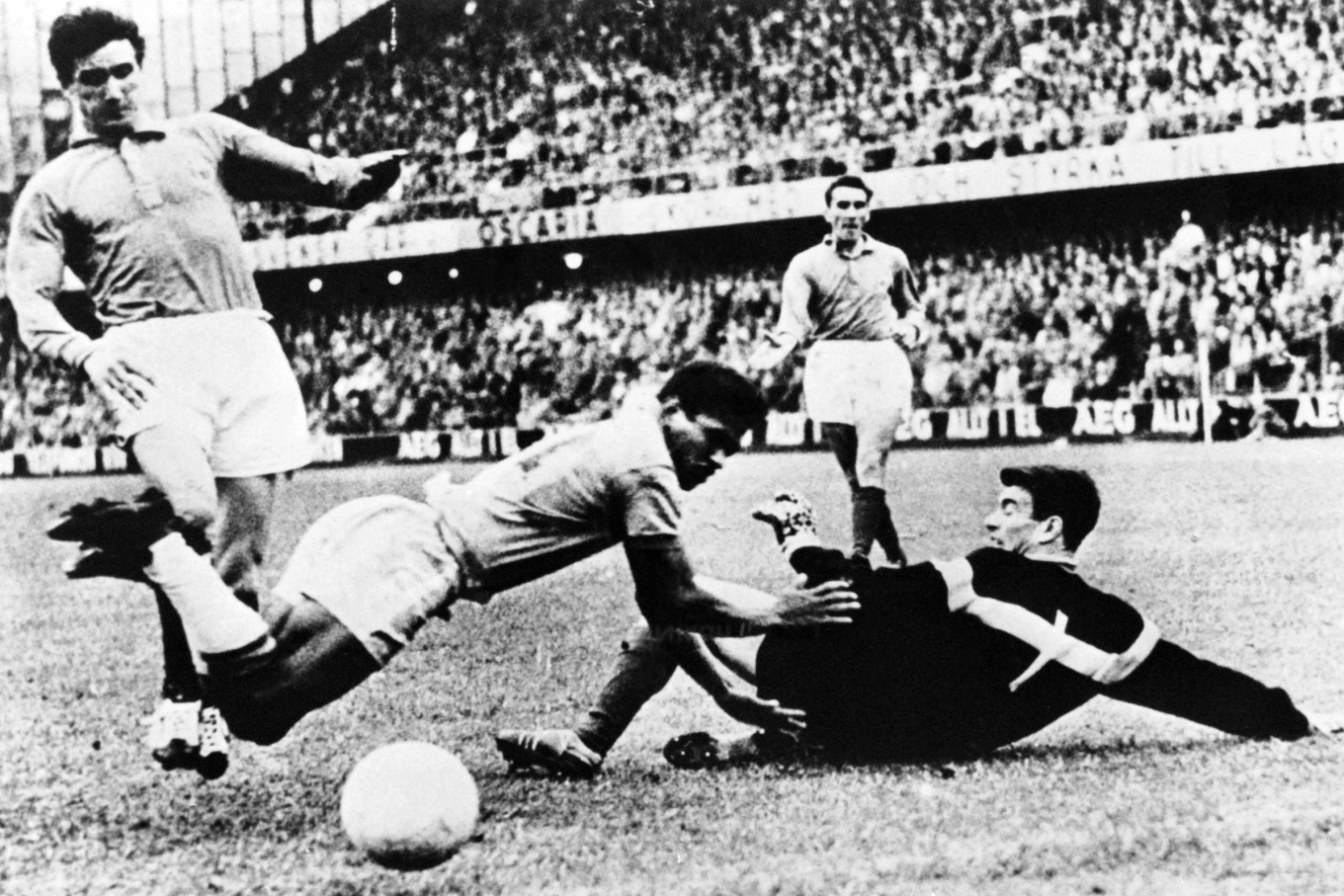
Football has always been a sport that celebrates overcoming adversity, and few stories embody this spirit more profoundly than that of Manoel Francisco dos Santos, better known to the world as Garrincha.
Born in a small town in Brazil with a spinal defect and one leg significantly shorter than the other — a difference of approximately six centimetres — Garrincha was told early in life that he would never be a professional athlete. The medical assessment could not have been more wrong. The physical irregularity that was supposed to be a limitation became the foundation of one of the most unique and devastating dribbling styles the game has ever produced. His uneven gait gave him an unpredictable centre of gravity; his dribbles were so unconventional that defenders simply could not read his body shape or anticipate his next movement.
By 1958, Garrincha had already won a World Cup alongside Pelé with Brazil in Sweden. In that tournament, he operated primarily as a traditional right winger — brilliant in patches, but not yet the complete attacking force he would become. By the time Chile 1962 arrived, Garrincha had evolved into something else entirely.
The 1962 tournament arrived under a dark cloud for Brazil. Pelé, widely considered the greatest player in the world at that time, was injured in the second group-stage match and took no further part in the competition. Many felt Brazil's title defence was effectively over. What followed, however, was one of the most remarkable one-man shows in sporting history.
Garrincha stepped into the leadership void with an authority that few could have anticipated. He had worked diligently to develop his left foot and his aerial game, and both additions to his repertoire proved decisive. In the quarter-final against England, Garrincha scored a magnificent header and followed it with a thunderous long-range strike with his right foot. Against Chile in the semi-final, he again delivered a stunning double — another header and this time a left-footed long-range effort — to propel Brazil into the final.
The tournament almost ended in disaster for Garrincha in the closing moments of the Chile semi-final, when he was shown a red card following a retaliation incident. The prospect of Brazil's talismanic performer missing the final sent shockwaves through the footballing world. However, following extensive lobbying by the Brazilian Football Confederation and intervention at the highest levels, the suspension was overturned, allowing Garrincha to take his place in the final.
He was not at his physical best in the 3-1 victory over Czechoslovakia in the final — the effects of the compressed schedule and the injury concern evident to those watching closely — but his contribution to the overall tournament cannot be overstated. In the absence of Pelé, Garrincha had single-handedly guided Brazil to back-to-back World Cup titles. Remarkably, Brazil never lost a World Cup match in which Garrincha played — a record that stands to this day.
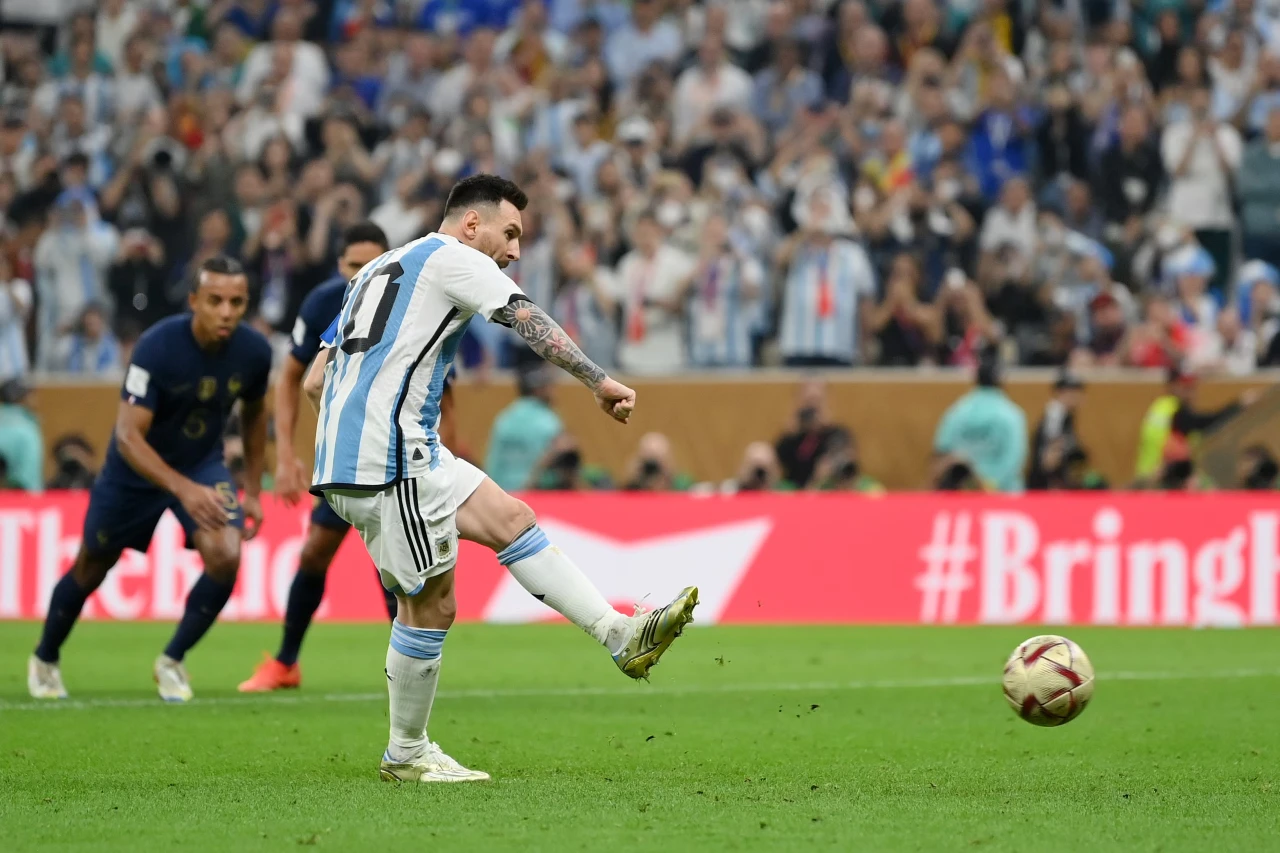
3. Lionel Messi — Argentina, Qatar 2022
For over a decade, the debate about Lionel Messi's legacy was haunted by a single absence: the World Cup winner's medal that eluded him through four previous tournaments. In Qatar 2022, at the age of 35, Messi finally silenced every critic and completed the most celebrated collection of footballing achievements the sport has ever seen.
Argentina's road to glory was anything but straightforward. In their opening group-stage match, they suffered one of the most shocking upsets in modern World Cup history — a 2-1 defeat to Saudi Arabia that sent tremors through the football world. With their tournament suddenly under threat, it was Messi who steadied the ship. Against Mexico in a must-win encounter, he delivered a precise, perfectly-weighted long-range strike to open the scoring and inspire a 2-0 victory. The goal was vintage Messi: unhurried, technically immaculate, and exactly when it was needed most.
From the knockout rounds onward, Messi elevated his game to heights that reminded the world exactly why he is considered by many to be the greatest footballer who has ever lived. Against Australia in the Round of 16, he both dictated the tempo of the match and contributed a clinical opening goal. Against the Netherlands in the quarter-final, he provided a brilliant assist for Nahuel Molina's opening goal before adding a penalty himself, helping Argentina survive a nervy finale to advance.
The semi-final against Croatia was arguably the match that showcased Messi's complete skill set most comprehensively. First, he won and converted a penalty with ice-cold composure. Then, in one of the most astonishing moments of the entire tournament, he dribbled past the towering Joško Gvardiol — one of Europe's most highly-rated young defenders — along the right touchline and delivered a perfectly-timed cut-back for Julián Álvarez to finish. It was the kind of moment that generations of football fans will discuss for decades.
The final against France will be remembered as one of the greatest matches in World Cup history — a breathtaking rollercoaster of emotion that swung from comfort to crisis to triumph within the span of a few extraordinary hours. Messi scored twice, including a penalty in regular time and a composed finish in extra time, before Argentina held their nerve in a penalty shootout that went to sudden death. When the final penalty was converted, Messi fell to his knees, overcome with emotion, and then raised the golden trophy that had been football's final frontier for him.
His final tournament statistics were extraordinary: seven goals and three assists across seven matches, making him the joint top scorer of the competition and easily its best player. He was awarded the Golden Ball as the tournament's best performer — the second time he had received the honour, joining a list of two players ever to win it multiple times. For Messi, Qatar 2022 was not simply another World Cup performance. It was the culmination of an entire career, the final brushstroke on the greatest portrait in the history of the beautiful game.
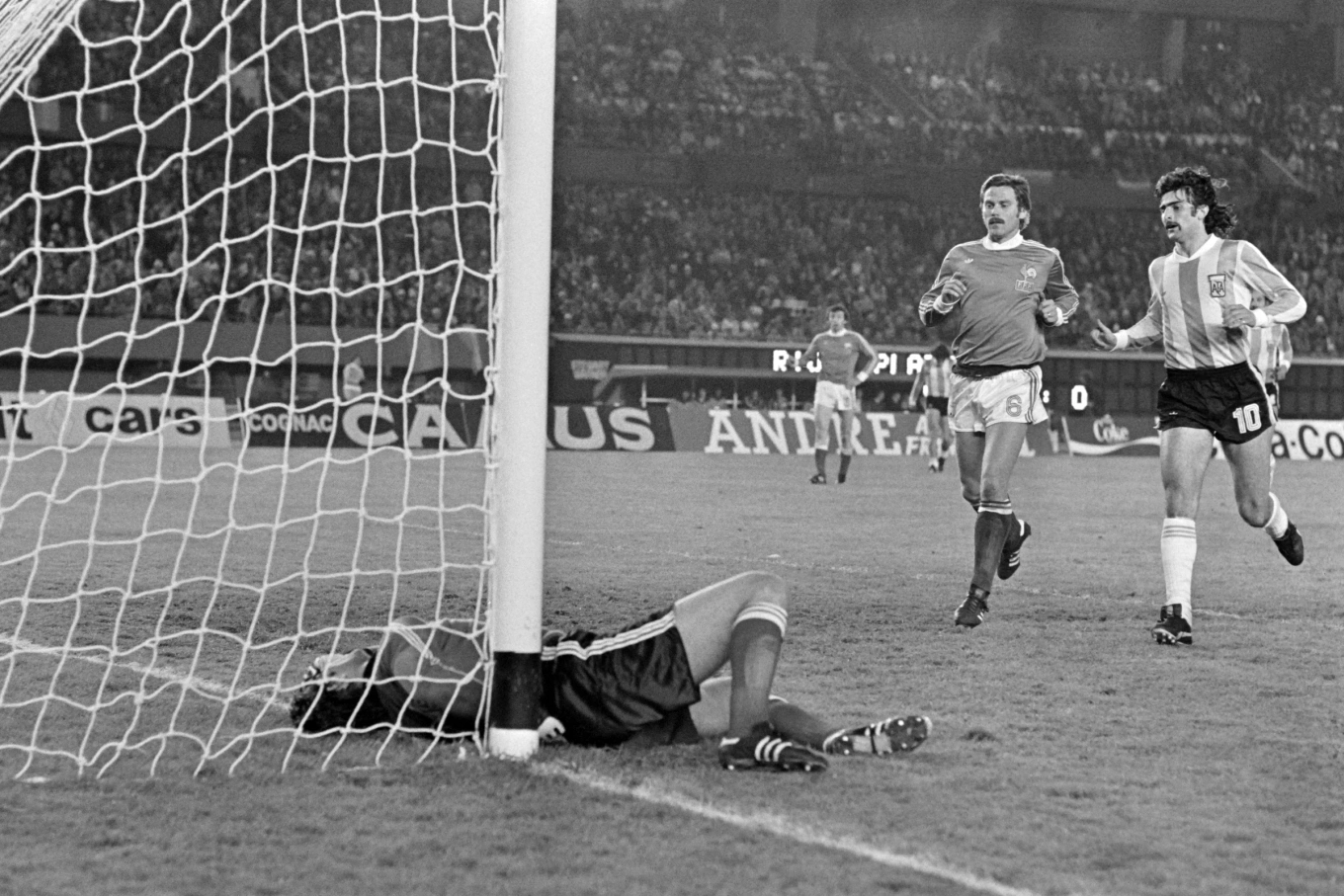
4. Mario Kempes — Argentina, Argentina 1978
Of the five performances on this list, Mario Kempes is perhaps the least celebrated in the global footballing consciousness — but that is largely a function of era rather than quality. To those who were there, and to historians who have studied the footage meticulously, Kempes's tournament in 1978 was a masterclass in clutch performance and fearless attacking football.
Kempes had endured a frustrating World Cup in 1974, failing to score despite Argentina's solid overall showing. The 1978 tournament, hosted on home soil, represented his chance at redemption — but it did not begin promisingly. Argentina ground through the group stage, and Kempes remained goalless through their opening matches. Questions were being asked. The pressure, in front of the passionate Buenos Aires crowd that demanded success, was immense.
Then, as the tournament entered its decisive phase, Kempes erupted. In the second group stage — a peculiar format used in that era — he scored a brace against Poland before adding another two goals against Peru, including an outstanding individual effort in which he combined with a teammate in a neat wall pass before cutting past a defender and finishing clinically. Six goals in the knockout stages alone is an extraordinary return by any measure.
The final against the Netherlands was an occasion that tested Kempes to the very limit — and he rose to meet it magnificently. He opened the scoring with a characteristic driving run from deep, latching onto a long ball, holding off his marker, and finishing with composure. When the Dutch equalised and the match went to extra time with the score level at 1-1, it was Kempes who broke the deadlock again. He embarked on a tenacious, determined run into the penalty area, had his first shot blocked, kept his balance despite the contact, and prodded the rebound over the line. Argentina went on to win 3-1, and Kempes finished as the tournament's top scorer with six goals.
It would be an overstatement to place Kempes in the same bracket as Maradona or Messi in terms of overall career brilliance. But as a tournament performance — measured by consistency, big-game impact, and the ability to deliver when the stakes were highest — 1978 Kempes belongs in this conversation without question. He was not merely Argentina's best player. In those crucial weeks, he was their spine, their heartbeat, and their defining voice.
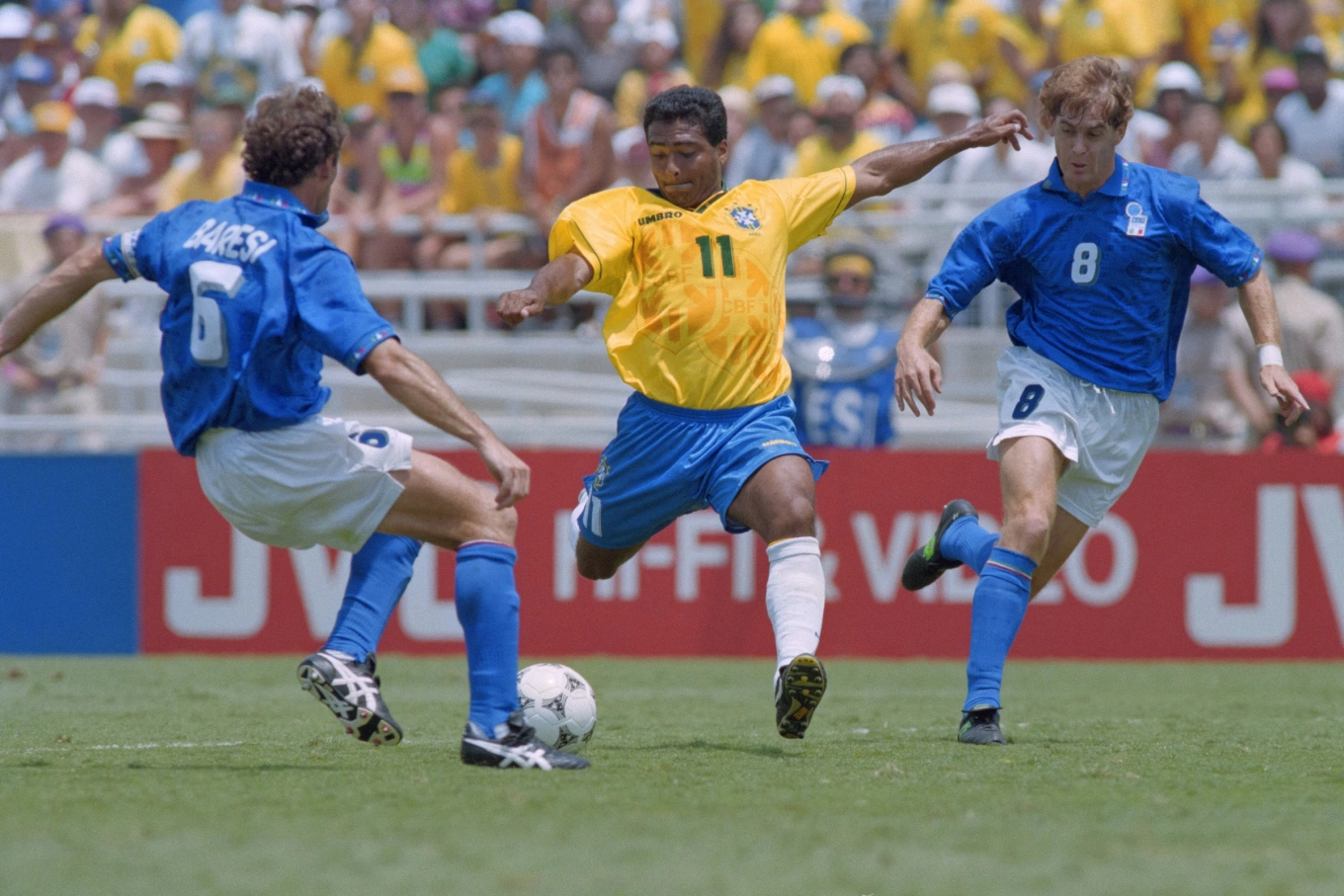
5. Romário — Brazil, USA 1994
The Brazil of 1994 was a very different proposition to the samba football sides of previous generations. Under Carlos Alberto Parreira, they played a pragmatic, organised 4-4-2 system that prioritised defensive solidity over attacking freedom. The romantic football that had defined Brazil's identity in 1958, 1962, and 1970 was largely absent. What the 1994 team had instead was Romário — and it turned out that was enough.
The tournament arrived in the shadow of personal tragedy for Brazilian football. The legendary Formula 1 driver Ayrton Senna, one of Brazil's most beloved sporting figures, had been killed in a crash at the San Marino Grand Prix just weeks before the World Cup began. Romário — a close friend and admirer of Senna — made a public promise: he would win the World Cup for Brazil in Senna's honour. It was an enormous statement, the kind that defines a player's character when they either deliver or crumble under its weight.
Romário delivered. He scored in each of Brazil's three group-stage matches, demonstrating the full range of his attacking artistry: precise positioning, clever movement off the ball, devastating finishing in tight spaces, and the technical intelligence to exploit the slightest defensive lapse. His goal against Sweden in the group stage — a delicate, instinctive toe-poke finish that redirected a cross with minimal backlift — drew admiring gasps from analysts for its sheer economy of movement.
In the knockout rounds, Romário continued to find the net when it mattered most. He scored against the Netherlands in the quarter-final, helping Brazil survive a difficult encounter, and struck the decisive goal in the semi-final against Sweden, a match that was settled by the narrowest of margins. Across the tournament, Romário scored five goals — and in a remarkable detail that underlines his importance to the team, every single one of those five goals was the opening goal of the match. In a tournament where Brazil frequently played with extreme caution, Romário was the player who unlocked doors.
He was not at his physical best in the final against Italy — a gruelling 0-0 draw after extra time that went to penalties — and did not leave a decisive individual mark on that particular occasion. But the evidence across the entire tournament was overwhelming. In a team built around defence and structure, Romário was the creative force, the decisive edge, the difference-maker. When Brazil lifted the trophy following a dramatic shootout, everyone in football understood that Romário had fulfilled his promise to Senna.
The Greatest Individual World Cup Performances: What Unites Them?
Looking across these five extraordinary performances, several common threads emerge that help explain what elevates them above the rest.
Each of these players was, in some meaningful sense, indispensable to their team's success. Argentina without Maradona in 1986, or Brazil without Garrincha in 1962, or Messi's Argentina without their captain in Qatar — these are not competitive teams at the same level. The individuals on this list did not merely contribute to their nation's triumph. In many cases, they were the reason for it.
Each also demonstrated the ability to perform at the highest level consistently across an entire tournament — not just in one or two matches, but across six or seven successive high-pressure occasions spanning a period of weeks. This sustained excellence is what distinguishes a truly great World Cup performance from a single memorable moment.
Finally, and perhaps most importantly, each of these performances contains at least one moment of such breathtaking quality that it has transcended the sport entirely and entered broader cultural consciousness. The Hand of God. Garrincha's dribbling in Chile. Messi on his knees in Lusail Stadium. Kempes forcing the ball over the line in extra time in Buenos Aires. Romário's toe-poke against Sweden. These are moments that non-football fans can picture and that football fans will never forget.
As the 2026 World Cup approaches — the first to be held across three nations and the first to feature 48 teams — a new generation of stars will have the opportunity to etch their own names into this exclusive conversation. Whether Kylian Mbappé, Erling Haaland, Jude Bellingham, or Lamine Yamal can produce a tournament performance worthy of joining this list remains to be seen. But what is certain is that the World Cup will continue to produce the conditions under which individual greatness can flourish — and when it does, the world will be watching.