WORLD CUP 2026
Netherlands vs Japan: World Cup 2026 Group F Opener — The Clash of Contrasting Styles at AT&T Stadium
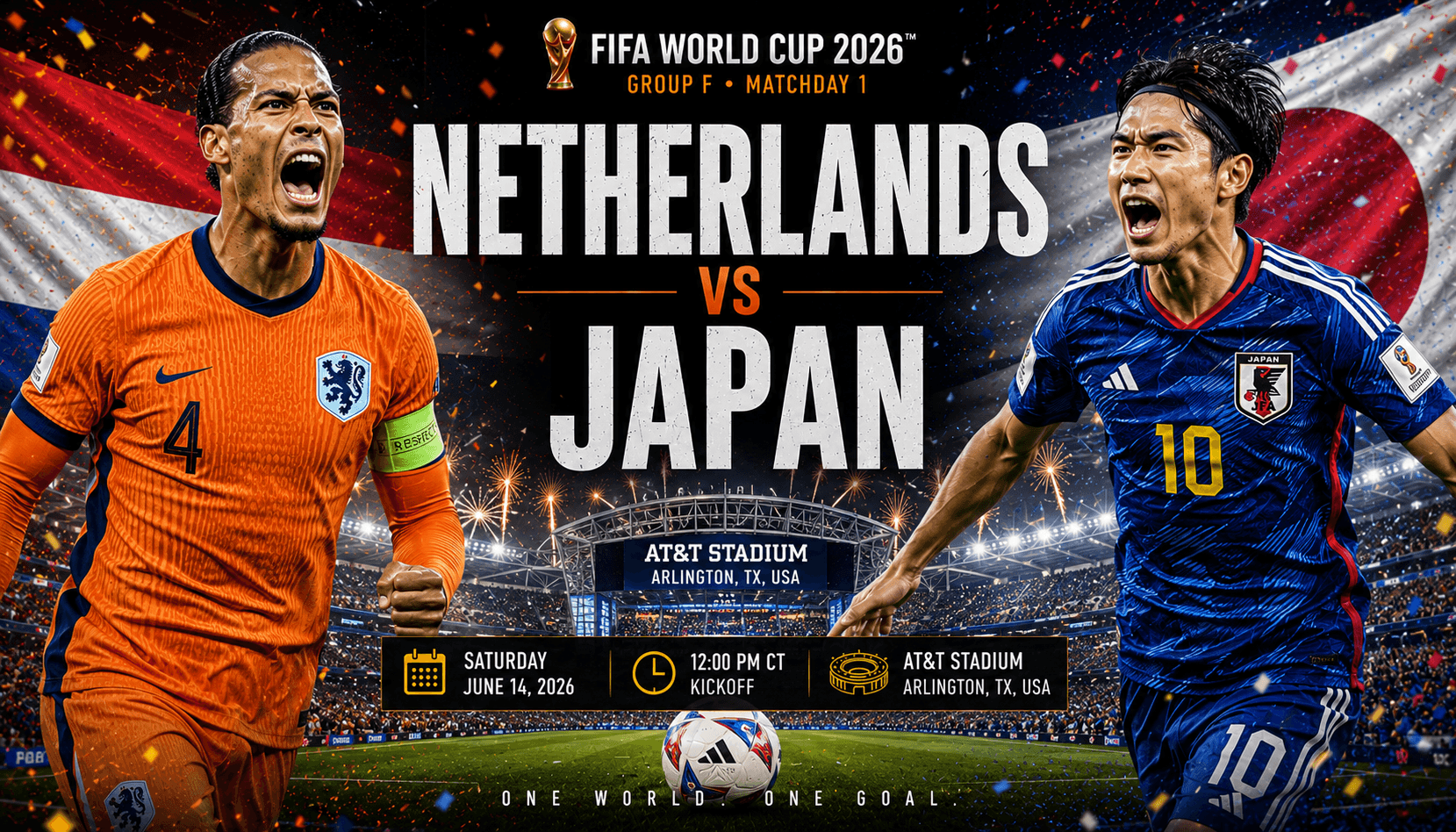
Netherlands face Japan in a pivotal World Cup 2026 Group F opener at AT&T Stadium, Dallas on June 14. Dutch experience meets Japanese precision — who prevails in Texas?
Netherlands vs Japan: World Cup 2026 Group F Opener — The Clash of Contrasting Styles at AT&T Stadium
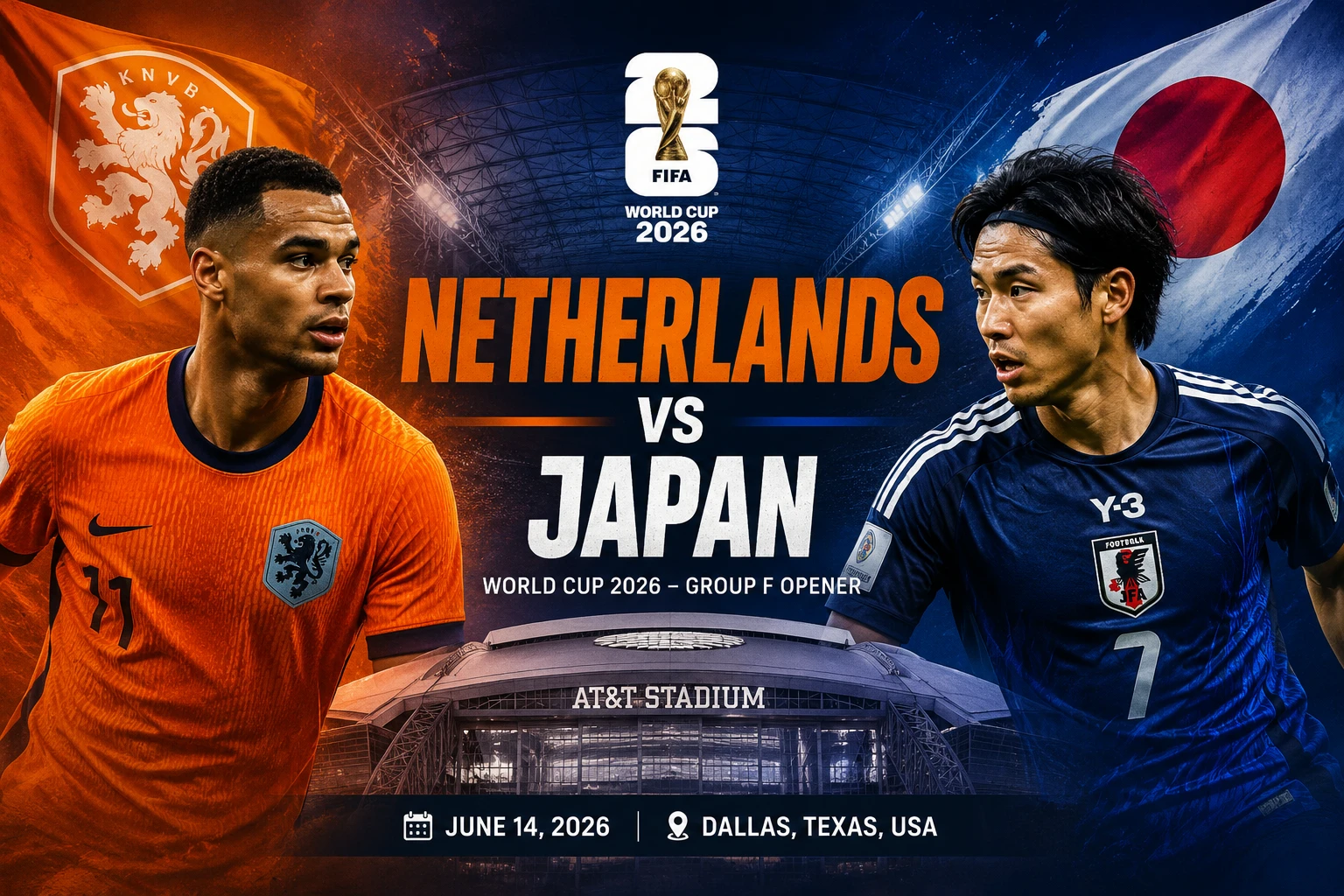
In the grand theatre of the FIFA World Cup, few fixtures promise the same tactical intrigue as a meeting between the Netherlands and Japan. On June 14, 2026, at AT&T Stadium in Dallas, Texas, these two footballing worlds will collide in what promises to be one of the most compelling Group F openers of the entire tournament. Dutch elegance and European pedigree against Japanese discipline and relentless collective energy — this is not just a football match. It is a statement of intent.
The Stage: AT&T Stadium, Dallas — A World Cup Fortress
There is something deeply symbolic about staging this fixture at AT&T Stadium, one of the most iconic arenas in American sports. With a capacity exceeding 80,000 and a retractable roof that transforms the venue into an atmospheric cauldron, Dallas provides the perfect backdrop for a group-stage clash with knockout-round implications. The heat of a Texas summer evening, the roar of an international crowd, and two nations hungry for glory — the stage is set.

Netherlands: Three Finals, Zero Titles — and a Point to Prove
The Netherlands carry the weight of near-misses into every World Cup campaign. Three finals. Three devastating defeats. 1974, 1978, 2010 — the Dutch have come achingly close to lifting the trophy, only to fall at the final hurdle each time. That unresolved hunger is baked into the identity of every Oranje generation, and the 2026 squad is no different.
Heading into Group F as the tournament's most tactically sophisticated European side, the Netherlands boast a squad rebuilt from the ground up since their 2022 Qatar campaign. With Cody Gakpo establishing himself as one of Europe's most dangerous wide forwards at Liverpool, and a new generation of midfield architects and defensive leaders stepping up, Ronald Koeman's side arrive in the United States with genuine ambition and organisational clarity.
Their recent form reinforces the optimism. In their last five internationals, the Dutch have posted three wins, one draw, and one defeat — defeating Uzbekistan 2-1, Norway 2-1, and Lithuania 4-0, with only a narrow 1-0 loss to Algeria and a 1-1 draw with Ecuador providing any cause for concern. Nine goals scored, four conceded. The attacking intent is evident.
Japan: Asia's Giant-Killers, and They Are Coming for Everyone
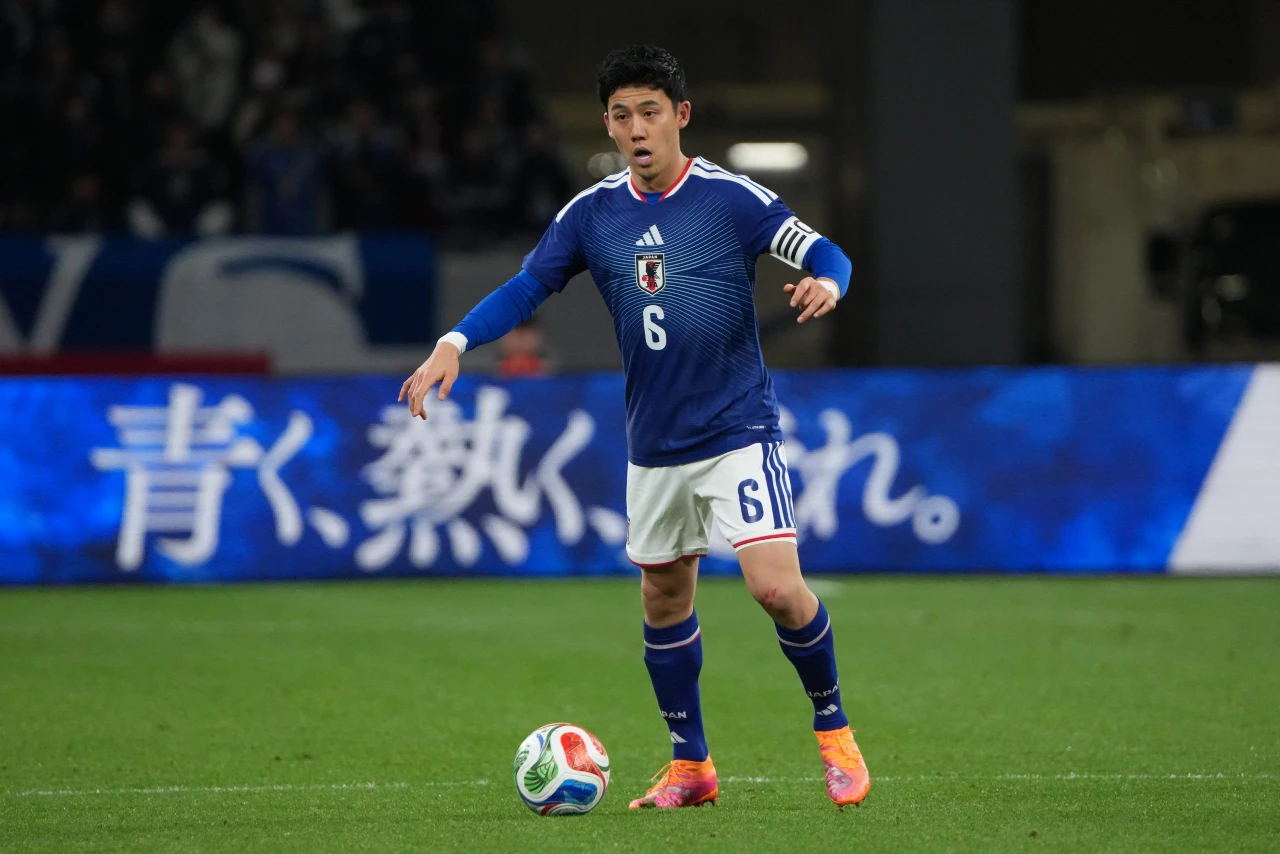
If the Netherlands carry history's weight, Japan carry history's momentum. The Samurai Blue's trajectory since their 2022 Qatar triumph — defeating Germany 2-1 and Spain 2-1 en route to the Round of 16 — has fundamentally altered how global football perceives Asian opposition. Japan are no longer a curiosity. They are a genuine threat.
Their preparation for World Cup 2026 has been nothing short of extraordinary. Five wins from their last five internationals, with eight goals scored and a perfect clean-sheet record. Victories over Iceland, England, Scotland, Bolivia, and Ghana tell a story of a side not merely going through the motions but actively testing themselves against varied opposition and passing every examination. The collective pressing mechanism under their coaching staff is among the most sophisticated in world football, built on the principles that saw them dismantle two of Europe's heavyweights in Qatar.
Japan's World Cup story began modestly — three straight group-stage defeats at France 1998 — but has evolved into something genuinely inspiring. Four appearances in the knockout rounds, including their historic 2018 run where they became the first Asian nation to defeat a South American side at a World Cup, beating Colombia 2-1. In 2022, they pushed Croatia to penalties before bowing out. The ceiling is rising. And at Dallas, they intend to raise it further.
Head-to-Head History: The 2010 Shadow Over Texas
The historical ledger between these nations is thin but telling. Their only World Cup meeting came at the 2010 FIFA World Cup in South Africa, Group E, where the Netherlands edged Japan 1-0 in a tightly contested affair. That result reflected a pattern that multiple analysts now cite as contextual evidence — Dutch defensive solidity absorbing Japanese pressure before finding a decisive moment of quality.
Sixteen years separate these two encounters. The teams have evolved dramatically. Japan's pressing intensity and individual technical quality have reached new heights. The Dutch have rebuilt their squad around a new generation. The 2010 result provides a historical reference point, but this fixture will be decided by what happens in Texas, not what happened in Durban.
Tactical Breakdown: The Dutch Structure vs. Japan's High-Tempo Transitions
The tactical chess match between these sides is where the real drama lives. The Netherlands will likely set up in their familiar 4-3-3 or 4-2-3-1 shape, looking to control possession in the middle third, press high when they win the ball back, and exploit wide channels through their energetic wingers. Gakpo's ability to cut inside from the left and combine in tight spaces will be central to their attacking architecture.
Japan, meanwhile, will press relentlessly from the front. Their compact 4-4-2 mid-block is designed to force errors in the Dutch buildup, win the ball high, and transition at devastating speed. In Qatar, this approach overwhelmed Germany and Spain's slower ball-circulation patterns. The Netherlands, with better individual quality in tight spaces, will be aware of the threat — but awareness and neutralisation are two very different things.
The key battle will be in the Dutch central midfield. If the Netherlands' double pivot can screen effectively and prevent Japan's front three from finding the channels between the lines, Koeman's side should control large passages of play. If Japan's forwards disrupt that rhythm, the game transforms into exactly the high-tempo, chaotic contest that suits Hajime Moriyasu's side perfectly.

Key Players to Watch
Cody Gakpo (Netherlands): The Liverpool forward brings Champions League-level quality to every engagement. His technical sharpness, intelligent movement, and goal threat from wide positions make him Japan's most dangerous opponent. If Gakpo finds space on the left channel, the Samurai Blue's defence will face serious problems.
Virgil van Dijk (Netherlands): The Liverpool captain is the defensive cornerstone of Oranje's structure. His aerial dominance and reading of the game should neutralise Japan's rapid forward runners — but he will need to be sharp against opponents who switch play quickly and run in behind.
Ritsu Doan (Japan): The Freiburg winger was Japan's hero in Qatar, scoring in both the Germany and Spain victories. His low, driven shooting technique and ability to exploit half-spaces makes him a constant counter-attack threat. The Dutch right-back will have their hands full all evening.
Takefusa Kubo (Japan): Real Sociedad's mercurial playmaker has emerged as Japan's most technically gifted performer in recent years. His close control, dribbling ability, and vision in tight areas can unlock even the most organised European defences. If Kubo finds pockets of space between Dutch lines, expect fireworks.
Group F Context: Why This Result Matters Beyond June 14
Netherlands, Japan, Sweden, and Tunisia make up one of the World Cup's most intellectually fascinating groups. Sweden arrive as perhaps the most individually talented side relative to their collective uncertainty — a squad whose combined market value rivals elite nations, yet whose team cohesion remains an open question. Tunisia, the Carthage Eagles, seek their historic first knockout-stage appearance.
In this context, the Netherlands vs Japan opener carries enormous weight. Three points here for either side creates a platform from which a knockout-stage berth becomes highly manageable. A draw leaves both nations in a precarious position, particularly if Sweden open their own campaign with a victory. The stakes are not merely about group standing — they are about psychological momentum heading into what promises to be a brutally competitive second round of fixtures.
The Bigger Picture at World Cup 2026
World Cup 2026 is already historic before a ball is kicked. Co-hosted across the United States, Canada, and Mexico, it is the first edition with 48 teams — meaning more fixtures, more possibilities, and more giant-killing opportunities. Japan's trajectory suggests they are not attending to make up the numbers. The Netherlands, with three final appearances already etched in history, believe this is finally their year.
At AT&T Stadium on June 14, those ambitions meet for the first time. The atmosphere in Dallas will be electric, the tactical battle intricate, and the consequences significant. This is the fixture that could define Group F — and perhaps set the tone for both nations' entire 2026 campaigns. Do not miss it.
AI Model Predictions: What the Data Says
As a supplementary analytical layer, TuringStats' panel of ten leading AI models reached near-unanimous agreement on this fixture. All ten models — spanning GPT-4o, Claude, Gemini, Mistral, DeepSeek, Qwen, Llama, MiMo, Cohere, and Grok — predicted a Netherlands victory, with a mean predicted scoreline of 2-1 at 60% mean confidence (classified as a medium confidence band).
The most frequently predicted exact scoreline was 2-1, appearing in five of ten model outputs. Three models predicted 1-0 and two predicted 2-0 — a consistent expectation of a tight, competitive match with Dutch quality ultimately proving decisive. The aggregated expected goals projection stands at 1.70 for the Netherlands and just 0.50 for Japan, reflecting the models' view of a dominant but not dominant-enough Oranje performance.
Several models specifically highlighted the Dutch squad's defensive solidity and home-tournament advantage as primary factors. Japan's exceptional recent form was acknowledged across the panel, but their clinical finishing record was flagged as a potential limitation against organised European defences. The "both teams to score" implied probability lands at approximately 55% before defensive adjustments — consistent with the prevalence of tight 1-0 scenarios in the panel's projections.
These AI-derived projections provide an interesting statistical framework. However, as Japan demonstrated most memorably against Germany and Spain at Qatar 2022, football's greatest narratives are written by the players on the pitch, not the models in the cloud. On June 14 in Dallas, that truth will once again be tested.