WORLD CUP 2026
South Korea vs Czech Republic: World Cup 2026 Group A Preview — The Battle That Could Define Both Nations' Campaigns
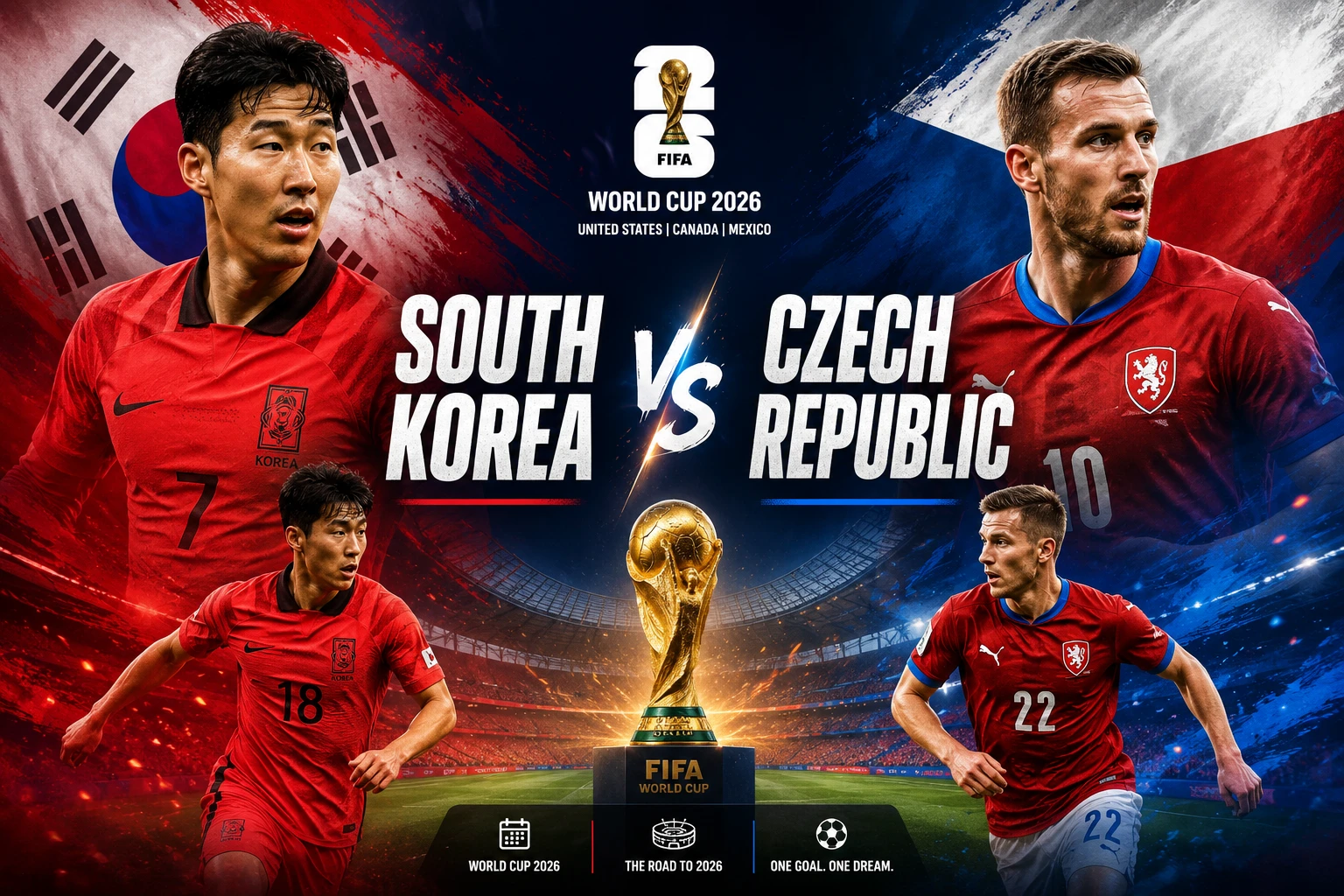
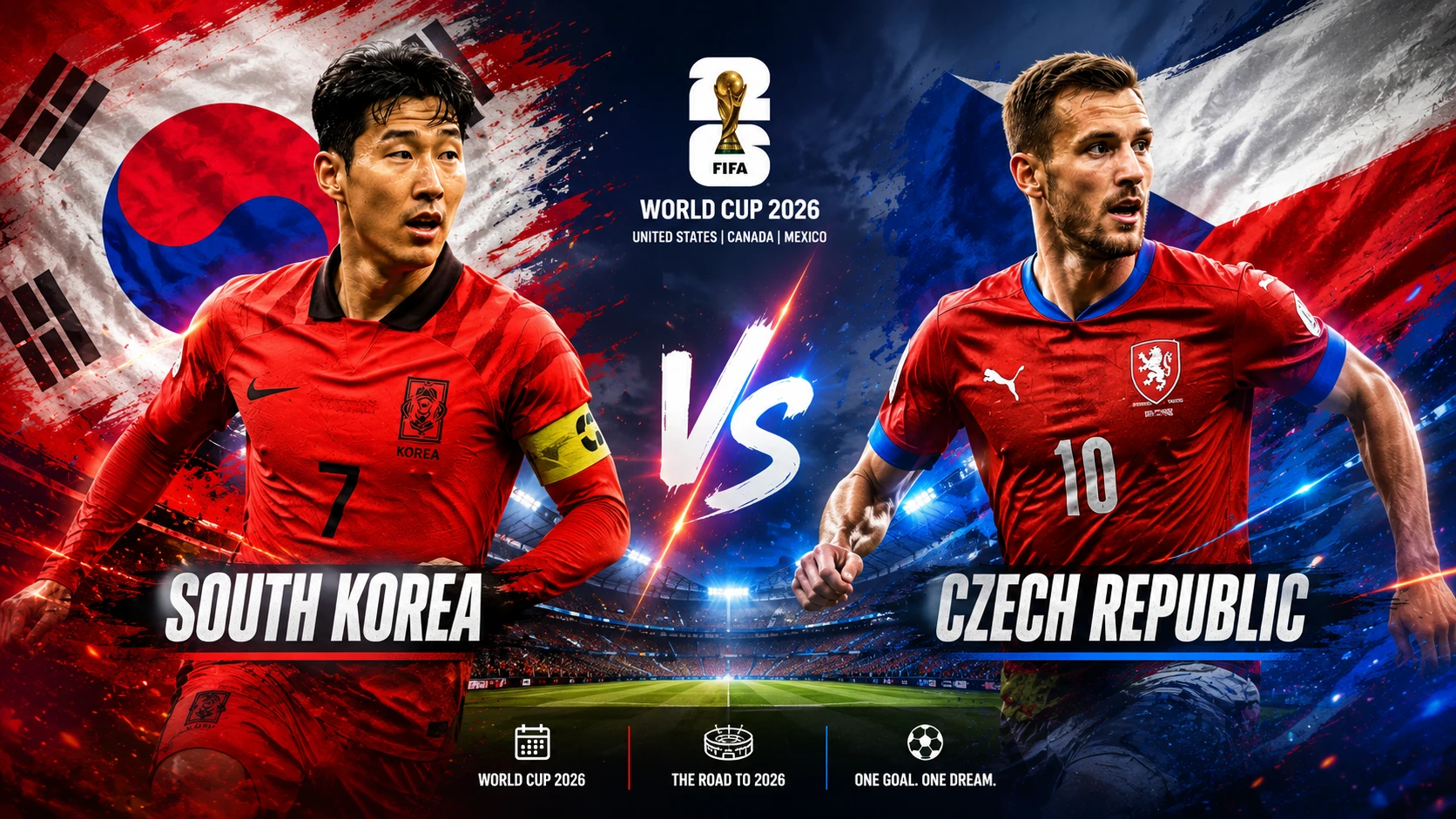
On June 12, 2026 at Estadio Akron in Zapopan, Mexico, South Korea and the Czech Republic clash in a high-stakes FIFA World Cup 2026 Group A opener. With Mexico the overwhelming group favorite, both sides know that victory here could be decisive in determining who advances to the knockout rounds. Son Heung-min's last World Cup dance versus Patrik Schick's Czech steel — this is the match that defines campaigns.
South Korea vs Czech Republic: World Cup 2026 Group A Preview — The Battle That Could Define Both Nations' Campaigns
On June 12, 2026, as the sun sets over the volcanic skyline of Guadalajara, two footballing nations that have never met at a World Cup before will finally come face-to-face at the Estadio Akron in Zapopan, Mexico. South Korea versus Czech Republic — on paper, a fixture between two sides ranked third and fourth in Group A. In reality, a match that could determine which of them lives to fight another day in the tournament that matters most.
This is not merely a group stage opener. It is a crossroads.
With host nation Mexico the undisputed favorite in Group A and South Africa presenting a dangerous wildcard, the arithmetic is ruthless: both South Korea and Czech Republic almost certainly need points from this game to stay alive in the race for the second automatic qualifying spot. A defeat here could spiral into elimination before the tournament truly begins. A win, conversely, provides a platform — a cushion — from which a historic run might be launched.
Everything is on the line from minute one.
Group A Context: Why This Match Is a Potential Six-Pointer
The 2026 FIFA World Cup, the first ever expanded to 48 nations, has restructured the group stage dynamic entirely. With three teams qualifying from each group of four, the stakes of the opening match are paradoxically both lower and higher. Lower, because a loss is no longer automatically catastrophic. Higher, because the psychological and points-table momentum gained from winning the first fixture can be transformative.
Group A presents a clear hierarchy in most analysts' estimations: Mexico, with the twin boost of home continent advantage and deep tournament experience, are expected to top the group. South Africa — surprise qualifiers generating enormous continental goodwill — are dangerous opponents. That leaves South Korea and Czech Republic in an almost explicit duel for second place, with this June 12 opener functioning as a direct shootout between them.
Coach Hong Myung-bo, returning for a second tenure in charge of the Taegeuk Warriors, has been candid about the importance of the match. Czech Republic manager Ivan Hasek, who has guided the Czechs back to their first World Cup since 2006, knows his squad's depth is not comparable to the European giants — making this opener even more critical to bank points early.
South Korea: Son Heung-min's Last Dance on the Grandest Stage
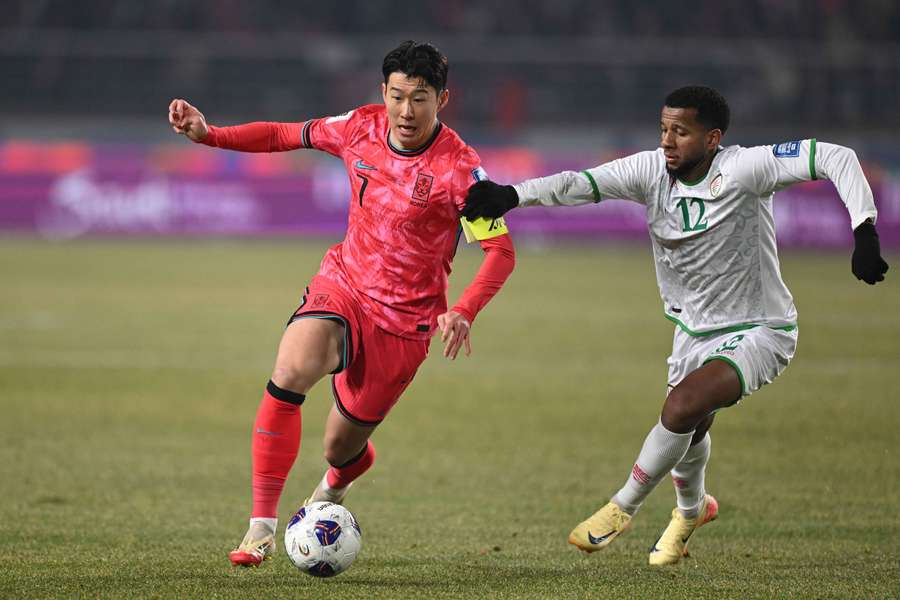
There are moments in sport when legacy crystallizes around a single tournament. For Son Heung-min, captain of South Korea and one of the finest players of his generation, the 2026 World Cup in North America feels deeply, unmistakably like that moment.
Now 34 years old and in his fourth World Cup campaign — having represented his country at Brazil 2014, Russia 2018, and Qatar 2022 — Son is approaching the twilight of his international career. In the summer of 2025, after 11 extraordinary years at Tottenham Hotspur, he made the emotional move to Los Angeles FC in MLS. Far from fading, Son has thrived in the American league: in 34 appearances for LAFC, he has registered 14 goals and 20 assists, his legendary link-up play and relentless pressing transferring seamlessly to the continent where this World Cup is being staged.
His significance to South Korea transcends statistics. Son is the heartbeat, the leader, the man around whom Hong Myung-bo has built his entire attacking system. When Son moves, the Korean press moves. When Son drives into the final third, teammates instinctively make their runs. He is simultaneously talisman and tactical fulcrum.
In the qualifying campaign, across both stages, South Korea went 16 matches unbeaten, scoring 40 goals and conceding just eight. Son contributed 10 goals during that run — not always the highest-profile contributor, but always the most decisive. Now, with the World Cup here and time running short on his international career, the 34-year-old will be playing with a hunger that is uniquely his own.
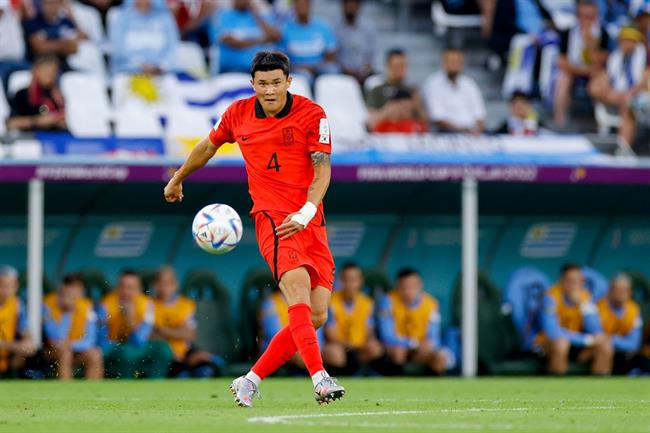
Alongside him, South Korea boast a squad of genuine European-level quality. Lee Kang-in, the Paris Saint-Germain midfielder who has developed into one of Ligue 1's most creative forces, provides the through-ball precision and technical elegance that complements Son's direct running. Kim Min-jae, the Bayern Munich center-back and one of the best defenders in the Bundesliga, anchors a South Korean defensive line that has grown significantly more composed under Hong's management. Hwang Hee-chan adds another dimension from wide areas, his Premier League experience with Wolverhampton Wanderers giving him the physical intensity required at this level.
Their recent form, however, carries a cautionary note. South Korea's last five internationals before the World Cup read: loss to Austria (1-0), loss to Ivory Coast (0-4), before recovering with wins over Ghana (1-0), Bolivia (2-0), and Paraguay (2-0). The heavy defeat to Ivory Coast raised legitimate questions about defensive organization against physical, counter-attacking sides — precisely the kind of challenge Czech Republic's Patrik Schick will present.
Czech Republic: European Discipline, Aerial Threat, and the Schick Factor
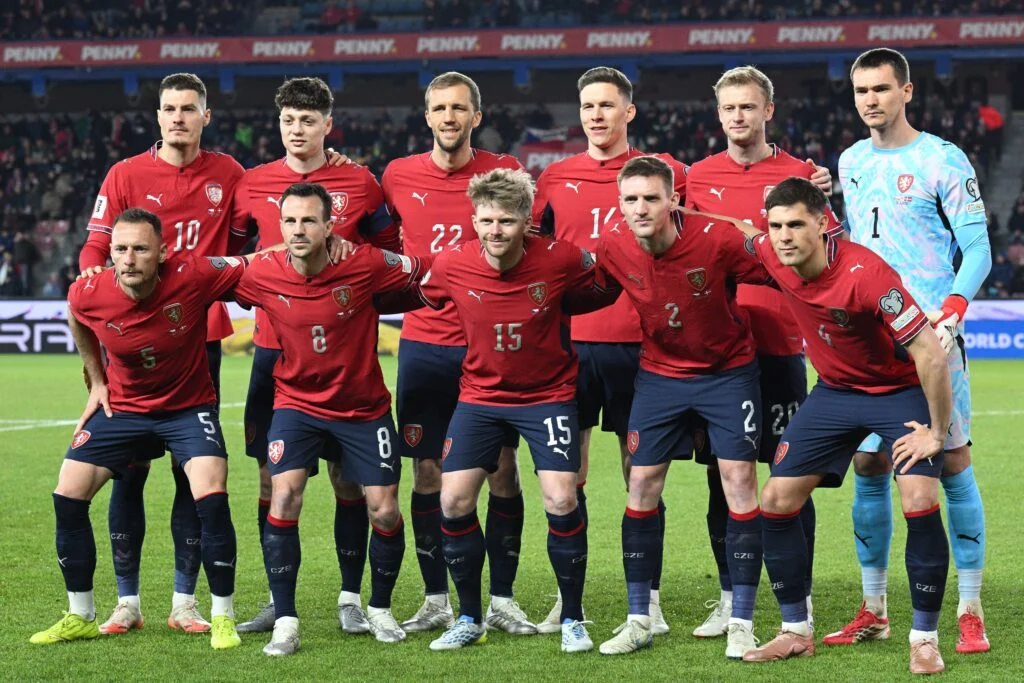
The Czech Republic's return to the World Cup for the first time since 2006 — a 20-year absence — was not elegant. Ivan Hasek's side scraped through qualification with a mixture of grit, set-piece efficiency, and moments of individual brilliance. But they are here, and they arrive with a clear identity and a genuine world-class weapon at the tip of their attack.
Patrik Schick is, unambiguously, the Czech Republic's most dangerous player. The Bayer Leverkusen striker, who finished as joint-top scorer at Euro 2020 with five goals — including that jaw-dropping long-range effort against Scotland that remains one of the great tournament moments of the decade — brings a physicality, positional intelligence, and finishing purity that places him among the best strikers in European football. In 52 appearances for the Czech national team, he has scored 25 goals. In the 2025-26 Bundesliga season, he has contributed more than 15 goals for Leverkusen, underlining that he arrives in top form. His aerial dominance and ability to hold the ball up will be a severe test for Kim Min-jae and South Korea's backline.
But Czech Republic are far more than a one-man team. Tomas Soucek, the combative West Ham United midfielder, is one of the most recognizable midfielders in the Premier League — his box-to-box energy and physical presence in duels will be critical in winning the second-ball battles that Group A fixtures at this level are decided by. Matej Kovar, the Manchester City-trained goalkeeper now at a leading European club, provides an assured presence between the posts. Adam Hlozek, recovered from injury to make the provisional squad, offers pace and technical ability as a secondary attacking option, while Pavel Sulc at Lyon adds creativity from midfield.
Their recent form has been somewhat inconsistent: a draw against Denmark (1-1), another draw against the Republic of Ireland (2-2), a heavy win over Gibraltar (6-0), a tight win over San Marino (1-0), and a surprising defeat to the Faroe Islands (2-1). The results against top-quality opposition have been underwhelming, but against physical, disciplined sides, Czech Republic's structure and set-piece threat make them genuinely difficult to break down.
One statistical fact stands out: Czech Republic have scored 11 goals in their last five matches, suggesting that when the structure holds, they have the firepower to punish opponents. Their defensive record of just five conceded in that same period adds credibility to the idea that Hasek's team will arrive at Estadio Akron with a clear tactical blueprint: defend deep, control the midfield through Soucek and his partner, and look for Schick on the counter-attack.
Tactical Breakdown: Speed vs. Physicality at Estadio Akron
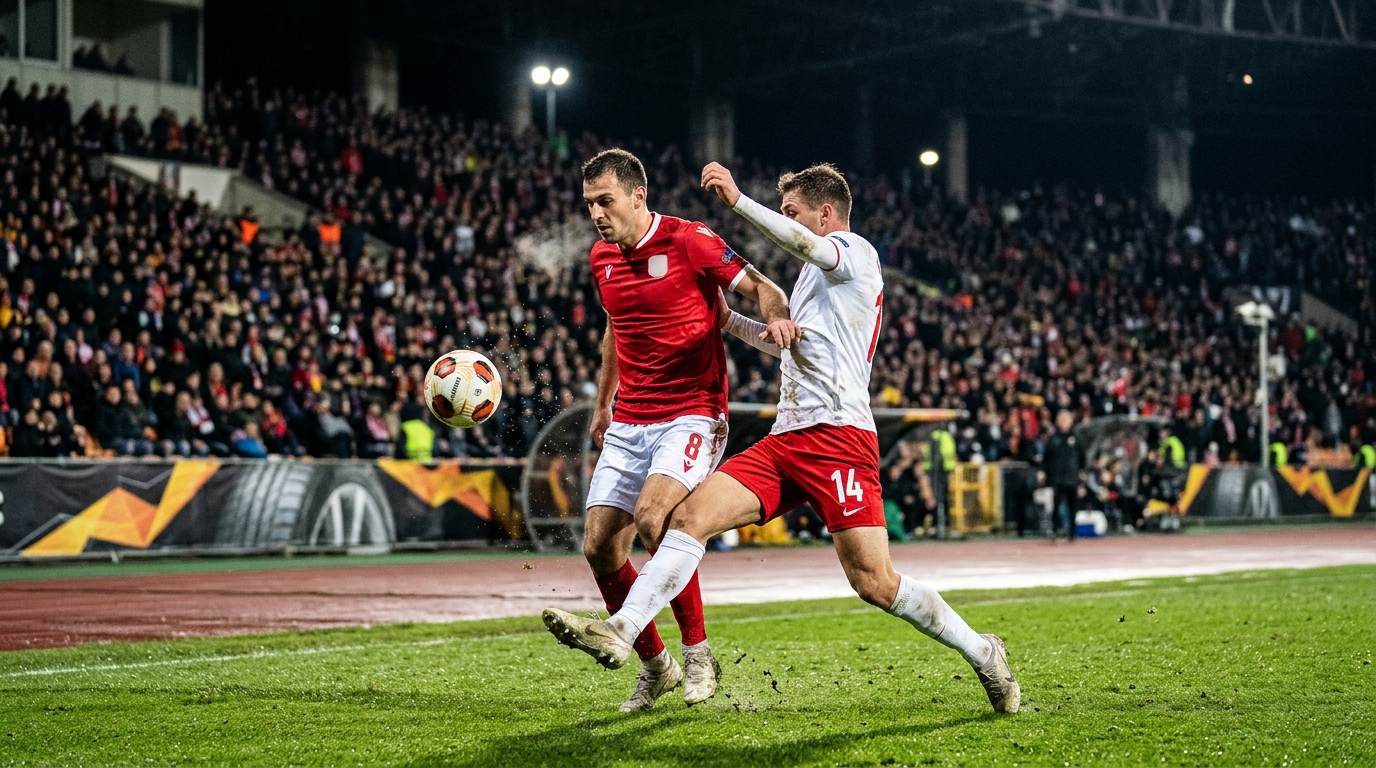
The tactical duel at the heart of this match is one of the most compelling at the entire World Cup: South Korea's blistering, fluid, transition-based attacking system against Czech Republic's organized, physically dominant, set-piece oriented approach.
Hong Myung-bo is expected to line up South Korea in a 4-2-3-1 formation, with Son operating from the left attacking midfield position — a role that gives him freedom to drift inside and combine with Lee Kang-in in the number ten position. Hwang Hee-chan will provide width and defensive work on the right. The double pivot behind them must be physical enough to protect Kim Min-jae and the backline while also winning the ball quickly to feed Son and Lee Kang-in in transition.
The key question for South Korea is simple: can they win the ball back quickly enough to hurt Czech Republic before Hasek's side can organize? Their best football in qualifying came through pressing high, forcing errors, and then exploiting space with rapid vertical passes. Against Czech Republic's physical midfield, that press will need to be perfectly calibrated — overcommit and Soucek will drive through the gaps; undercommit and Czech Republic will slow the game down and negate South Korea's speed advantage entirely.
For Czech Republic, the tactical approach is likely to be a disciplined 4-3-3 or 4-4-2 defensive block, designed to absorb South Korean pressure in the first 20-30 minutes, then build toward Schick on transition. The aerial threat at set pieces — with Schick, Soucek, and center-backs all dangerous from dead balls — will be a constant source of anxiety for South Korea's penalty box. Limiting corners and free kicks in dangerous zones will be as important as creating chances at the other end.
The critical individual battle runs through the center of the pitch: Lee Kang-in versus Tomas Soucek. If Lee Kang-in can find pockets of space between Czech Republic's midfield and defensive lines and play Son in behind, South Korea have the tools to win this game. If Soucek wins those midfield duels and denies Lee Kang-in time on the ball, Czech Republic can compress the game and play to Schick's strengths.
Head-to-Head History and Venue Details
South Korea and Czech Republic have met just once at a major tournament — a friendly in 2006 that ended 2-1 in favor of the Czechs. There is no World Cup head-to-head history between the two nations, which adds an element of tactical unpredictability to an already complex encounter. Neither side has a template to fall back on, no tactical scar tissue from previous meetings.
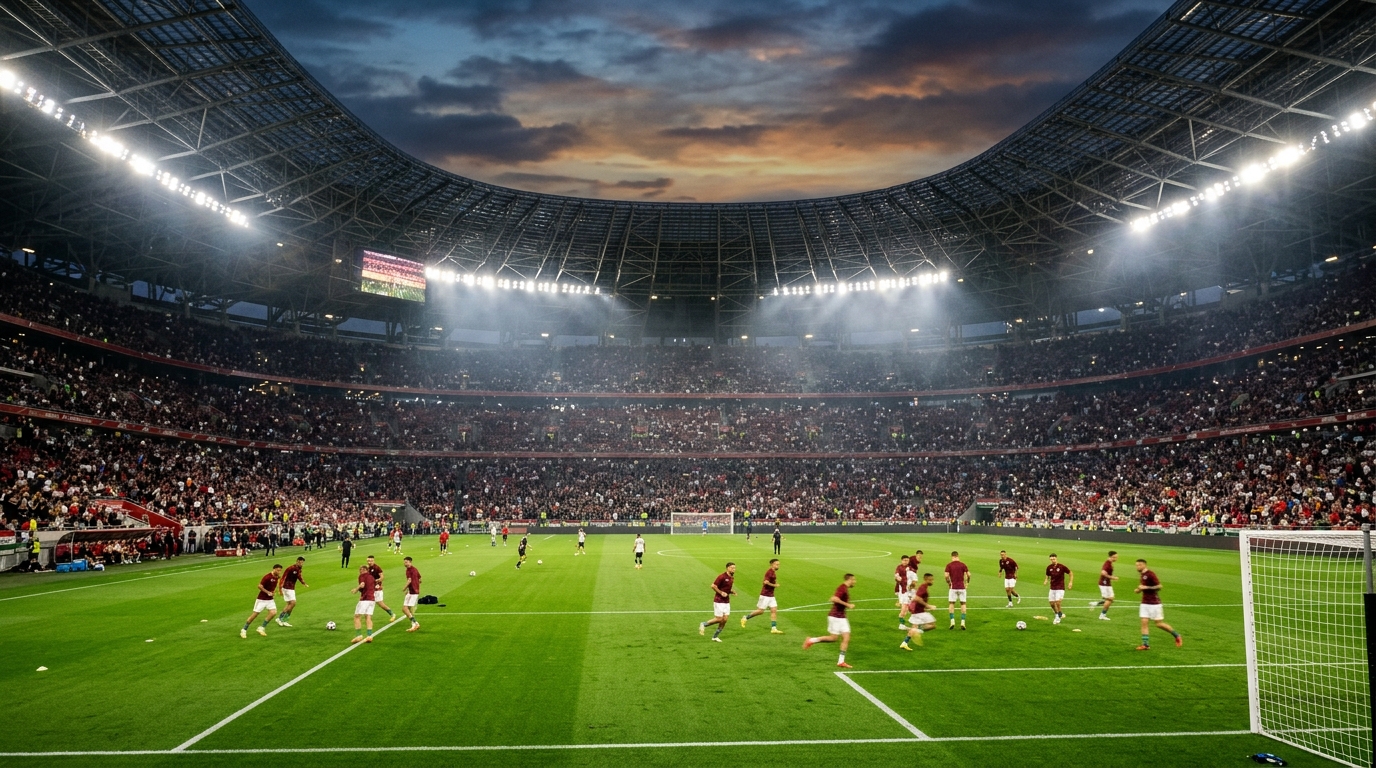
The Estadio Akron in Zapopan, Guadalajara — home of Liga MX side Chivas de Guadalajara — is a spectacular modern stadium with a capacity of approximately 46,000 and a reputation for generating intense atmospheres. At altitude (approximately 1,560 meters above sea level), the conditions will favor neither side equally, but the thinner air typically benefits technically quick sides over physically dominant ones — a marginal edge that might favor South Korea's counter-attacking game.
The match kicks off at 02:00 UTC on June 12, 2026 — early morning for European viewers, but prime time across parts of Asia and the Americas.
What Both Teams Need From This Match
For South Korea, the calculus is straightforward: a win against Czech Republic opens up the possibility of advancing with a respectable result against Mexico and a win over South Africa. A draw maintains viability but makes the remaining fixtures more fraught. A defeat would require winning both subsequent games — which, given the quality of Mexico and the unpredictability of South Africa, would be extremely difficult.
Son Heung-min's personal motivation adds another dimension. In Qatar 2022, South Korea reached the Round of 16 — knocking out Uruguay along the way in a famous group stage run — before falling to Brazil. Son, now in what is almost certainly his final World Cup, has been vocal about wanting to go further. A strong performance and result against Czech Republic would signal that intent and give the entire squad the belief required to make a deep run.
For Czech Republic, the stakes are identical but the emotional context is different. This is their first World Cup in two decades. The players who form this squad came of age watching their country struggle to qualify, watching Czech football fade from the prominence it enjoyed in the 1990s and early 2000s. Schick, Soucek, Kovar — these are players who have the quality and the experience to drag Czech Republic through a genuinely difficult group. But they need the foundation of a positive result on June 12.
Ivan Hasek knows his team's limitations. Czech Republic are unlikely to threaten Mexico for top spot. But second place is entirely achievable — and this match against South Korea is where that ambition either gains traction or stalls.
Players to Watch in This Fixture
Son Heung-min (South Korea) is the name everyone will be watching, and for good reason. At 34, he has lost none of the electric pace, two-footed finishing ability, or leadership presence that have made him a Premier League icon. His desire to create a World Cup legacy will make him the most dangerous attacker on the pitch.
Patrik Schick (Czech Republic) is his direct counterpart in narrative terms — a striker at the peak of his powers, clinical in front of goal and capable of the extraordinary. With the Czech backline relying on his ability to hold possession and bring others into play, Schick's performance will be central to Czech Republic's chances of winning this game.
Lee Kang-in (South Korea) is perhaps the most technically gifted player in the Korean squad. His ability to receive between the lines, turn defenders, and pick the decisive pass gives South Korea a creative dimension that can unlock any defense in the world when he is at his best. A big game from the PSG midfielder could be decisive.
Tomas Soucek (Czech Republic) will be the engine room of Czech Republic's midfield. His work rate, physicality, and goalscoring ability from set pieces — a remarkable skill in a central midfielder — make him a player South Korea's backline must track even from dead balls.
Kim Min-jae (South Korea) faces perhaps the toughest individual challenge: nullifying Patrik Schick. The Bayern Munich defender is among the best in Europe in aerial duels and one-on-one situations. His performance in defending Schick's movement could determine the result.
Fun Facts: Two Nations, Two Remarkable Stories
South Korea are Asia's most successful World Cup nation by a considerable margin. Their historic run at the 2002 tournament — co-hosted on home soil — remains one of the great sporting fairy tales of the modern era, with the Taegeuk Warriors reaching the semi-finals and finishing fourth. No other Asian nation has come close to matching that achievement.
Czech Republic, as a separate nation since the Velvet Divorce of 1993 (before which they competed as Czechoslovakia), have appeared at just two World Cups: France 1998 and Germany 2006. Czechoslovakia, however, were finalists in 1934 and 1962 — a proud footballing heritage that the Czech Republic is seeking to honor in Mexico this summer.
The Estadio Akron is also known colloquially as "the Volcanic Stadium" due to its dramatic architectural design inspired by the volcanic landscape of western Mexico — a fitting arena for a match with this much heat and consequence.
Prediction and AI Model Insights
A panel of 10 leading AI models analyzed this fixture for TuringStats, and the consensus is striking in its unanimity: nine of the ten models predict a 1-1 draw, with only one (Grok 4.3) backing South Korea for a 2-1 win. The mean predicted score is 1-1, with 56% mean confidence — classified as a Medium confidence band.
The models collectively forecast an xG (expected goals) of 1.10 for South Korea and 1.00 for Czech Republic — a marginal lean toward the home-leaning side, but one consistent with an essentially balanced contest. The draw market commands an implied probability of approximately 90% from the AI panel, compared to 10% for a South Korea win and 0% for Czech Republic.
The models' reasoning clusters around three common themes: the neutrality of the Estadio Akron venue (which reduces South Korea's nominal home advantage), the evenly matched quality of both squads, and the well-documented tendency of World Cup group openers — particularly between two teams desperate to avoid defeat — to compress into low-scoring, cautious affairs.
GPT-4o (60% confidence) notes that "both teams have similar strengths; unfamiliar venue likely to balance play." Claude Sonnet (38% confidence) observes that the fixture is an "evenly matched Group Stage opener" where "Czech Republic's European solidity makes a cautious, shared-points opener most plausible." Mistral Large (60%) highlights the lack of any head-to-head World Cup history as a factor pointing toward a tight, low-scoring match. Only Grok 4.3 breaks from the consensus, predicting a South Korea win driven by Son Heung-min's attacking threat.
It is worth treating these projections as informative context rather than certainty. At 56% mean confidence, this is categorized as a Medium band prediction — meaning real uncertainty exists. World Cup group openers have a long history of confounding expectations, and the presence of Son Heung-min at his final tournament introduces a wildcard element that statistical models struggle to fully quantify.
The most important signal from the AI panel: this will be a tight, competitive fixture decided by fine margins — exactly the kind of match where a single moment of brilliance from Son Heung-min or Patrik Schick could prove decisive.