Football
Can Messi Escape the Shadow of Maradona — Or Eclipse It Entirely?
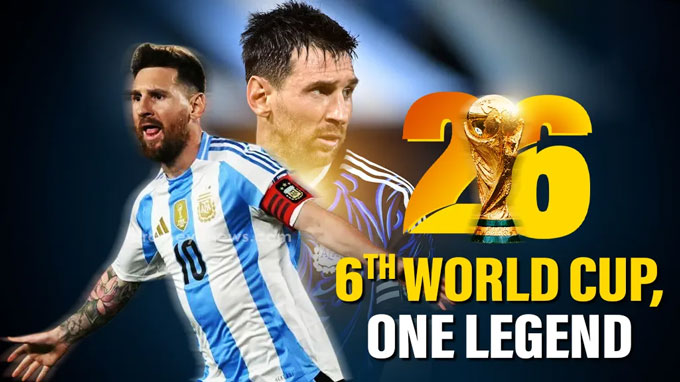
As Lionel Messi heads into World Cup 2026 at age 38, the footballing world is asking a question that has haunted Argentina for decades: can the greatest player of his generation finally step out of Diego Maradona's enormous shadow — or even surpass it? With a second World Cup title on the line, the answer may rewrite football history forever.
Lionel Messi's journey at the 2022 FIFA World Cup in Qatar felt like the closing chapter of a perfectly scripted novel. It was an ending almost too cinematic to be real — the aging genius, the desperate nation, the golden trophy finally within reach. And yet, for all its drama, Messi's life story has long been framed against the turbulent, operatic existence of Diego Armando Maradona. Place the two side by side, and Messi's narrative can seem, at first glance, almost too clean, too linear, too devoid of the chaos that made Maradona a myth in the first place.
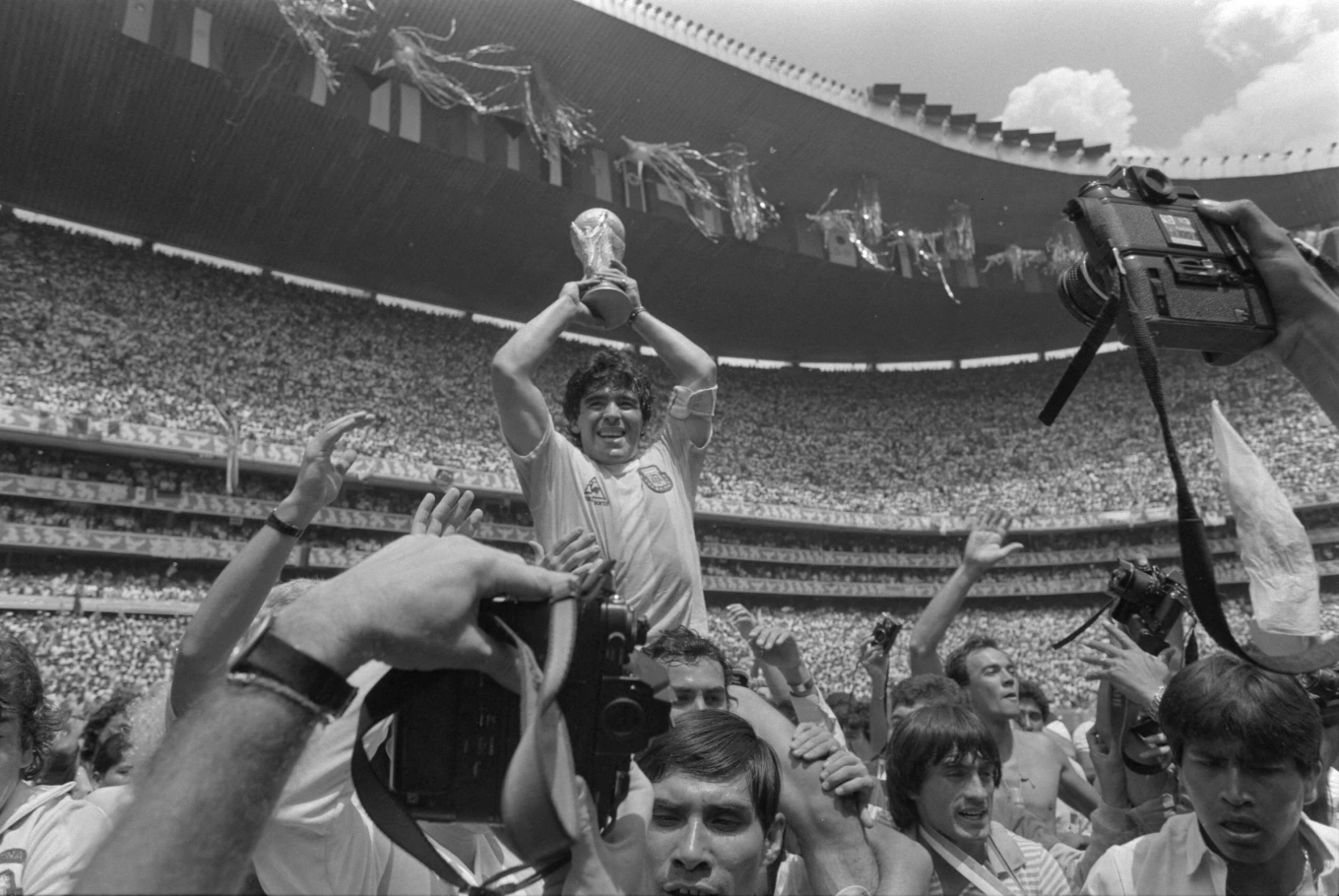
Maradona's life was a Shakespearean tragedy wrapped in a football jersey. Injuries, addiction, bans from the sport, brushes with organized crime, the heights of genius, and the depths of self-destruction — his story was never just about football. It was about human fallibility at its most spectacular. The "Golden Boy" from Villa Fiorito did not just play football; he lived it with reckless, intoxicating abandon.
And then there is Messi: a boy touched by God, maintaining elite performance for two straight decades, accumulating trophy after trophy, record after record. His story, on paper, reads more like a spreadsheet of excellence than a soap opera. No scandals, no guns, no fake urine samples to dodge drug tests — just relentless, almost supernatural excellence.
The Qatar Tournament: When Messi Finally Showed His Fangs
But do not mistake consistency for blandness. Qatar 2022 delivered the dramatic spark that even the harshest Messi skeptics could not deny. It was at this tournament that the world finally saw a different Messi — not the quiet, introverted maestro who preferred to let his feet do the talking, but a warrior, a captain, a man visibly hungry for something that no Ballon d'Or or Champions League medal could provide.
His transformation had actually begun a year earlier, when Argentina claimed the Copa America title on Brazilian soil — the most psychologically loaded of all possible venues. It was the first major international trophy of Messi's senior career, and it seemed to unlock something within him. He began rallying teammates in dressing rooms, raising his voice, demanding more. The quiet boy from Rosario had grown into something Argentina had been desperately waiting for: a true leader on the world stage.
Then came the moment that crystallized it all. After Argentina's nail-biting quarterfinal victory over the Netherlands, a visibly heated Messi turned to Dutch striker Wout Weghorst during a live television interview and delivered the now-legendary line: "Que mira, bobo?" — roughly translated as "What are you looking at, idiot?" It was petty, perhaps, but in its pettiness lay its power. The crowd loved it. Argentina loved it. The internet lost its collective mind. For a man known for his quiet dignity, this flash of raw human emotion was seen not as a lapse but as a liberation — proof that beneath the genius lay a competitor with fire in his belly.
The Weight of Every Match: Messi's Mortality on Display
Throughout the knockout stages in Qatar, each match carried the unmistakable weight of finality. With every tackle absorbed, every sprint made, every genius moment conjured from nothing, the awareness loomed large: this is a man in his late thirties, and football does not grant many more chances like this. The combination of brilliance and visible frailty — not weakness, but the natural creeping of age onto even the greatest physique — made every Messi touch feel precious in a way that transcended ordinary football.
There was also a beautiful circularity to the whole story. Qatar, as a footballing destination, was not entirely foreign to Argentina's national identity. It was there, in 1995, that Argentina launched what would become the most dominant era in youth football history — five U20 World Cup titles in 12 years under coaches Jose Pekerman and Hugo Tocalli. The very people now steering Argentina's senior team were shaped by that era. Current head coach Lionel Scaloni was a squad member of the 1995 generation. His assistants, Walter Samuel and Pablo Aimar, were also products of that golden youth movement. Messi himself was part of the 2007 U20 championship winning squad, alongside Papu Gomez; Angel Di Maria had lifted the same trophy two years earlier, in 2005.
The spirit planted by Pekerman and Tocalli — an ethos of technical brilliance, collective identity, and relentless ambition — ran through this group like a genetic code. There was an undercurrent of fear, too: that the most sustained period of success in the history of youth international football would ultimately produce nothing at the senior level. What had started in Qatar all those years ago, then, came full circle in the most glorious fashion imaginable.
The Perfect Ending That Never Was — And Why That Matters
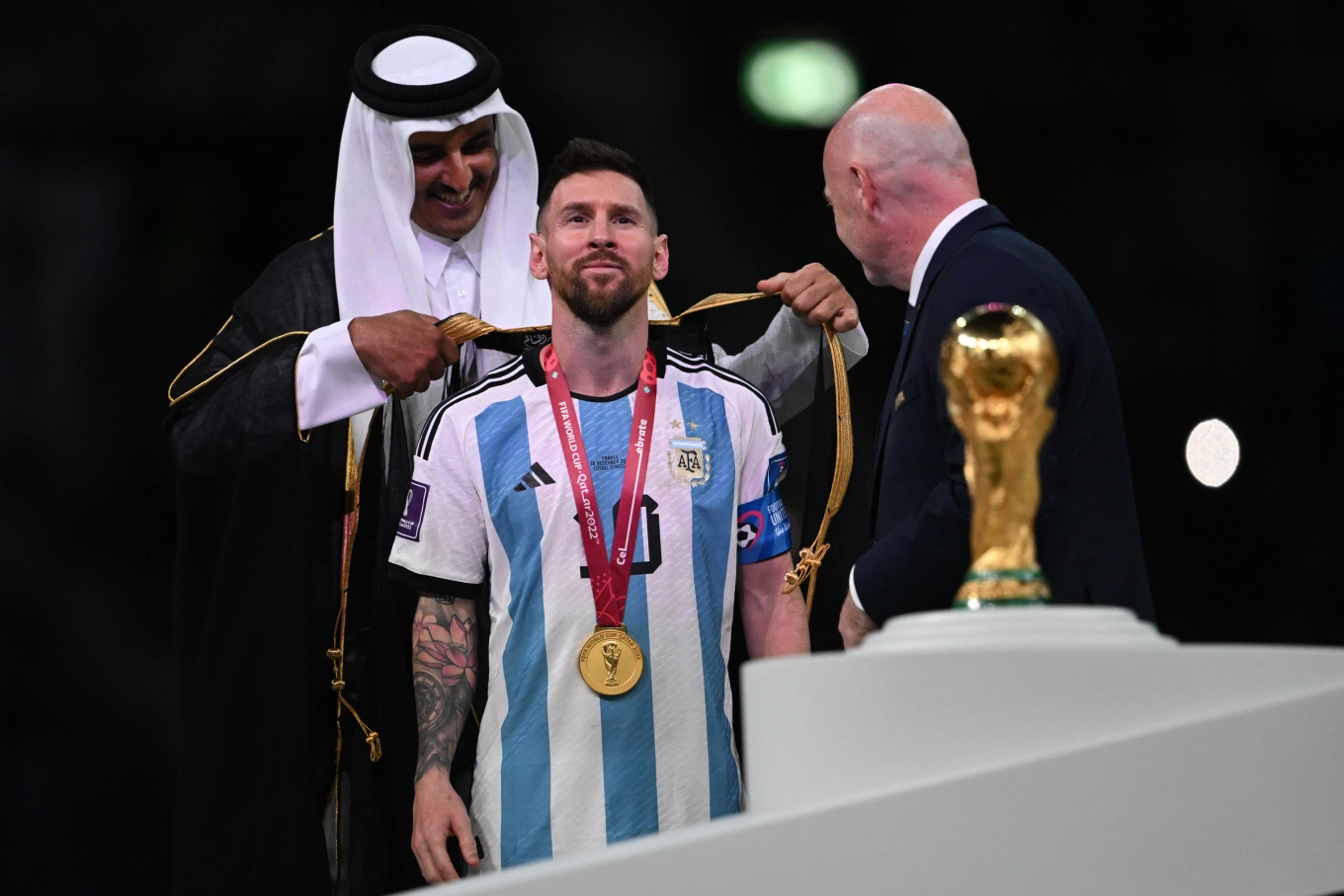
Here is the moment where Messi departs from the mythological script. After lifting the World Cup trophy on the night of December 18, 2022, at the Lusail Stadium, a Qatari official draped the traditional Bisht robe over his shoulders before he received the trophy. Had Messi been the type to lean into narrative perfection, he might have done what legends do: accept the moment as the definitive full stop on a career, parade around the pitch in pure triumph, be hoisted on his teammates' shoulders in conscious echo of Maradona's iconic image atop the Azteca in 1986. That would have been a perfect film ending. Roll credits.
But Messi did not retire from international football. He kept going. He chose to return. And in doing so, he complicated and deepened his own story in ways that a clean retirement never could have. His capacity for "one last jobs" rivals that of any aging Hollywood action hero — except Messi keeps delivering.
Now, as the 2026 World Cup in North America approaches, Messi is set to turn 39 during the tournament itself. He will be the oldest Argentine ever to appear at a World Cup, though he ranks only in the top ten oldest players at this particular edition overall. The risk is real and undeniable: he could exit 2026 in defeat, his legacy tinged with the kind of sad, over-extended farewell that diminishes rather than adds to a great career — a reminder not of triumph but of ambition pushing past its rightful end.
Can Glory Beckon One More Time?
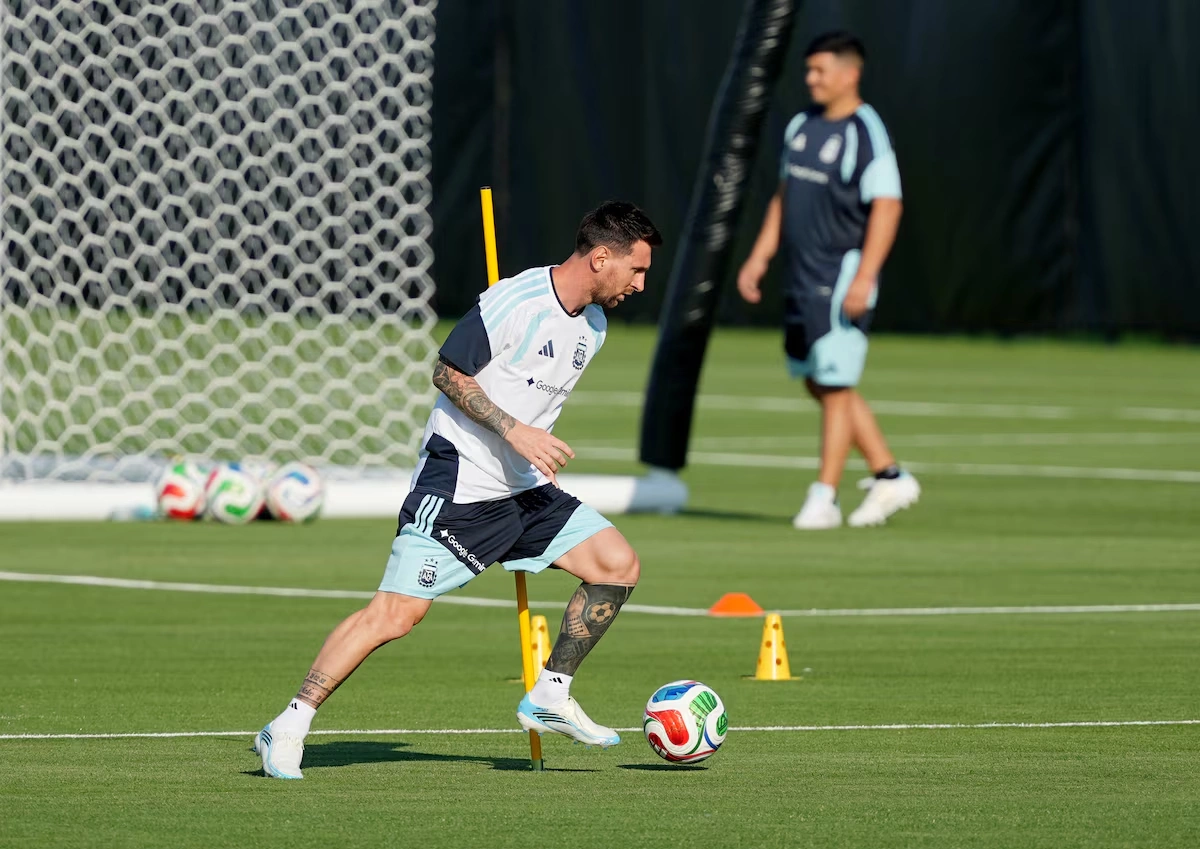
But let us not surrender to pessimism so easily — because the other possibility is just as real: Messi wins again. A second World Cup title. That prospect alone is enough to make even the most rational football analyst stop and pause. Most observers would argue that Messi has nothing left to prove. The GOAT debate, which consumed football for more than a decade, has — in the minds of most — been settled. He has done everything the sport can ask of a player. By any logical standard, he should be resting, perhaps transitioning into management (something he has repeatedly said he has no interest in), or simply enjoying the quiet pleasures of life after football.
But elite athletes are rarely rational. What separates the truly great from the merely excellent is precisely that irrational, almost delusional belief in their own ability to keep winning. And Messi — this most enigmatic of men — may genuinely believe that he can inspire Argentina to another world title. If that belief is real, it changes everything.
There is also the enduring weight of Maradona's ghost. For years, Messi was taunted, subtly and not so subtly, with the same accusation: yes, you have done extraordinary things with Barcelona, but you have never done what Maradona did — you have never brought Argentina the World Cup. That particular jab lost most of its venom after December 18, 2022. But there is a next level to this argument, one that could only be unlocked by winning again in 2026. Imagine the asado conversations across Argentina — families gathered around the barbecue, cold beer in hand — reluctantly conceding that as great as Diego was, he only did it once.
The Physical Reality: How Does Messi Actually Look at 38?
All of this begs the most uncomfortable question: can Messi's body still do what his mind demands of it? In Qatar, the signs of aging were already visible — and in some ways, fascinating. Messi spent increasing amounts of time walking, conserving energy on the periphery of play, disappearing from certain passages of the game, then reappearing with a moment of devastating precision that changed everything. It was a different kind of presence, but a presence nonetheless.
The architecture of the team adapted to protect him. Rodrigo De Paul operated almost as a human engine room specifically designed to do the running that Messi could not — to win the ball, to press, to carry, to make the space that Messi then exploited. The relationship worked so well that Inter Miami later signed De Paul for precisely the same role in MLS. Similarly, Julian Alvarez and Enzo Fernandez ran themselves into the ground in every match, covering the ground and the distances that Messi was no longer expected to cover.
This is the key insight: once a coaching staff fully accepts that a player can no longer press consistently or track back with intensity, that player's declining athleticism becomes a manageable — even exploitable — factor rather than a liability. A Messi who walks in the shadows becomes a constant threat precisely because defenders must track him at all times. He does not disrupt the team's rhythm when he operates as the focal point of a system designed around his specific gifts.
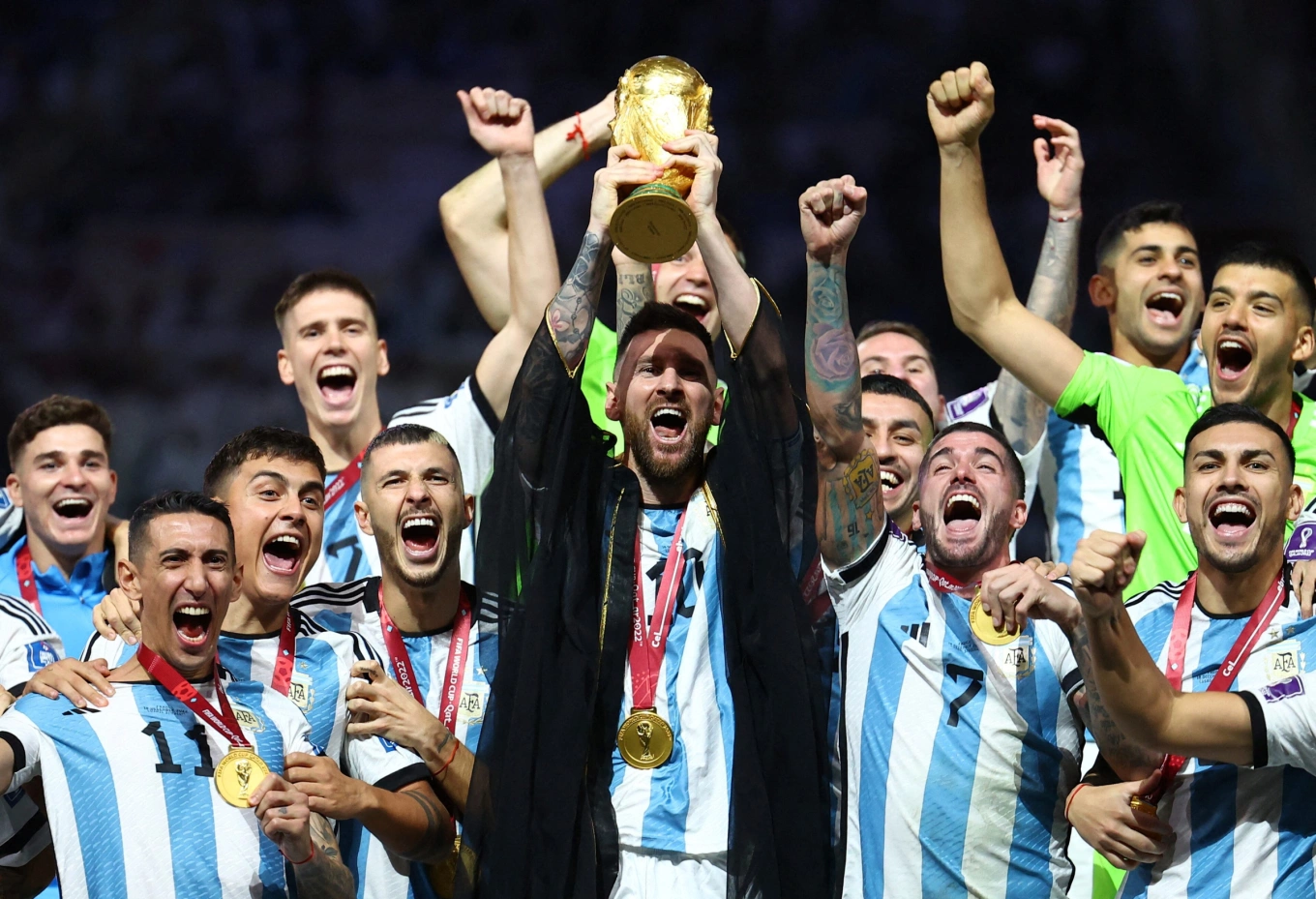
The question of competition level is also pertinent. Before Qatar, Messi was still playing regularly in European football's elite ecosystem — recording appearances in Ligue 1 and the Champions League in the first half of the 2022-23 season. By contrast, heading into the 2026 World Cup, his club football has been in MLS with Inter Miami and CONCACAF competition. The numbers look broadly similar in terms of games played, but the quality of opposition is not comparable to what the French league, let alone the Champions League, offers.
That said, Messi's scoring and assist output for Argentina has remained consistent across the most recent Copa America, the qualifying campaign, and subsequent friendlies. His numbers for the national team have not collapsed. Whatever he has lost in athleticism, he seems to have retained in footballing intelligence, timing, and finishing.
The Haunting Fear: Becoming a Pale Imitation
The greatest risk Messi faces is not defeat. Defeat, in football, is survivable — even noble. The greatest risk is irrelevance. The nightmare scenario is one in which Messi becomes a diminished version of himself on the world stage; a ghost of a genius, present but unable to influence, a walking reminder of past greatness rather than a generator of new moments.
This is the psychological trap that ensnares all great athletes who stay too long. The fear of meaninglessness, of becoming a cautionary tale rather than a continuing legend, of allowing the last image the world holds of you to be one of struggle rather than mastery. Every great sportsperson who has wrestled with the question of retirement knows this fear intimately. It is the shadow that falls even on the sunniest of legacies.
And yet, there is an equally valid argument on the other side. Messi is not a typical athlete. The rules that apply to most players — the linear decline, the inevitable falling off — have never applied to him in the way they should. He has defied physicality for his entire career, compensating for what he lacks in height and power with an almost algorithmic reading of space and time. If anyone can still be dangerous at 39, it is him.
What Lies Ahead for the World's Greatest?
Messi remains, at his core, a deeply private and enigmatic man. His motivations are not easy to read. After hanging up his boots — whenever that day comes — his path forward is genuinely unclear. Does he want to coach? He has said repeatedly that he does not. Commentary? Perhaps. Or something entirely different, something that the quiet man from Rosario has not yet revealed to a world that has been watching his every move for two decades.
If his post-football life turns out to consist largely of commercial work and endorsement tours, then it is entirely understandable that he might be reluctant to face the finality of retirement. But that is an outsider's logic, and Messi has never lived by outsider logic.
Perhaps the most honest conclusion is this: the standards of ordinary human rationality have never quite applied to Lionel Messi, and it would be a mistake to start applying them now. Qatar 2022 felt like the perfect ending. But history, and Messi himself, seem to be suggesting that it was only the end of the first act. The second act — at the 2026 World Cup on North American soil — may yet prove to be even more extraordinary.
And somewhere, impossibly, Messi might actually win it again. The shadow of Maradona would not just be escaped. It would be eclipsed.