World Cup 2026
World Cup 2026 Group F Preview: The Sweden Enigma — Stars Without a System
Group F at the 2026 FIFA World Cup is one of the tournament's most intriguing tactical puzzles. The Netherlands arrive as European heavyweights. Japan bring relentless discipline and giant-killing pedigree. Sweden possess a collective transfer value that rivals the very best nations on earth — yet remain a deeply uncertain proposition as a team. Tunisia complete the group as the Carthage Eagles seek a historic first knockout-stage appearance. Here is TuringStats' complete Group F preview.
Group F at the 2026 FIFA World Cup: A Battle of Contrasting Identities
On paper, Group F at the 2026 FIFA World Cup looks like a straightforward exercise in separating the established from the emerging. The Netherlands have 11 World Cup appearances on their record and three final appearances to their name. Japan are Asia's most consistent tournament performers. Sweden carry a squad whose individual market value is staggering. Tunisia arrive as the group's clear underdogs but have shown in qualifying what a cohesive defensive unit can achieve.
In reality, Group F offers something far more nuanced. The uncertainty surrounding Sweden — a team of extraordinary individual talent that has repeatedly failed to function as a coherent collective — makes this group genuinely unpredictable in a way that the pure talent rankings would not suggest. And Japan, fresh from delivering seismic World Cup upsets against Germany and Spain in 2022, arrive with the quiet confidence of a side that understands exactly how to disrupt stronger opponents. Here is TuringStats' in-depth analysis of every team in Group F.
The Netherlands — History, Pedigree, and the Pressure of Expectation
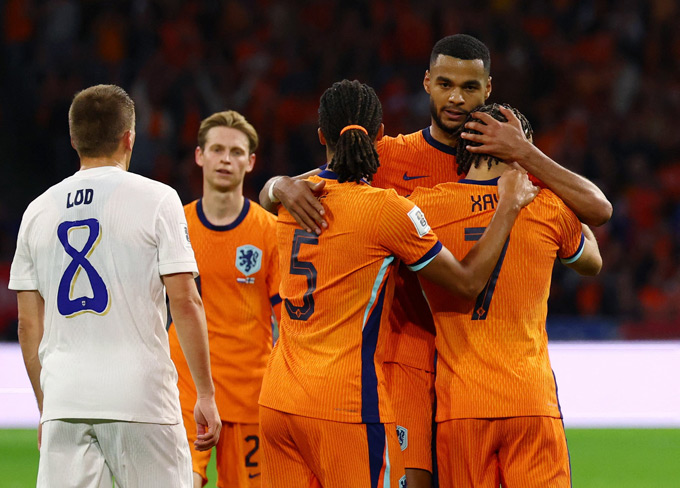
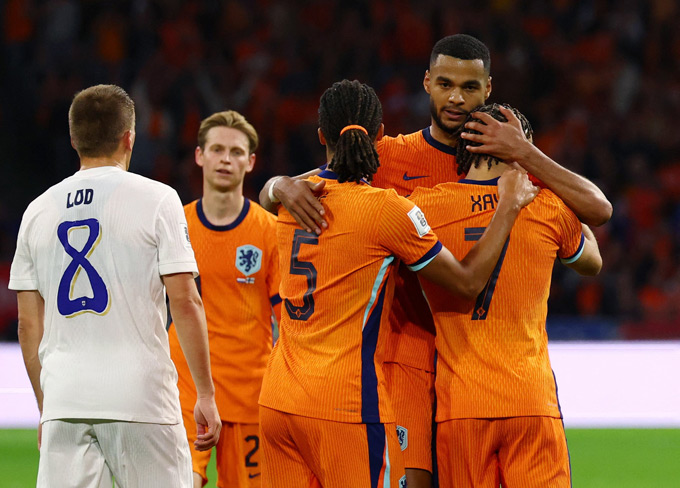
The Netherlands are one of international football's great tragic heroes. Eleven World Cup participations, three final appearances — in 1974, 1978, and 2010 — and yet the golden trophy has never been lifted by Dutch hands. It is a record that speaks to consistent excellence at the highest level and an almost magnetic ability to get tantalizingly close without completing the journey. At the 2022 World Cup in Qatar, the Oranje were eliminated in the quarter-finals by eventual champions Argentina — in a penalty shootout that felt, like so many Dutch World Cup exits, simultaneously agonizing and somehow predestined.
Under Ronald Koeman, the Netherlands head into 2026 with a blend of experienced campaigners and emerging quality. The squad is well-organized defensively, structured in midfield, and capable of producing moments of genuine attacking quality when their system clicks. Koeman's pragmatic approach — building from a solid foundation and relying on collective shape rather than individual flair — has given the Netherlands a reliability that their more aesthetically ambitious predecessors sometimes lacked.
The concern heading into Group F is that this is not a straightforward group. Japan represent a genuine threat to Dutch ambitions of topping the table, and Sweden — despite their collective inconsistency — possess enough individual quality in their forward line to hurt any defense in the world on a good day. Koeman will need to ensure his team approaches every fixture with the required intensity, because in 2026, complacency against either Japan or Sweden could prove costly.
The Netherlands have never failed to progress from the group stage in any World Cup they have participated in — a remarkable statistic that reflects not just their quality but their professionalism in navigating the group phase. That record should continue in Group F, but it will not be without challenge.
Qualification probability: 85%
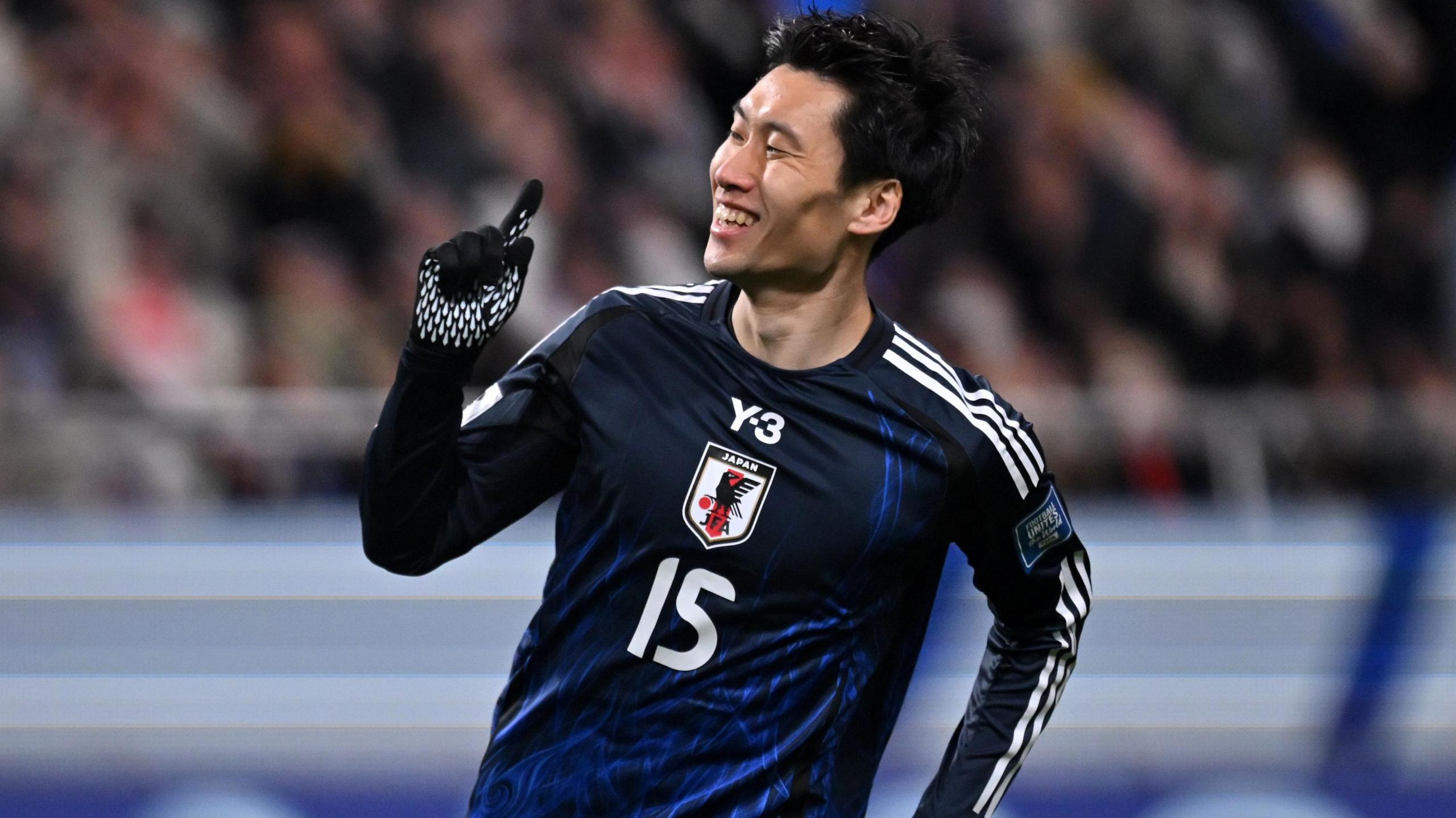
Japan — The Blue Samurai Who Fear No One
Japan's qualification for the 2026 FIFA World Cup was not just timely — it was historic in context. The Blue Samurai became the first team outside of the host nations to secure their place at the tournament when they clinched their spot in March 2025. It was a fitting milestone for a nation that has built one of international football's most disciplined and technically sophisticated programs over the past three decades.
Eight consecutive World Cup appearances, spanning from France 1998 through to 2026, have cemented Japan as Asia's most consistent presence on the global stage. But it is the quality of their performances — not just the quantity — that has drawn the world's attention in recent years. The 2022 World Cup in Qatar was a watershed moment: Japan's victories over Germany and Spain in the group stage, accomplished through a meticulously prepared second-half tactical shift that overwhelmed both European giants, announced this generation of Japanese footballers as something genuinely special.
The foundation of Japan's success lies in the extraordinary European club pedigree that the current generation carries. Players from the Bundesliga, Serie A, Ligue 1, and the Premier League form the backbone of a squad that has absorbed the tactical and technical demands of elite club football and brought those standards back to the national team. The result is a side that presses with extraordinary intensity, defends with collective discipline, and understands precisely when and how to transition from defensive solidity into dangerous attacking sequences.
Japan's best result at a World Cup remains the Round of 16 — achieved in 2002, 2010, 2018, and 2022 — but there is a strong sense among football analysts that this generation has the tools to break that ceiling. The group stage, at least, presents a winnable path: the fixture against Sweden is arguably Japan's best opportunity to claim a high-profile scalp, while the Netherlands game will test their ability to compete against European heavyweights for a full 90 minutes.
Japan are the Netherlands' most dangerous rival for first place in Group F, and potentially the most dangerous opponent any team in the group faces. Underestimate them at your peril.
Qualification probability: 78%
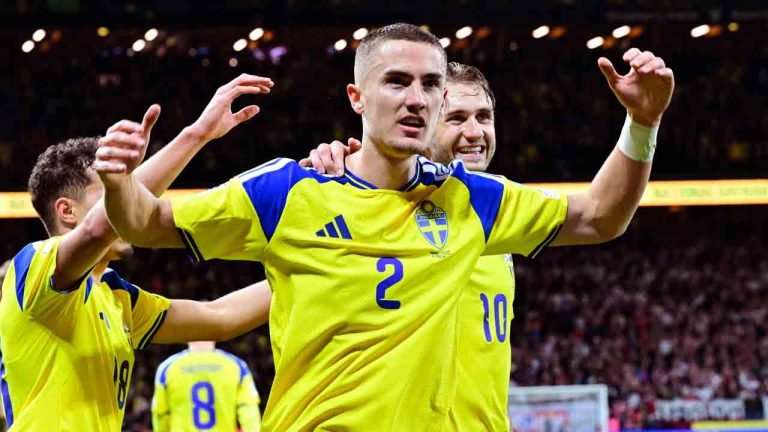
Sweden — The Most Fascinating Paradox in the Entire Tournament
No team at the 2026 FIFA World Cup generates more debate, more confusion, and more football-philosophical interest than Sweden. The Blågult arrived at this tournament through the most chaotic qualification campaign imaginable — finishing bottom of their UEFA qualifying group with just 2 points from 8 games, recording zero wins, 2 draws, and 6 defeats — before surviving a playoff against Poland to claim their World Cup berth by the narrowest possible margin.
And yet. Look at the individual players in Sweden's squad, and the transfer fees attached to their names, and the clubs they represent, and you will find a collective whose raw talent inventory rivals some of the strongest nations in this tournament. Not just in Europe — globally.
Alexander Isak, the striker who made the move from Newcastle United to Liverpool in a deal worth a reported £120 million, is one of the most complete centre-forwards in world football: technically refined, lethal in front of goal, physically imposing, and gifted with the movement and intelligence that makes him almost impossible to defend one-on-one. Viktor Gyökeres, the man who joined Arsenal from Sporting CP for a reported £60 million after one of the most prolific single-season goalscoring performances in European football's recent memory, brings relentless pressing energy, physical dominance, and a finishing efficiency that borders on clinical. Anthony Elanga, who moved from Nottingham Forest to Newcastle United in a £55 million deal, provides pace, directness, and the ability to carry the ball at pace in wide areas.
That is over £235 million worth of attacking talent in a single squad — and we have not even begun to catalogue the quality elsewhere in the team. On aggregate transfer value alone, Sweden would rank alongside Portugal, France, and England as one of the most expensively assembled squads in the entire tournament.
So why did they finish bottom of their qualifying group? Why do they arrive at this World Cup as one of the competition's least predictable teams rather than one of its favorites?
The answer lies in the fundamental challenge that head coach Graham Potter faces: converting a collection of elite individual footballers into a functioning collective. Sweden's qualifying campaign revealed that the current generation of players has not yet discovered how to subordinate individual brilliance to collective purpose. The pressing system broke down. Defensive organization was inconsistent. And the attacking talent — brilliant in isolation at club level — could not produce the same output in the context of an international system still finding its shape.
Potter's task heading into the 2026 World Cup is to solve a puzzle that has no simple answer: how do you build a team identity around players who are all accustomed to being their club's primary attacking threat? How do you integrate three world-class forwards whose positional requirements overlap significantly? How do you create defensive discipline in a squad whose mentality is naturally oriented towards attack?
If Potter can find the answers — if Sweden's World Cup preparation has genuinely yielded the collective coherence that their qualifying campaign so conspicuously lacked — then this is a team capable of beating anyone in the tournament. Their attacking firepower, at full capacity, is as threatening as anything in the competition. If the system holds, Sweden could be one of 2026's biggest stories.
If it does not — if the same collective fragility that characterized their qualifying campaign surfaces again at tournament level — Sweden will be the group's most expensive also-rans. The margin between those two outcomes is razor thin, and it is the central question that will define Group F.
Qualification probability: 48%
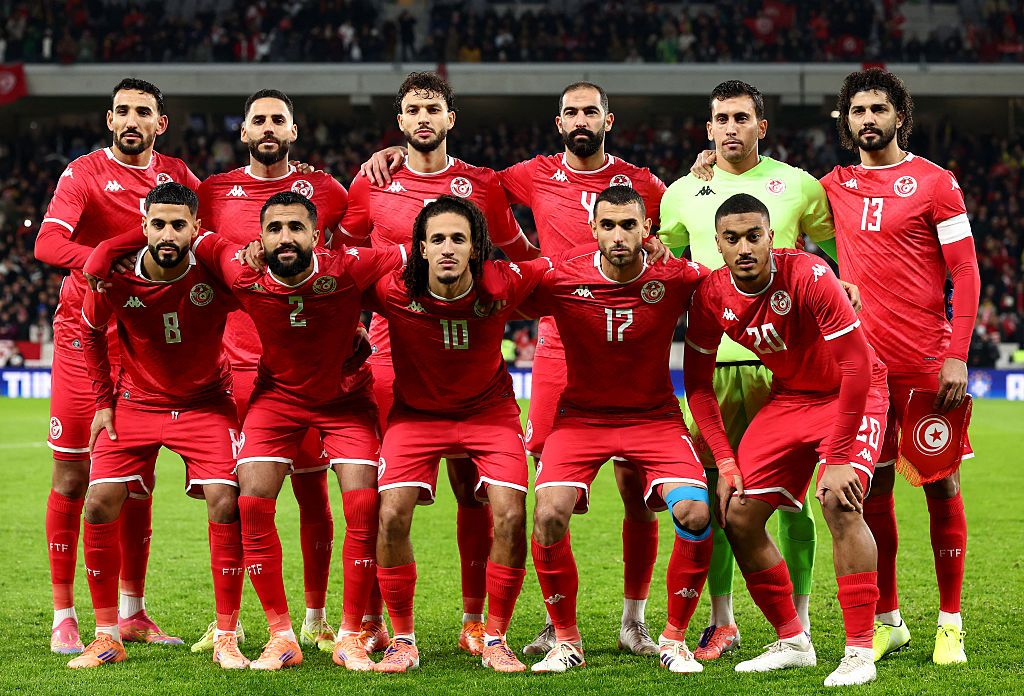
Tunisia — The Carthage Eagles Refuse to Be Merely a Footnote
Tunisia's road to the 2026 World Cup was, in purely statistical terms, one of the most impressive qualifying campaigns of any nation in any confederation. The Carthage Eagles concluded their African qualifying group with a record of 9 wins and 1 draw from 10 games, scoring 22 goals and — most remarkably — conceding absolutely none. That level of defensive discipline across ten matches, against the varied quality of CONCACAF competition, reflects a team that has been expertly organized and psychologically prepared by their coaching staff.
Tunisia share that perfect defensive qualifying record with Ivory Coast — a distinction that underscores just how seriously this group stage qualification was taken and how tightly the squad has been drilled. It is a foundation that demands respect from their Group F opponents, even if the talent gap between Tunisia and the three European/Asian sides above them in the global rankings is significant.
Historically, Tunisia have participated in seven World Cups — 1978, 1998, 2002, 2006, 2018, 2022, and now 2026 — without ever advancing beyond the group stage. That is a record of consistent presence at the highest level combined with a persistent inability to make the decisive breakthrough. The Carthage Eagles have been competitive in most of their World Cup group campaigns; they have simply been unable to convert performances into the points needed to progress.
In Group F, Tunisia face their most challenging draw to date. The Netherlands and Japan are both proven knockout-round competitors with significantly superior individual quality. Sweden, whatever their collective uncertainties, possess forwards who can exploit defensive errors at the highest level. Tunisia's path to the knockout stage would require at minimum one significant upset — against either the Netherlands or Sweden — combined with flawless management of the moments they are expected to handle.
What Tunisia can guarantee is organization, defensive solidity, and the kind of tactical cohesion that makes them difficult to break down. In the expanded 48-team format, even a best third-place finish carries mathematical hope. The Carthage Eagles will fight for every point and every minute.
Qualification probability: 15%
The Decisive Fixture: Netherlands vs. Japan
The clash between the Netherlands and Japan is, without question, the headline fixture of Group F. In 2022, Japan demonstrated conclusively that they are entirely capable of defeating major European nations at World Cup level. The Netherlands, simultaneously, carry the confidence of a team that has never failed to progress from the group stage. When these two sides meet in 2026, both will understand the implications of the result: a victory for either team likely secures top spot in the group and a favorable bracket for the knockout rounds.
The tactical contest between Koeman's structured Dutch system and Japan's high-press, counter-attack approach will be fascinating. Japan's ability to sit deep, absorb pressure, and then explode in transition is the specific tactical profile most likely to disrupt a Dutch side that prefers to control possession and manage the tempo of games. How Koeman prepares his team for Japan's second-half shifts — which famously unlocked Germany and Spain in 2022 — could be the difference between first and second place.
The Sweden vs. Japan fixture deserves equal attention. Japan will be well aware that Sweden's collective inconsistency makes this one of the more winnable games in the group. A disciplined defensive performance followed by the efficient deployment of Japan's counter-attacking quality could yield a crucial three points.
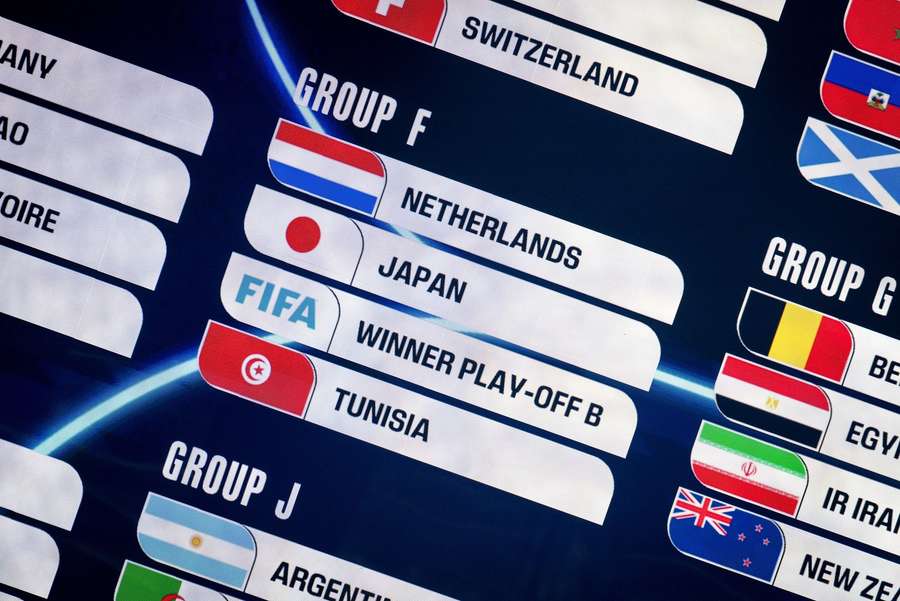
TuringStats Group F Predicted Final Standings
Based on our comprehensive analysis, here is how we project Group F to finish:
1. Netherlands — History, squad quality, and tactical organization make the Dutch the narrow favorites for first place. Their record of never failing to advance from a World Cup group stage is the most compelling data point of all. But the margin over Japan is genuinely small.
2. Japan — The Blue Samurai are the group's most consistent performers relative to expectation. Their ability to execute tactical game plans at the highest level, combined with their individual European club quality, makes second place highly probable. A first-place finish is entirely within reach if they beat the Netherlands.
3. Sweden — The group's great unknown. Potter's ability to convert individual brilliance into collective excellence will determine everything. If Sweden click, they could finish anywhere from first to fourth. If they fragment, as they did in qualifying, the Netherlands and Japan will leave them behind. A third-place finish in the expanded format may still offer a path forward.
4. Tunisia — Disciplined, organized, and defensively excellent. But the quality gap against the top three is ultimately too pronounced for a team without genuine knockout-stage pedigree. The Carthage Eagles can be proud of their flawless qualifying record and will compete until the final whistle of every game.
The Sweden Question: Football's Most Expensive Gamble
Group F will ultimately be remembered for the answer it provides to one of football's most fascinating questions: can individual talent alone — talent of extraordinary and well-documented quality — overcome the absence of collective identity and tactical coherence at the World Cup level?
Sweden's three group games will be watched as closely by football theorists as by fans. If Isak, Gyökeres, and Elanga fire in unison within a system that actually functions defensively, Sweden will be a genuinely dangerous team in the knockout rounds. If the collective fragility that defined their qualifying campaign reasserts itself, one of football's most expensive squads will have produced one of its greatest anticlimax stories.
Either way, Group F promises to be one of the 2026 World Cup's most watchable sections — a study in contrasting football philosophies, in the limits and possibilities of individual talent, and in the eternal World Cup question: on the day, does the team that plays as a team always beat the collection of stars that does not?