WORLD CUP 2026
Uruguay vs Spain: World Cup 2026 Group H Showdown — The Clash That Decides Everything
On June 27, 2026, at the iconic Estadio Akron in Zapopan, Mexico, two of football's most storied nations — Uruguay and Spain — meet in a winner-takes-all Group H finale that could define both teams' paths through the 2026 FIFA World Cup. Bielsa's battle-hardened Celeste against De la Fuente's technically supreme La Roja: this is the match football fans have been waiting for.
The date is June 27, 2026. The venue is Estadio Akron in Zapopan, Mexico. The stakes could not be higher. When Uruguay and Spain take to the pitch for the final round of 2026 FIFA World Cup Group H, they will not merely be playing for points — they will be playing for supremacy, momentum, and the psychological high ground heading into what both nations genuinely believe will be a deep tournament run. This is, without question, the defining fixture of Group H, and one of the most anticipated clashes of the entire group stage.
The Context: Everything Is on the Line
By the time June 27 arrives, both Spain and Uruguay will have already navigated two group games. Spain — ranked number one in the world by FIFA heading into this tournament — entered the competition as near-certainties to top Group H. Uruguay, sitting fourth in the world rankings and under the polarizing, brilliant stewardship of Marcelo Bielsa, arrived with the hallmark of every great Celeste generation: the unshakeable conviction that they belong among the elite, regardless of what the form guide says.
Both teams will carry the weight of their previous results into this final fixture. For Spain, the imperative is dominance — finishing top of the group to secure the most favorable knockout draw possible. For Uruguay, the prize is even more immediate: a result against the European giants would be a statement of the highest order, confirming that this Bielsa-era side is not merely a gritty survivor but a genuine contender.
The winner of Group H advances to face the runner-up of Group J. The runner-up of Group H meets the winner of Group J. In a 48-team tournament, the paths through the knockout rounds matter enormously, and both nations know it.
Two Footballing Philosophies Collide
If you were asked to design a fixture that encapsulates the great tactical debate of modern football — possession versus transition, patience versus intensity, technical elegance versus physical directness — you would design Uruguay vs Spain.
Spain under Luis de la Fuente have refined the tiki-taka inheritance of the 2008–2012 golden era into something simultaneously more pragmatic and more explosive. The relentless high press is still there. The short combinational play through midfield remains their calling card. But De la Fuente's Spain are more vertical, more willing to exploit space in behind defenses, and more dangerous at set pieces than any previous iteration of La Roja in recent memory. In qualifying for this tournament, Spain were virtually flawless — minimal goals conceded, maximum control, and a squad that blends experienced tournament warriors with a thrilling generation of young talent nurtured in the academies of Barcelona, Atletico Madrid, and beyond.
Perhaps the most remarkable subplot heading into this World Cup is that Spain have arrived without a single Real Madrid player in their 26-man squad — the first time in 16 tournaments that Los Blancos have no representation in La Roja's selection. Coach Luis de la Fuente has placed his faith in Barcelona's brilliant generation, with Gavi returning from injury to anchor the midfield and a squad dominated by youth and creativity. This is a Spain team unburdened by past cycles, playing with freedom and authority.
Uruguay's identity under Bielsa is a fascinating synthesis. The Argentine coaching icon has overlaid his characteristic high defensive line, vertical pressing triggers, and relentlessly attacking positional play onto a squad that retains Uruguay's historic backbone of defensive solidity and set-piece menace. The result is a team that can suffocate opponents in high-intensity pressing phases, then unleash devastating transition attacks through world-class operators.
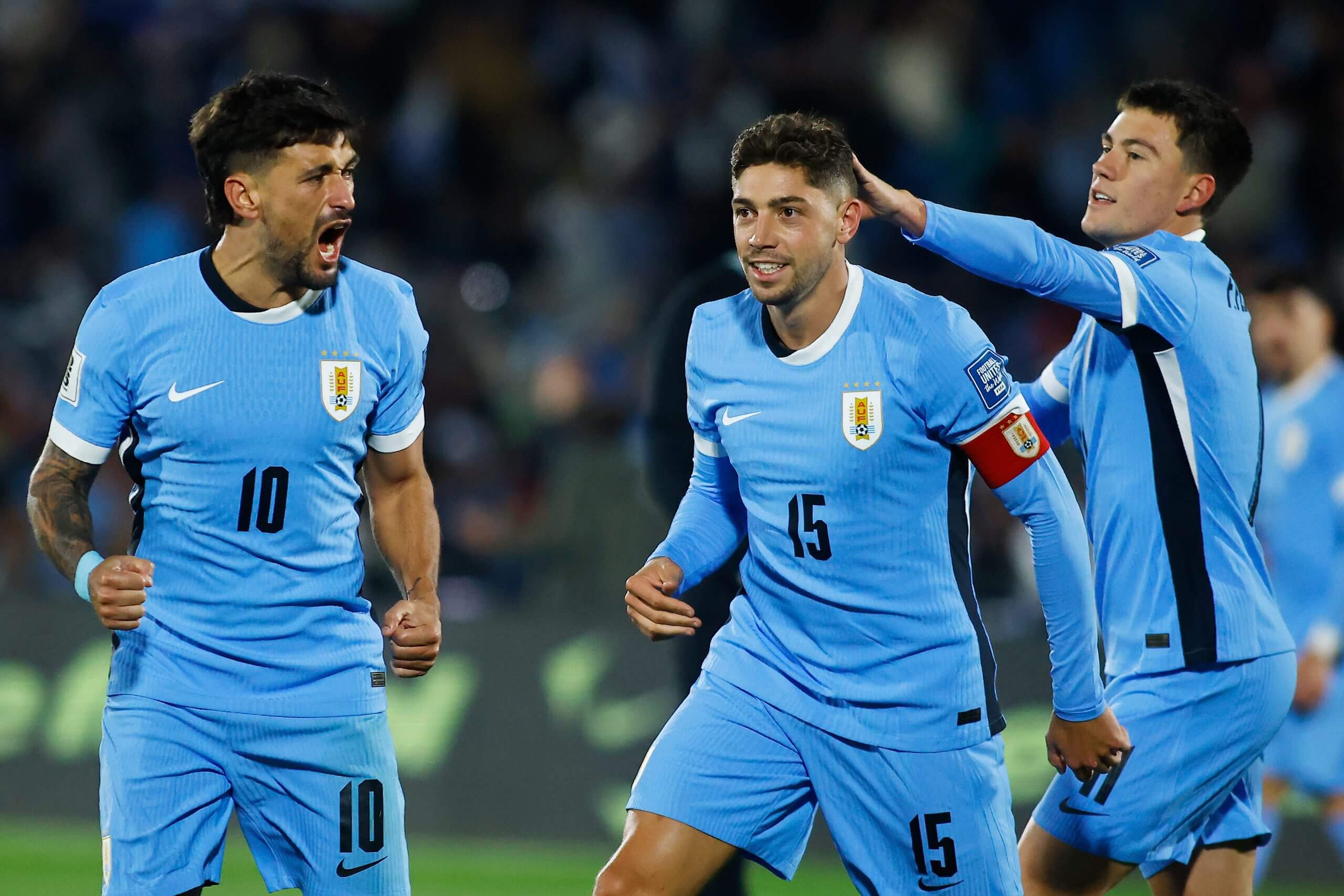
The spine of this Uruguay team deserves individual attention. Federico Valverde — Real Madrid's box-to-box midfield powerhouse — is arguably one of the five best midfielders in the world. His engine, his reading of the game, and his ability to arrive late into scoring positions makes him dangerous in any system. Darwin Núñez at centre-forward brings a relentless pressing intensity and lethal pace in behind defensive lines. Ronald Araújo, commanding at the heart of Uruguay's back four, provides the kind of aerial and physical dominance that high-level tournament football demands. These are not supporting players — these are elite operators who would start for virtually any team in this World Cup.
Head-to-Head History: A Record That Tells a Story
The head-to-head history between these two nations is modest in volume but rich in context. The teams have met ten times in total, including two memorable encounters on the World Cup stage.
At the 1950 FIFA World Cup in Brazil — a tournament that ended with one of football's most legendary upsets when Uruguay defeated Brazil in the final deciding match at the Maracana — Spain and Uruguay played out a 2–2 draw in the final round-robin phase, a result that has stood in the collective memory of both nations for decades.
Forty years later, at Italia '90, the sides met again in the group stage, this time producing a goalless draw that reflected the tight, cautious nature of both squads at that tournament.
Their most recent competitive encounter came at the 2013 FIFA Confederations Cup in Brazil, where Spain recorded a 2–1 group stage victory — a result that represents their best performance in the head-to-head record and one that has given the Spanish camp quiet confidence heading into this rematch thirteen years later.
Overall across ten meetings: Spain hold the better of the head-to-head record. But in World Cup football, history is at best a loose guide. Uruguay are a team built to defy historical narratives.
Key Battles That Will Define the Match
Valverde vs Spain's Midfield Press
The central midfield battle will define the rhythm and tone of the entire game. Federico Valverde thrives in open, high-tempo environments where his physical attributes and forward runs can be exploited. Spain's midfield — disciplined, compact, and relentlessly positional — will attempt to deny Valverde time on the ball and prevent him from driving forward. If Uruguay can protect Valverde and allow him to dictate the tempo, they can genuinely control large portions of this match.
Darwin Núñez vs Spain's High Defensive Line
Spain's tendency to defend with a high line creates the exact space that a forward of Núñez's explosive pace is designed to exploit. One perfectly timed through ball, one lapse in the defensive chain, and Uruguay could break the deadlock. Spain's defensive unit will need to be impeccably organized to negate this threat.
Spain's Positional Play vs Uruguay's Defensive Block
Bielsa's Uruguay are not the same team as the low-block, counter-punching Uruguay of previous World Cup cycles. But when the moment demands it — when protecting a lead or absorbing pressure — they retain the organizational intelligence to drop into a structured defensive shape and make Spain work for every chance. The question is whether Spain's patience and technical quality can unpick that structure over 90 minutes.
Set Pieces: Uruguay's Underrated Weapon
Uruguay have one of the most potent aerial attacks in this World Cup. Araújo, Giménez, Valverde, and Núñez all pose genuine threats from dead-ball situations. Spain — despite their many qualities — have historically been vulnerable to well-executed set pieces. If Uruguay win a corner or free-kick in a dangerous area late in a tight game, the outcome could pivot in an instant.
Tactical Preview: How the Game Is Likely to Unfold
Expect Spain to control the opening quarter of this match in a manner consistent with their tournament style. De la Fuente's side will seek to press high immediately, disrupt Uruguay's build-up before it reaches Valverde's feet, and establish their passing rhythm through the centre of the pitch.
Uruguay, meanwhile, are unlikely to sit passively. Bielsa's pressing principles demand active engagement even when not in possession. The opening phase could be more openly contested than a superficial read of the possession statistics might eventually suggest.
The first goal will be decisive. If Spain score first, their ability to manage games from in front — slowing tempo, controlling possession, forcing opponents to chase the match — makes them extremely difficult to overcome. If Uruguay score first, they possess the organizational intelligence and collective resilience to defend a lead with conviction.
A draw scenario is also entirely plausible. Both teams are likely to qualify from this group regardless, but the psychological and practical value of first place means that neither side is likely to settle for a goalless draw if the opportunity to win presents itself.
Recent Form: Reading the Signals Before Kick-Off
Spain arrive at this fixture in excellent shape. Their last five competitive results include victories over Georgia (4–0) and Serbia (3–0), interspersed with draws against Turkey (2–2) and Egypt (0–0) — a form run that underscores both their attacking potency and the occasional defensive lapses that sharper opponents might exploit. With 9 goals scored and only 2 conceded across their last five outings, Spain's attacking credentials are in strong form.
Uruguay's recent form tells a more nuanced story. Their last five results show one win (against Uzbekistan, 1–2), three draws (against Algeria, England, and Mexico), and a heavy defeat to the United States (5–1) — a result that raised eyebrows and prompted intense debate about defensive vulnerabilities under Bielsa's high defensive line. Four goals scored and seven conceded across that sequence shows a team with genuine attacking intent but real exposure when the press is beaten. The US result, in particular, will have served as a sobering reminder that the tactical framework demands near-perfect execution.
Both teams enter this fixture with points to prove. Spain want to demonstrate they are the real article — not just the pre-tournament favorites on paper, but the team that delivers when the lights are brightest. Uruguay want to silence the skeptics who pointed to the heavy defeat as evidence of systemic vulnerability.
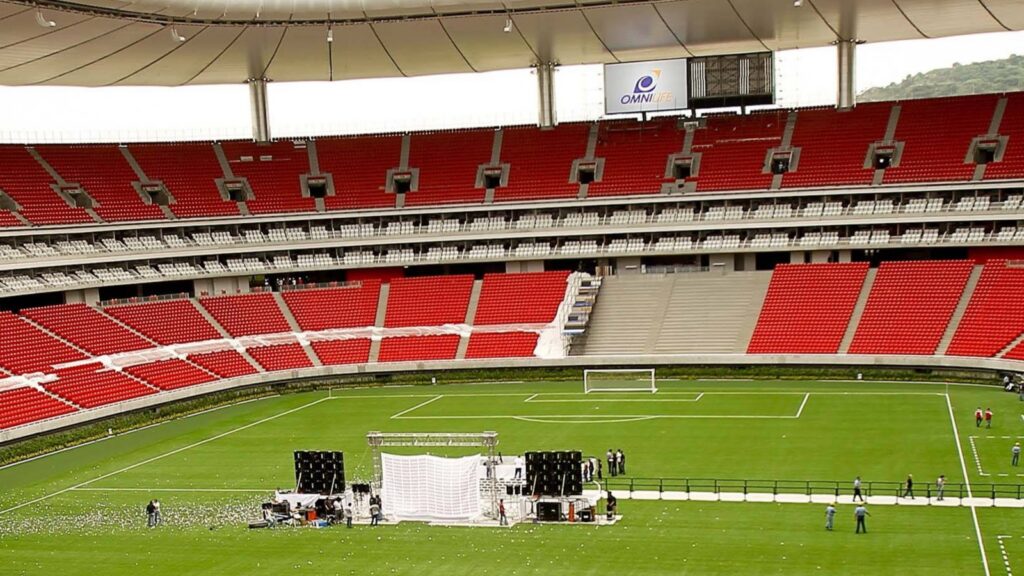
The Estadio Akron Stage
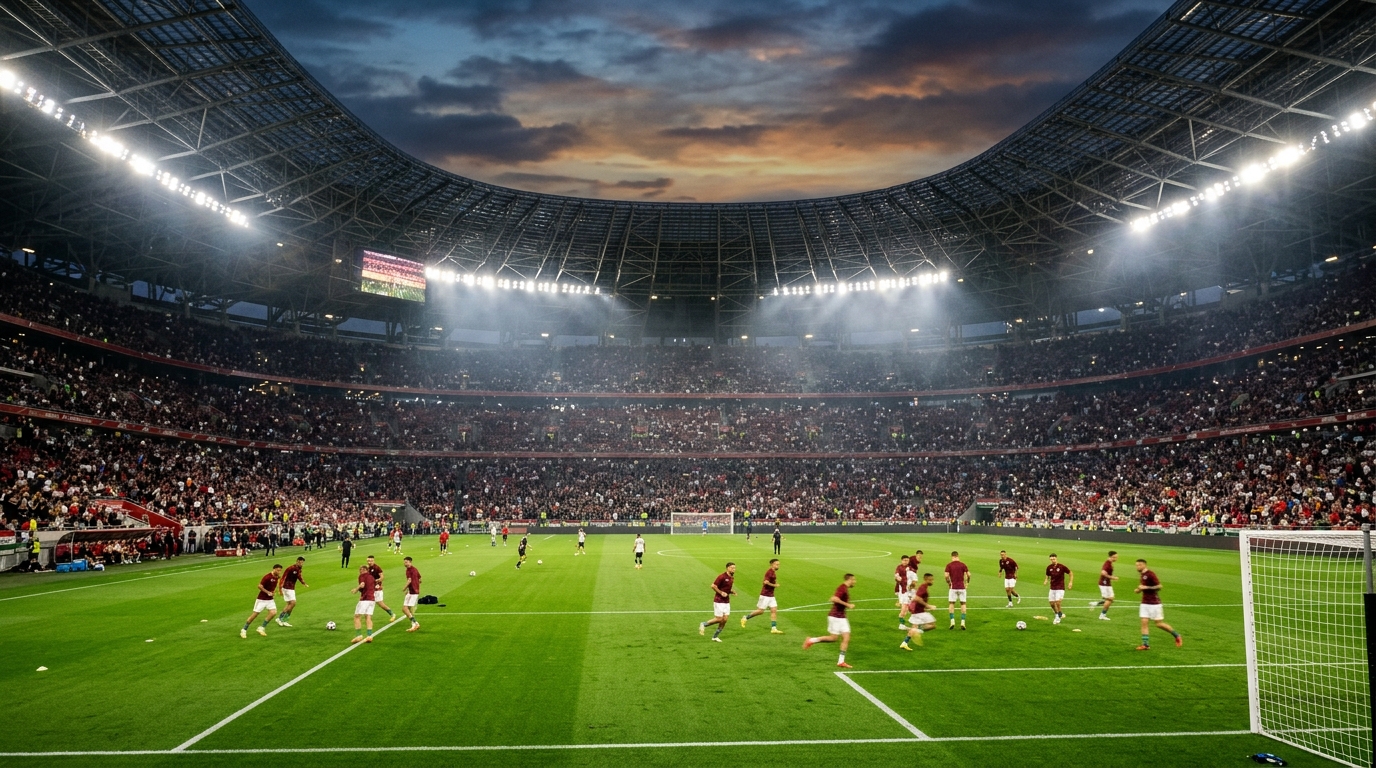
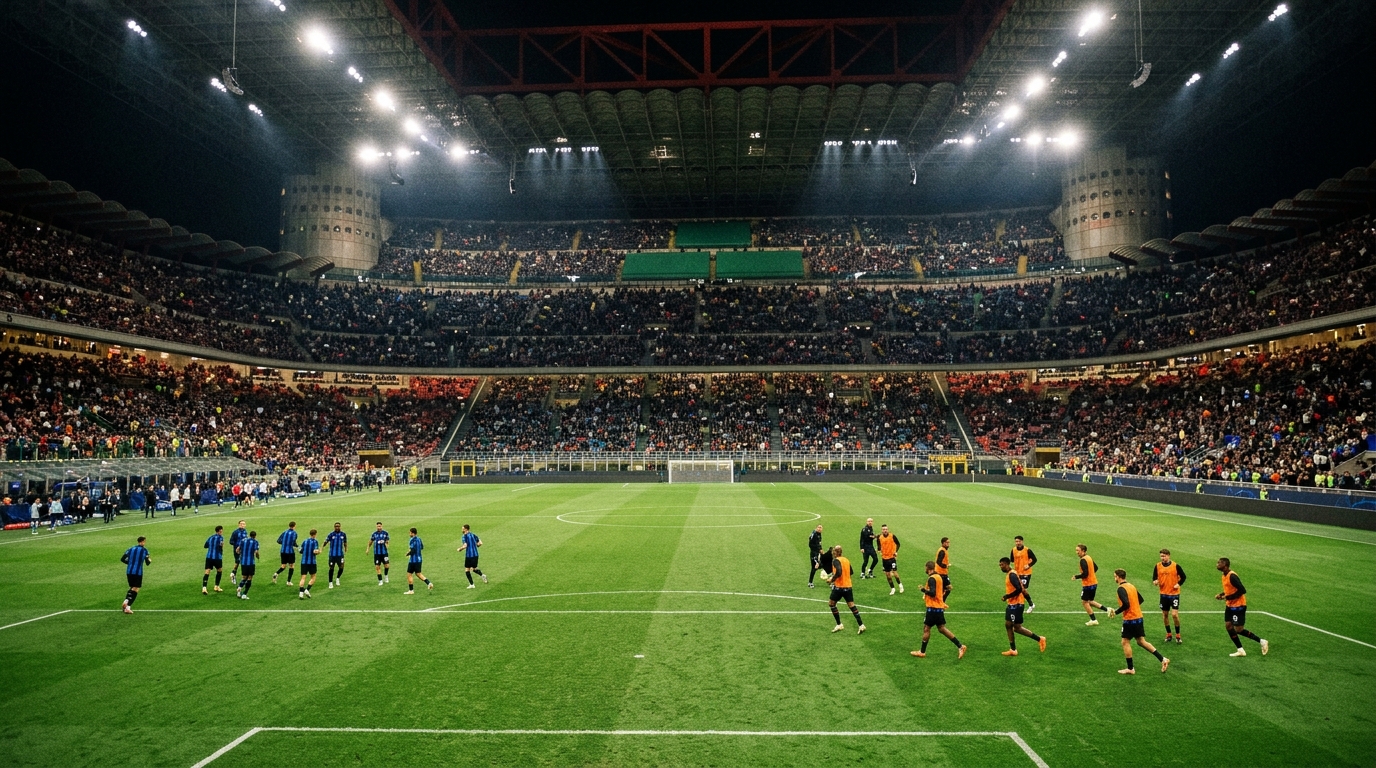
The Estadio Akron in Zapopan, on the outskirts of Guadalajara in Mexico's Jalisco state, is a fitting arena for a match of this magnitude. With a capacity of approximately 49,850 spectators, the stadium is renowned for its intimate, electric atmosphere — one of the most acoustically intense environments in North American football. The ground sits at an elevation of roughly 1,560 meters above sea level, a factor that can influence the intensity of high-pressing styles over the course of a full 90 minutes.
The Mexican crowd — traditionally warm toward South American nations and deeply knowledgeable football fans — will create an atmosphere that could subtly favor Uruguay. A neutral venue at the 2026 World Cup is never truly neutral when tens of thousands of passionate local spectators are in attendance.
What This Match Means for Both Nations
For Uruguay, defeating or drawing with Spain in a World Cup group game would be more than a footballing result — it would be a validation of Bielsa's entire project. The decision to appoint one of football's most demanding and philosophically rigorous coaches was a gamble that demanded complete institutional commitment. A competitive performance against the world's number one ranked side, in the world's most prestigious tournament, would represent a definitive answer to every critic who questioned the direction.
For Spain, the match represents an opportunity to announce themselves not just as favorites on paper but as a team that handles adversity and elite opposition with authority. Their tournament pedigree is unmatched among active international sides — a World Cup in 2010, back-to-back European Championships in 2012 and 2024 — but no golden generation lasts forever, and the current crop carries the expectation of delivering the next chapter in that extraordinary story.
Beyond the immediate context, this fixture connects two of football's deepest historical narratives. Uruguay and Spain are both nations whose football identities were forged through struggle, through political turbulence, and through an almost fanatical collective belief that the beautiful game is something worth fighting for. When they meet on June 27, 2026, all of that history will be present on that pitch in Zapopan.
What the AI Models Predict
As a supplementary lens on this match, TuringStats aggregated predictions from ten leading AI language models — GPT-4o, Claude Sonnet, Gemini 3.1 Pro, Mistral Large, DeepSeek Chat, Qwen 2.5, Llama 3.1, MiMo V2.5, Cohere Command R+, and Grok 3 — to produce a consensus forecast.
The headline finding: five of ten models favor a draw, making the 1–1 scoreline the single most common prediction (cited by five models). Spain are favored by three models, with two models backing Uruguay. The mean predicted score across all ten systems is 1–1, with a mean confidence level of 59% — classified as the medium band, reflecting genuine uncertainty and the inherent unpredictability of a high-stakes World Cup group decider.
The models that favor Spain — GPT-4o (0–1, 62%), Claude Sonnet (1–2, 45%), and Gemini 3.1 Pro (1–2, 60%) — consistently point to Spain's technical superiority and possession-based control as the deciding factor. The models backing a draw — DeepSeek Chat, Qwen 2.5, Llama 3.1, MiMo V2.5, and Grok 3 — emphasize the balance between Spain's control and Uruguay's resilience in tight World Cup group stage environments. The two Uruguay-win models — Mistral Large (1–0, 62%) and Cohere Command R+ (1–0, 58%) — cite defensive solidity and counter-attacking threat as Uruguay's decisive edge.
The AI-derived expected goals figures are 0.90 (Uruguay) versus 1.00 (Spain), suggesting a low-scoring game in which Spain have a marginal attacking advantage. The combined xG of 1.90 implies a total goals expectation below 2.0, making under 2.5 goals a strong modelling signal.
These predictions are provided as an analytical supplement to the match preview above and should be treated as one input among many — not financial advice, and not a replacement for watching the teams evolve through their first two group games before drawing firm conclusions.
Final Word: A Fixture for the Ages
Uruguay vs Spain at the 2026 FIFA World Cup is not merely a football match. It is a collision of footballing philosophies, generational ambitions, and deeply rooted national identities. It is a fixture where the world's best possession side meets one of the sport's most resilient, tactically intelligent, and emotionally charged teams. It is, in the truest sense, the kind of match that World Cups exist to produce.
Whatever the final scoreline at Estadio Akron on June 27, 2026, football fans around the world will be watching. And they will not be disappointed.