Insights
PSG vs Arsenal: The Final of Destiny — Champions League 2025/26 Preview, AI Predictions & Key Battles
Twenty years of waiting have brought Arsenal back to Europe's grandest stage. But waiting on the other side is a reborn PSG — defending champions with the mentality of a dynasty in the making. On May 30 in Budapest, two football destinies collide.
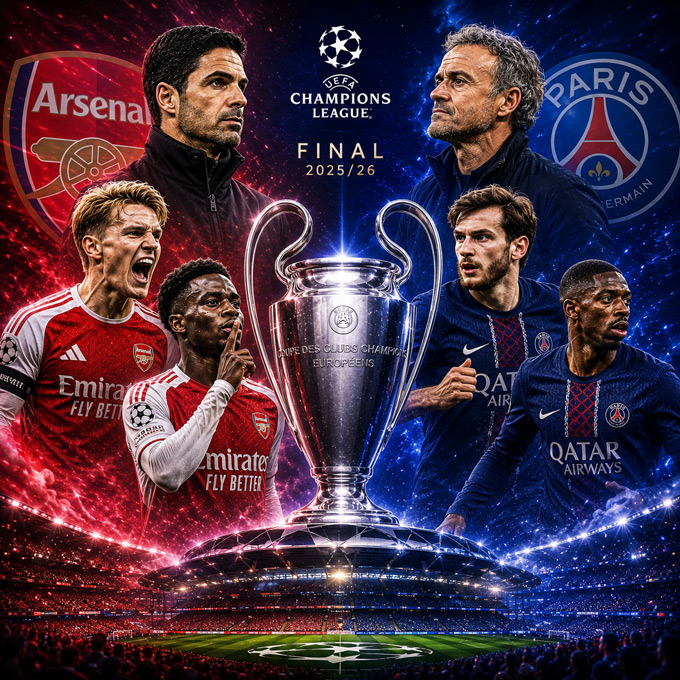
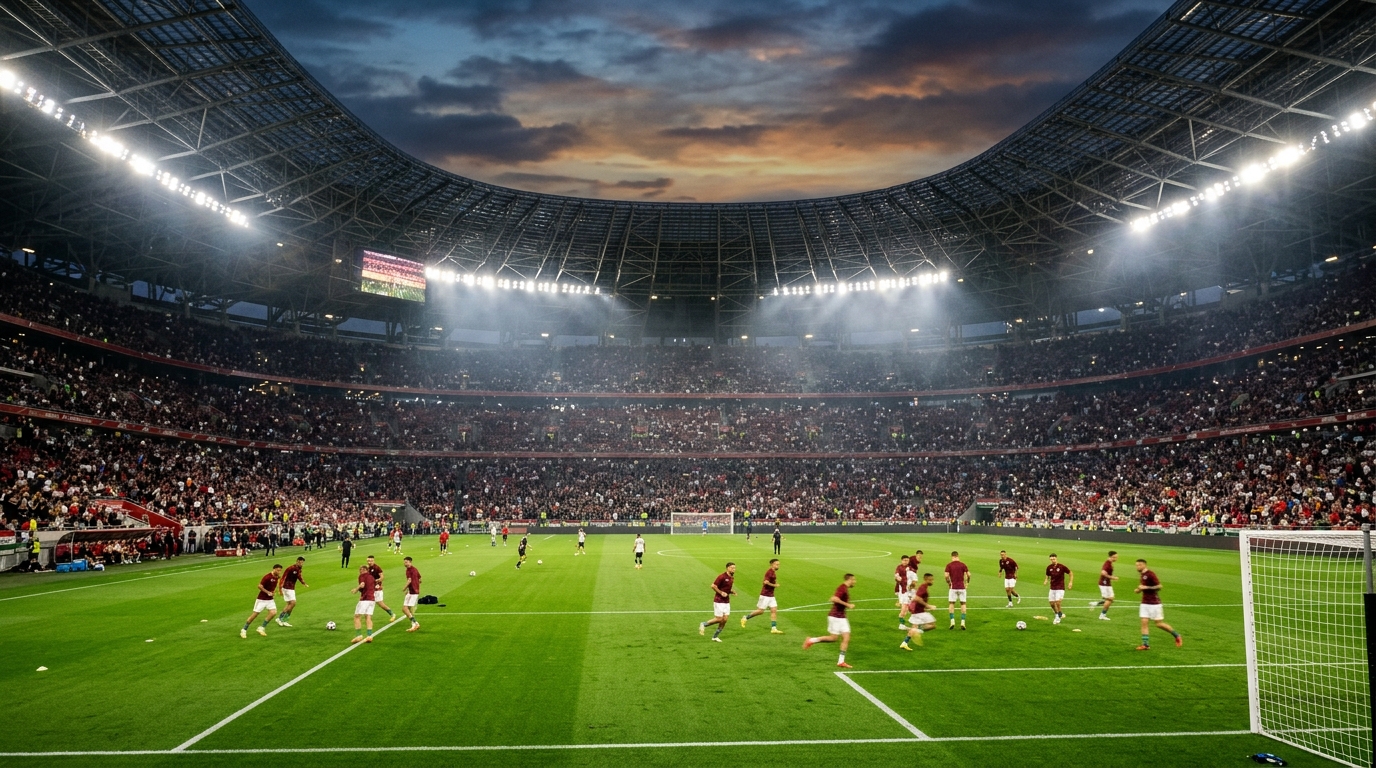
Twenty years of waiting. Two decades of heartbreak, rebuilding, and relentless belief. That is what Arsenal carry into the Puskas Arena in Budapest on May 30, 2026, when they face Paris Saint-Germain in the UEFA Champions League final — the biggest game English football has produced in a generation.
This is not just a football match. It is a collision of two contrasting narratives that have been building for years. On one side: Arsenal, a club reborn under Mikel Arteta, chasing a ghost that has haunted them since 2006. On the other: PSG, the defending champions, a club that has shed its reputation for failure on the biggest stages and is now eyeing something that could define an era — back-to-back European titles.
The story writes itself. And yet, the outcome remains genuinely, beautifully uncertain.
A TWENTY-YEAR WAIT FOR ARSENAL
The last time Arsenal appeared in a Champions League final was in 2006. A different Paris. A different era. Robert Pires, Ashley Cole, Thierry Henry — a side that captured the imagination of the world before falling to a Barcelona team led by Ronaldinho. That night left a wound that took years to close.
What followed were years of near-misses, financial austerity, the departure of iconic players, and a gradual drift from the elite. Arsenal remained a big club with a proud identity, but the Champions League — that ultimate measure of European royalty — kept them at arm's length.
Then came Arteta. Methodical. Intense. Visionary. The Spaniard arrived in 2019 and began a reconstruction that few believed would reach this height so quickly. And now, here they are: Champions League finalists for the first time since the Invincibles walked the earth.
For Arsenal supporters, just being in Budapest already feels like vindication. But this squad — battle-hardened, tactically astute, and burning with a hunger that only 20 years of longing can produce — is not here just to make up the numbers.
PSG: FROM CHAOS TO CHAMPIONS
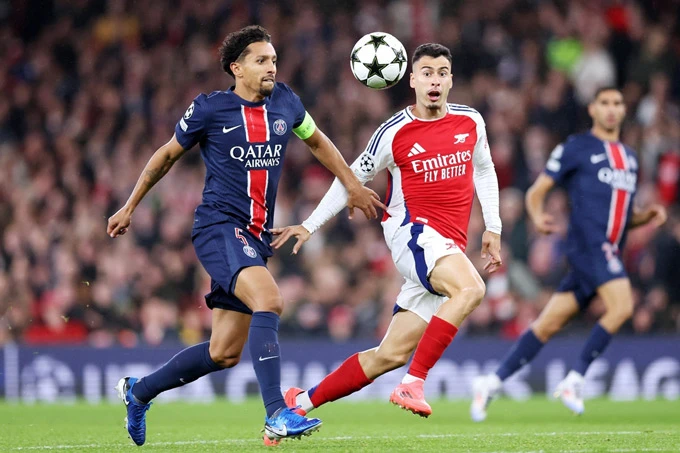
If Arsenal's journey has been one of resurrection, PSG's has been one of reinvention.
For much of the last decade, the Parisian club was the most polarising team in world football. Billions poured in from Qatar. Neymar. Mbappé. Messi. An unbroken conveyor belt of superstars — and yet the Champions League remained out of reach. The defeats were not just painful; they were theatrical in their cruelty.
But something shifted. The superstar carousel slowed. Luis Enrique arrived with a different philosophy: a collective, pressing system built not around individual brilliance but around team intelligence. Kylian Mbappé left. And paradoxically, PSG became stronger.
Last season, they won the Champions League. This season, they have returned to the final — leaner, sharper, and with the experience of champions. They arrive in Budapest not as dreamers, but as the team that knows exactly what it takes to lift the trophy.
That knowledge — that psychological muscle memory of winning at the highest level — may be the most dangerous weapon in Luis Enrique's arsenal.
THE TACTICAL BATTLEGROUND
On paper, these two teams represent genuinely different footballing philosophies, and their clash in midfield promises to be the defining battleground of the final.
Arteta's Arsenal are a machine of precision and discipline. Their defensive structure is one of the most organised in European football. Their pressing is purposeful, coordinated, and designed to win the ball back in dangerous areas. In set-pieces, they are arguably the most lethal team in the competition — a weapon they have wielded with devastating effect throughout the campaign.
PSG, under Enrique, offer something more fluid and unpredictable. They can press with suffocating intensity for stretches, then drop into a compact shape and punish on the counter with frightening speed. The key is that they no longer depend on a single player to unlock defences. The system does the work, and multiple players can deliver in the decisive moments.
The battle in the middle of the park will be crucial. PSG's trio of Vitinha, João Neves, and Warren Zaïre-Emery represents one of the most dynamic midfields in Europe. Their movement, press resistance, and ability to control tempo can strangle opponents before they get going. For Arsenal to survive — and thrive — Declan Rice and Martin Ødegaard will need to produce performances of the highest level, controlling the game's rhythm and finding space where PSG's midfield leaves little.
THE KVARATSKHELIA PROBLEM
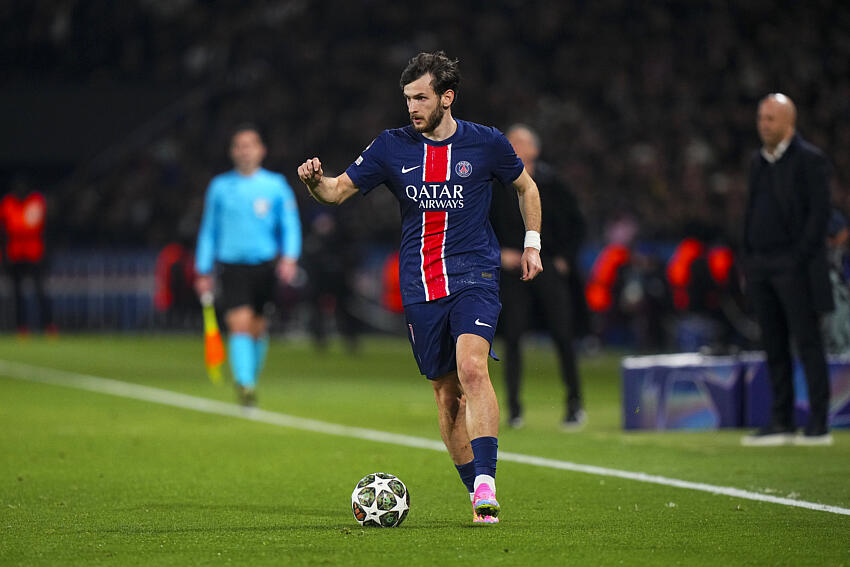
If there is one name that will dominate tactical discussions in the build-up to this final, it is Khvicha Kvaratskhelia.
The Georgian winger has been the most electrifying performer of PSG's Champions League campaign. His pace, his dribbling, his instinct for the moment — these are qualities that can break any defensive system, no matter how well-organised. Whether Ben White or Jurrien Timber is assigned to mark him, Arsenal know that one lapse of concentration is all it takes.
Kvaratskhelia is listed as a doubt heading into the final with an injury concern, and if he misses the game, it significantly changes PSG's attacking threat. But in these finals, players who were doubtful often find a way to play — and if he does, Arsenal's left or right flank will face 90 minutes of the most testing football imaginable.
TEAM NEWS AND KEY ABSENCES
The injury situation for both sides is worth watching closely heading into Budapest, as confirmed by TuringStats' match context data.
PSG are navigating a significant list of concerns. João Neves — one of their most important midfield pieces — is suspended for the final, a major blow. Kvaratskhelia and Ousmane Dembélé are both listed as injured doubts, along with Dário Doué (calf), Gianluigi Donnarumma (injury), Nordi Mukiele, Senny Mayulu (adductor), Presnel Kimpembe, Fabián Ruiz (muscle bruise), and Lucas Beraldo (ankle). That is a substantial list, and it could alter Luis Enrique's selection and tactical approach considerably.
Arsenal are not without their own concerns. William Saliba carries a sprained ankle worry — the most alarming news for Gunners fans given how central he is to their defensive solidity. Bukayo Saka has a thigh problem, Gabriel Jesus and Kai Havertz both have knee issues, and Martin Ødegaard is managing a shoulder injury. The good news is that Mikel Merino is reportedly fit and available, offering Arteta an important option in midfield.
Both managers will need to make difficult calls on who is ready and who is risking long-term damage for one night of glory. These decisions could define the final before it even kicks off.
HEAD-TO-HEAD HISTORY: THE RECENT RECORD MATTERS
If historical form is any guide, PSG enter this final with a psychological edge over Arsenal in recent meetings.
The last five encounters between the two clubs tell an interesting story. PSG claimed victories in both legs of their 2024/25 Champions League semi-final: a 1-0 win in Paris and a 2-1 defeat in London where the Gunners went out on aggregate. Prior to that, Arsenal won 2-0 at the Emirates in a group stage fixture in October 2024 — a reminder that this Arsenal team is absolutely capable of hurting PSG.
The overall record across the last five matches reads: PSG 2 wins, 1 draw, Arsenal 2 wins. It is tight. But the two most recent competitive encounters both went PSG's way, and in knockout football, recent form carries weight.
WHAT THE AI MODELS SAY: TURINGSTATS PREDICTIONS
For a data-driven perspective on how this final is likely to unfold, TuringStats ran ten leading AI models against this fixture — and the consensus is clear: Paris Saint-Germain are favourites.
Eight of ten models predict a PSG victory. The mean predicted scoreline, aggregated across all ten systems, is PSG 2–1 Arsenal, with a mean confidence of 59% across the panel — placing this firmly in the "Medium" confidence band, reflecting the genuine uncertainty and unpredictability of a Champions League final.
The model-by-model breakdown is revealing:
GPT-4o calls a 1–1 draw at 60% confidence, citing both teams as "evenly matched" with recent head-to-heads suggesting a balanced contest.
Claude Sonnet predicts a narrow PSG win, 1–0, at 38% confidence. The reasoning: PSG beat Arsenal in both 2025 semi-final legs, demonstrating clear recent superiority. UCL finals typically produce tight, cautious games, and a narrow PSG win fits their controlled style against this opponent.
Gemini 3.1 Pro Preview also tips a 1–1 draw at 60% confidence, noting that Champions League finals "are typically tense and closely contested" and that elite talent on both sides makes a low-scoring draw highly probable in normal time.
Mistral Large, DeepSeek Chat, Qwen 2.5, Llama 3.1, Cohere Command R+, and Grok 3 all align on a 2–1 PSG win, with confidence readings between 60–65%. Their reasoning consistently highlights PSG's recent head-to-head advantage, Luis Enrique's squad cohesion, and the fine margins that characterise finals as factors that favour the defending champions.
MiMo V2.5 Pro leans toward a 1–0 PSG win at 65% confidence, the highest single-model confidence reading in the panel, pointing to PSG's defensive resilience in recent meetings and the tendency for finals at neutral venues to produce low-scoring, tightly contested affairs.
In terms of scoreline frequency, 2–1 to PSG was selected by 6 of the 10 models — a notable convergence that TuringStats identifies as "a strong scoreline signal." The implied probabilities from the model vote share break down as: PSG win ~80%, Draw ~20%, Arsenal win ~0%. The aggregate expected goals figure sits at PSG 1.60 xG versus Arsenal 0.80 xG — a tilt that reinforces the models' lean toward Paris.
ARSENAL'S GREATEST WEAPON: HUNGER
Statistics and AI models can measure many things. They cannot fully quantify the emotional charge that Arsenal carry into this final.
PSG have been to the final before. They have won it. For their players and staff, the magnitude of the occasion, while enormous, carries a familiarity. They know the routine. They understand the pressure and have survived it.
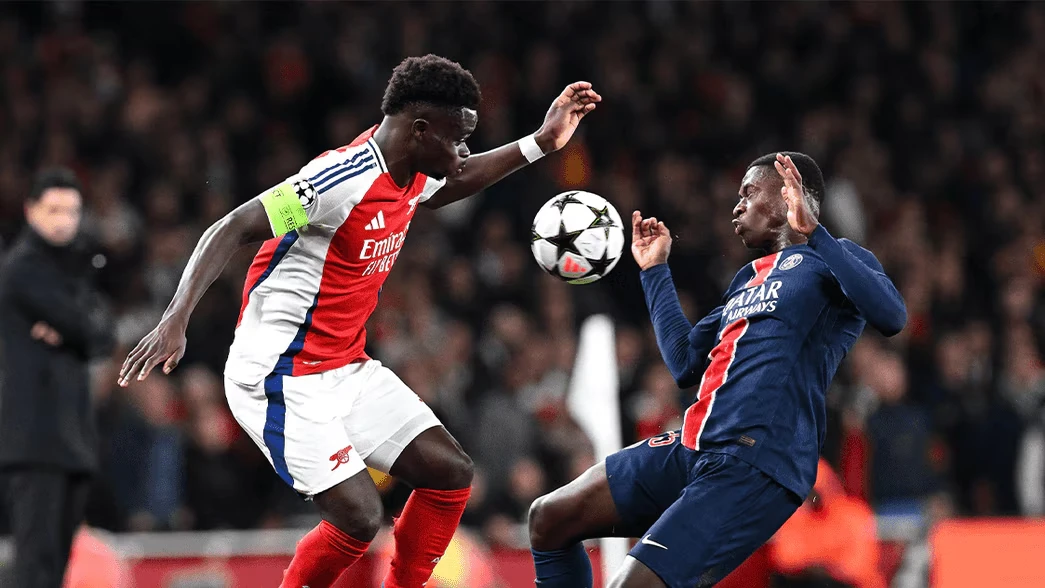
Arsenal have not been here for two decades. The hunger that comes with that — the raw, almost desperate desire to seize this once-in-a-generation opportunity — could be the ingredient that no model accounts for. In football, there are nights when desire outweighs data. When a team plays with such intensity and collective will that tactical blueprints become secondary.
Arteta has been meticulous in building not just a team, but a culture. These players believe in what they are doing. They believe in each other. And they arrive in Budapest with nothing to lose and everything to gain.
PSG'S GREATEST WEAPON: EXPERIENCE
But if Arsenal's greatest weapon is hunger, PSG's is something more refined: the knowledge of how to win when it matters most.
Their semi-final victory over Bayern Munich — controlled, mature, executed with the cold efficiency of serial winners — was the clearest demonstration yet of how far this PSG side has evolved. They did not panic. They did not buckle under the weight of a hostile Allianz Arena atmosphere. They managed the game, protected the lead, and closed it out.
That is what Champions League winners look like. And Arsenal, for all their quality and desire, have not yet proven they can replicate that composure on the biggest stage.
The question that will be answered in Budapest is simple but profound: has Arteta built a team capable of not just reaching the final, but winning it?
THE VERDICT
This is, without doubt, the most compelling Champions League final in years. Not since the great Barcelona or Real Madrid sides dominated the competition has there been a final that so neatly encapsulates two contrasting stories — one of longing and renewal, one of power and proven pedigree.
The TuringStats AI panel points to PSG as the more likely winner, with 80% of models backing the Parisians and a 2–1 scoreline the most common prediction. The absence of João Neves through suspension, combined with the doubt surrounding Kvaratskhelia and Dembélé, does introduce some uncertainty — and if Arsenal can exploit those absences, particularly with Saka and the in-form Gabriel Martinelli (fitness permitting) causing problems out wide, the picture could shift dramatically.
Arsenal's best chance lies in a low-scoring game, perhaps decided by a set-piece or a moment of individual brilliance. Their defensive structure, the aerial threat from corners and free-kicks, and the tireless work rate of Declan Rice give them a genuine route to victory — even if the models suggest that route is the harder road.
One thing is certain: Budapest is ready for history. Arsenal are ready for the moment they have been building toward. And PSG are ready to prove that what happened last season was not an accident, but the beginning of something much larger.
On May 30, 2026, at the Puskas Arena, the final of destiny awaits. The beautiful game rarely offers storylines this rich, this emotional, or this perfectly poised.
Whoever lifts the trophy, this final will be remembered for a very long time.