WORLD CUP 2026
Netherlands vs Sweden: World Cup 2026 Group F — The £235m Question at NRG Stadium
On June 20, 2026, at NRG Stadium in Houston, Texas, the Netherlands and Sweden meet in one of the most tactically compelling fixtures of the 2026 FIFA World Cup Group F. Dutch pedigree and tactical precision versus Swedish star power and collective uncertainty — this is the match that could determine who leads Group F into the knockout rounds.
It is June 20, 2026. Inside NRG Stadium in Houston, Texas — one of the grandest arenas in American sport — two of European football's most storied nations are about to collide in a fixture that carries enormous Group F implications. The Netherlands, with twelve World Cup appearances and three final runs etched into their DNA, face a Swedish side whose squad value rivals the richest nations in the tournament, yet whose collective identity remains one of the 2026 World Cup's most compelling — and unresolved — questions.
This is not just a match. This is a philosophical confrontation between system and individual talent, between organizational clarity and high-voltage uncertainty. It is, in the most precise footballing sense, the £235 million question.
The Group F Landscape: Why This Match Matters
Group F at the 2026 FIFA World Cup brings together four teams of contrasting ambition and footballing identity: the Netherlands, Japan, Sweden, and Tunisia. The group opens on June 14, with the Netherlands facing Japan at AT&T Stadium in Arlington and Sweden opening against Tunisia at Estadio BBVA in Guadalupe, Mexico.
By the time Netherlands and Sweden meet on June 20 at NRG Stadium in Houston, the group's tactical map will have partially clarified. But both teams will understand the weight of their head-to-head encounter: a win here likely secures top spot in Group F, with the winner advancing to face the runner-up of Group C in the Round of 32. The runner-up of Group F will meet the winner of Group C. Given that group placement determines knockout opponents across multiple rounds, the difference between first and second place in Group F is far more than a matter of pride.
Japan — the group's most dangerous wildcard, fresh from delivering seismic upsets against Germany and Spain at the 2022 World Cup — adds further urgency. Both the Netherlands and Sweden know that careless point-dropping against any opponent in Group F could prove fatal. Every result matters. Every match from the first whistle is a final.
The Netherlands: Twelve Appearances, Three Finals, Zero Trophies — and a Point to Prove
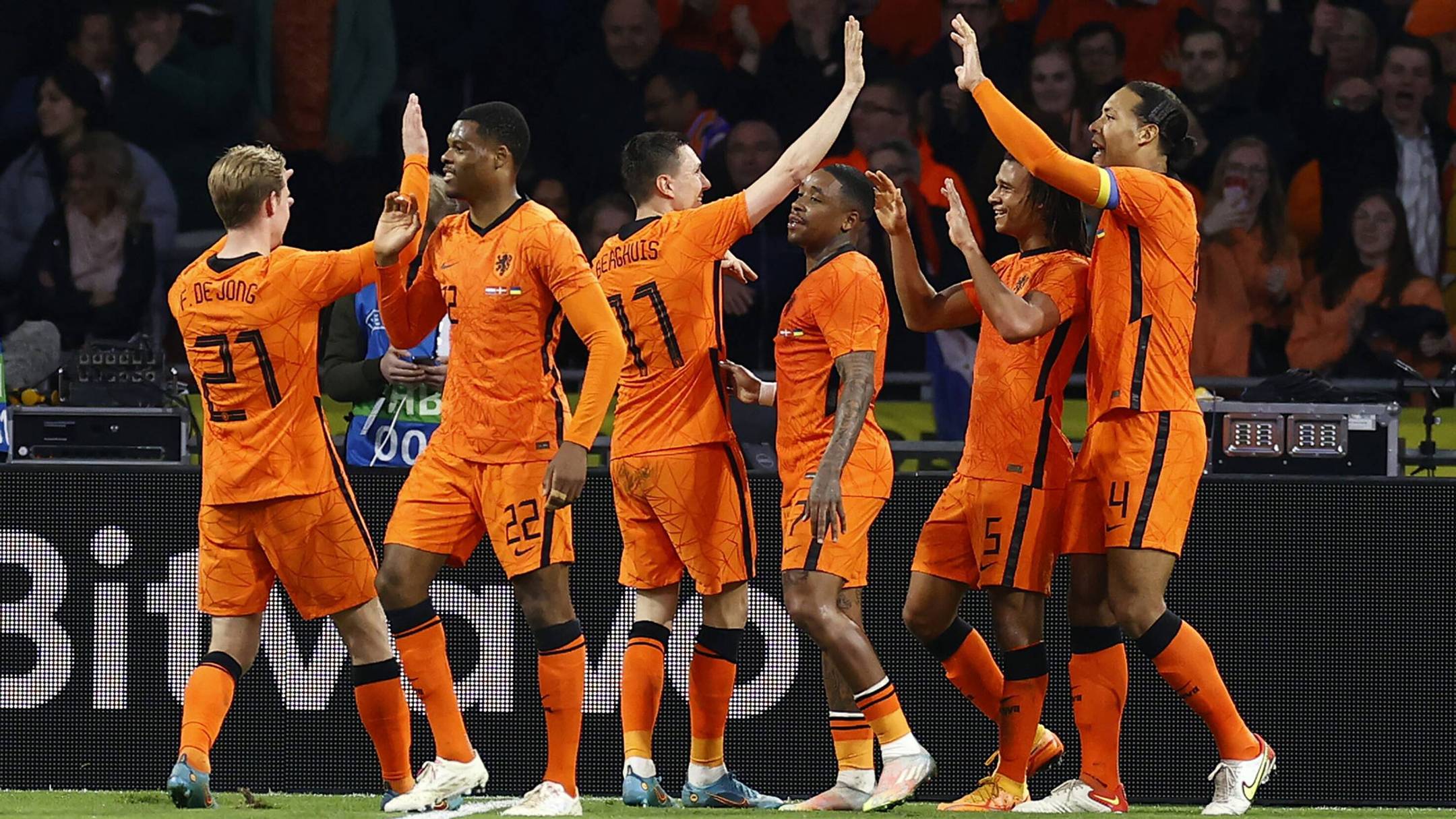
The Netherlands are one of international football's most singular institutions. Twelve World Cup participations. Three final appearances — in 1974 against West Germany, in 1978 against Argentina, and in 2010 against Spain. And yet the golden trophy has never been lifted by Dutch hands. It is a record that speaks simultaneously to extraordinary consistency at the highest level and to a recurring heartbreak that has become part of the Oranje's identity.
At the 2022 World Cup in Qatar, the Netherlands were eliminated in the quarter-finals by eventual champions Argentina — a penalty shootout defeat that felt, as so many Dutch exits do, simultaneously agonizing and oddly familiar. But the squad that Ronald Koeman brings to the United States in 2026 has been rebuilt with the explicit intention of avoiding that cycle.
Koeman's Netherlands are built on defensive solidity, structured midfield control, and the efficient deployment of attacking quality. The system is pragmatic — occasionally criticized for a lack of the aesthetic ambition that defined Dutch football's Total Football era — but it is effective. In qualifying for this tournament, the Netherlands were Group G winners, losing minimal points and conceding sparingly. Their last five competitive results tell the story: one draw with Ecuador (1-1), a win over Norway (2-1), a comprehensive 4-0 victory over Lithuania, a draw with Poland (1-1), and a 4-0 victory over Finland. In total: 12 goals scored, 3 conceded. The attacking output is there; the defensive structure is tight.
The Dutch have never failed to progress from the group stage in any World Cup they have participated in. That extraordinary record — a testament to professional group-stage management even in difficult tournaments — enters 2026 as one of the most compelling statistical footnotes in international football. Koeman will be acutely aware that Sweden represent the most technically capable opponent in the group, and that the match demands full concentration from the first minute.
The £235 Million Question: Can Sweden's Star Power Translate?
No team at the 2026 World Cup generates more football-philosophical debate than Sweden. The Blågult arrived at this tournament via one of the most turbulent qualification campaigns in modern European football history — finishing bottom of their UEFA qualifying group with just 2 points from 8 matches, recording zero wins, 2 draws, and 6 defeats — before surviving the playoff against Poland to earn their World Cup berth by the slimmest possible margin.
And yet the squad assembled by head coach Graham Potter is, on individual talent metrics, extraordinary.
Alexander Isak — the centre-forward who made the move from Newcastle United to Liverpool in a deal worth a reported £120 million — is one of the most complete strikers in world football. Technically refined, lethal in the penalty area, physically imposing, and gifted with the intelligence and movement to operate in tight spaces, Isak would be a guaranteed starter at virtually any World Cup nation. Viktor Gyökeres — signed by Arsenal from Sporting CP for approximately £60 million after one of the most statistically dominant single-season goalscoring performances in recent European football memory — brings relentless pressing energy, physical dominance, and a finishing efficiency that borders on clinical. Anthony Elanga — acquired by Newcastle from Nottingham Forest for £55 million — adds pace, directness, and the ability to carry the ball at explosive speed in wide channels.
That attacking trio alone represents an investment of over £235 million, and the squad depth behind those three names is no less impressive. On paper, Sweden should be a tournament contender. The transfer fees attached to their roster rival those of Portugal, England, and France.
The paradox — and it is a genuine, difficult paradox that has occupied football analysts throughout the qualifying campaign and the lead-up to this tournament — is that Sweden's collective has repeatedly failed to match the promise of its parts. Their qualification disaster was not an accident or a run of bad luck. It reflected a team that could not translate individual quality into collective purpose: a pressing system that broke down under pressure, defensive organization that collapsed when tested, and attacking talent that could not produce at international level the same output it consistently generates for elite clubs.
Head coach Graham Potter's entire project heading into the 2026 World Cup has been to solve this puzzle. The former Brighton and Chelsea manager has spent months working on a system that can harness Isak, Gyökeres, and Elanga simultaneously without creating defensive vulnerability. The shape he has developed — and whether it holds against the organized, disciplined Dutch defensive structure — will define Sweden's tournament.
Head-to-Head History: Dutch Dominance in a Familiar Fixture
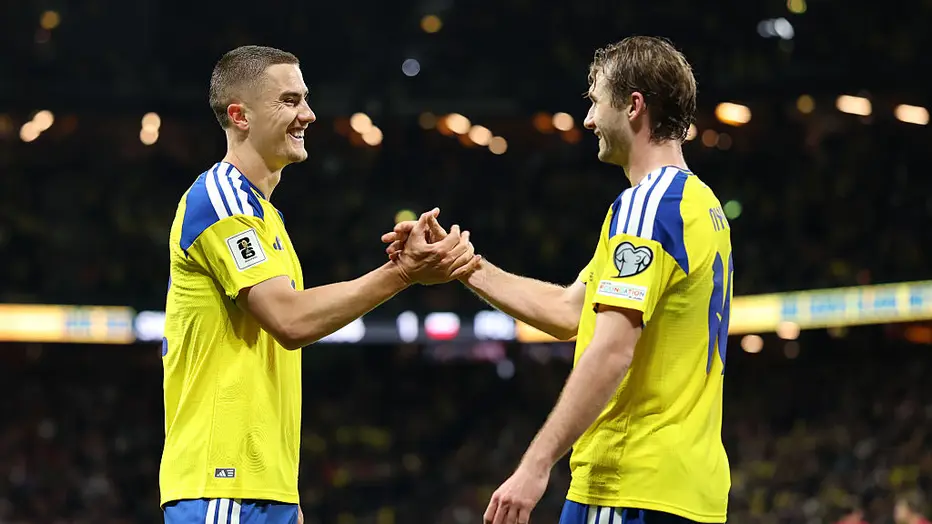
The Netherlands and Sweden have met twenty times across their shared history — a substantial record that spans friendly matches, World Cup qualifiers, and one historic World Cup encounter. The head-to-head is notable for a landmark moment: the two nations played out a goalless draw during the group stage of the 1974 FIFA World Cup in West Germany — a tournament in which the Netherlands ultimately reached the final, only to lose to the host nation.
In more recent times, the head-to-head has been defined by Dutch dominance. Their most recent competitive meeting came in October 2017, when the Netherlands recorded a 2-0 victory over Sweden in a World Cup qualifier — a result that eliminated Sweden from their direct qualification path and added to a head-to-head record in which the Netherlands hold the clear upper hand.
Before that, the sides met in September 2016, producing a 1-1 draw. From the available head-to-head data: Netherlands 1 win, Sweden 0 wins, 1 draw from the last two meetings — with the Dutch winning the most significant recent encounter by a comfortable margin.
The historical pattern reinforces what the current squad comparison suggests: the Netherlands have consistently managed this fixture with composure and efficiency, while Sweden have found the tactical demands of facing a well-organized Dutch defensive line difficult to overcome.
Tactical Preview: System vs. Individual Brilliance
This match will be defined by a central tactical tension: the Netherlands' organized, system-first approach against Sweden's reliance on individual quality to unlock defensive structures.
Koeman's Netherlands will look to control the midfield through disciplined positional play, denying Sweden the space between the lines where their forwards are most dangerous in transition. The Dutch defensive line will need to manage the specific problem that Isak and Gyökeres pose: two world-class forwards who press with extraordinary intensity from the front and then seek to exploit the space they create. Managing two forwards of that calibre simultaneously — who can both press and finish — is one of the more demanding organizational challenges any defense will face in this tournament.
For Sweden and Graham Potter, the tactical question is equally complex: how to prevent Koeman's Netherlands from controlling possession and tempo, while creating enough attacking opportunities to capitalize on the individual quality in the forward line. Sweden's most dangerous moments tend to come in transition — when the press wins the ball high and allows Isak or Gyökeres to run at a disorganized defense. Against the Netherlands, those transitional moments will be rare and brief, because Koeman's back line is designed specifically to deny them.
Set pieces will be a genuine subplot. Sweden have the physical attributes — Gyökeres and Isak in particular — to pose an aerial threat at corners and free-kicks. The Netherlands, for all their tactical organization, have historically shown occasional vulnerability to well-executed dead balls. A single set-piece goal could reshape the game's narrative entirely.
Key Players to Watch
Alexander Isak (Sweden) — The Liverpool striker is Sweden's most complete individual talent and the player most capable of deciding this match on his own. His combination of technical quality and physical presence makes him the most challenging defensive assignment for the Dutch back line. If Isak is on form — the Isak of Liverpool's Champions League campaigns — Sweden can beat anyone.
Viktor Gyökeres (Sweden) — The Arsenal striker's pressing intensity alone would disrupt a less organized team. But Gyökeres' goalscoring record — one of the most prolific in Europe in recent seasons — makes him a constant danger even against compact Dutch defending. His ability to hold the ball up and bring others into play is arguably as valuable as his finishing.
Corvus Gakpo (Netherlands) — The Liverpool winger has become one of European football's most dynamic attacking threats, combining pace, technical quality, and finishing ability in a profile that gives any defense serious problems. In a match where space is likely to be limited, Gakpo's ability to create chances from tight situations makes him the Dutch player Sweden will be most anxious to contain.
Graham Potter's tactical decisions — The Swedish head coach's ability to deploy Isak and Gyökeres in the same system, without one compromising the other's effectiveness, is the matchday decision that will have the most far-reaching impact on the game's outcome.
The NRG Stadium Factor
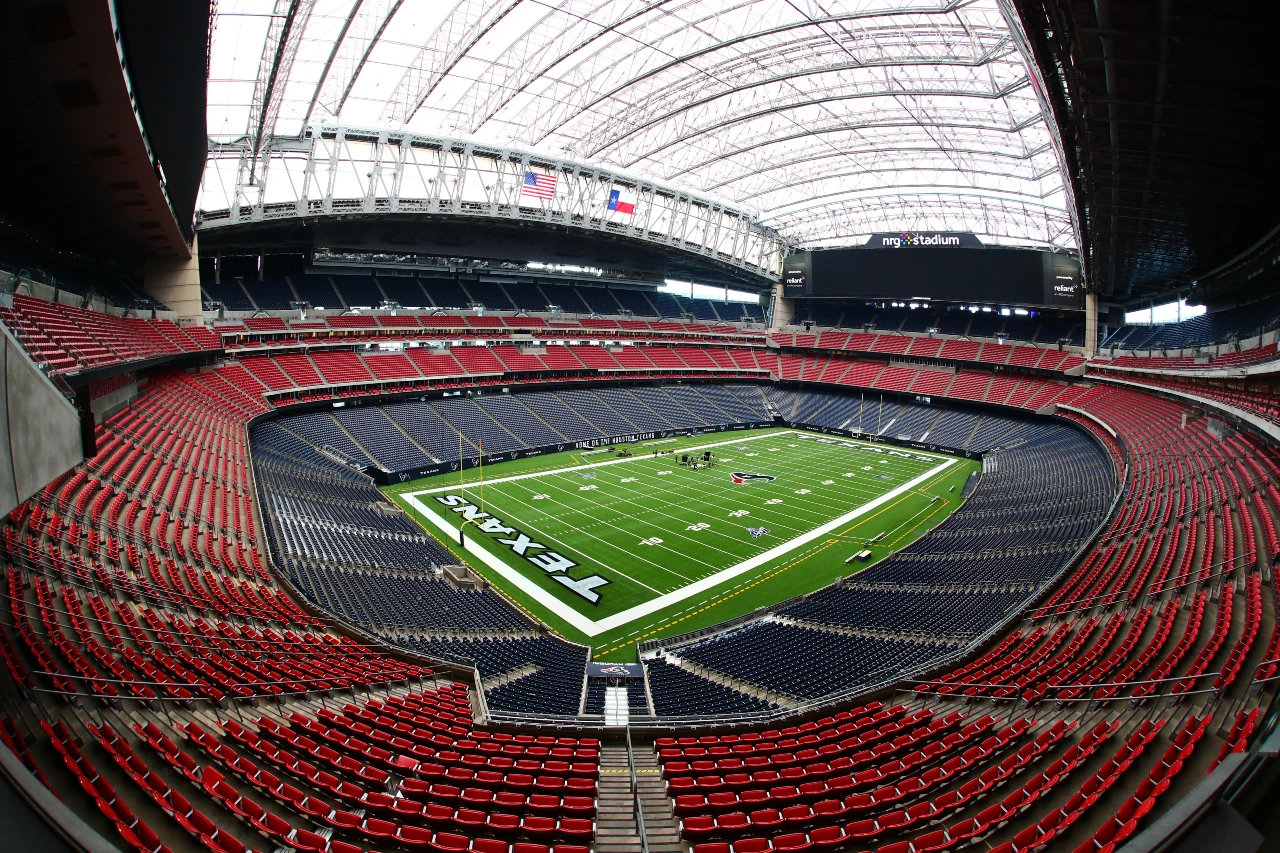
NRG Stadium in Houston, Texas is one of the marquee venues of the 2026 FIFA World Cup — a multi-purpose arena with a capacity of over 72,000 that has hosted some of the most significant events in American sport. The indoor dome creates an environment of intense acoustic energy that football fans will experience as something genuinely distinct from the open-air stadiums that define most World Cup settings.
Houston's demographics — a diverse, internationally connected city with large European and South American communities — will ensure a passionate and knowledgeable crowd. The atmosphere inside NRG Stadium during a high-stakes World Cup fixture between two European nations is likely to be extraordinary.
Both teams effectively play this fixture on neutral ground. There is no meaningful home advantage for either side. The stadium becomes the great equalizer — and in that context, the team with greater collective confidence and tactical clarity tends to prevail. That, by most assessments, points toward the Netherlands.
Recent Form: Reading the Pre-Tournament Evidence
The Netherlands arrive in Houston with one of the most convincing recent form records among all World Cup participants. Their last five competitive results — a 1-1 draw with Ecuador, a 2-1 win over Norway, a 4-0 victory over Lithuania, a 1-1 draw with Poland, and a 4-0 win over Finland — show a team capable of producing both commanding performances and resilient results in tighter games. Twelve goals scored, three conceded across five matches is a strong return.
Sweden's recent form is considerably more erratic and harder to read. Their last five results show: a 3-2 win over Poland, a 1-3 loss to Ukraine, a 1-1 draw with Slovenia, a 4-1 defeat to Switzerland, and a 0-1 loss to Kosovo. Eight goals scored, nine conceded. It is a sequence that reflects exactly the inconsistency that defined their qualification nightmare — moments of attacking brilliance interrupted by defensive fragility and collective breakdown.
The Ukraine loss and the Switzerland defeat in particular — heavy results against sides that Sweden's individual quality should handle comfortably — raise the question of whether Potter's system has genuinely stabilized or whether the qualifying collapse remains a recent and unreliable template.
What Both Teams Need from This Fixture
For the Netherlands, the strategic objective is clear: win, top the group, and control their own knockout destiny. A draw would not be a catastrophe — the Dutch would still be well-placed to advance — but it would hand Japan additional leverage in the group table and introduce unnecessary uncertainty heading into the final round of fixtures. Koeman's team is built to win this type of match.
For Sweden, this fixture represents the clearest possible evidence of whether Graham Potter's project has delivered. Defeating or drawing with the Netherlands — a side ranked seventh in the world and considered among the tournament's more consistent European contenders — would be the statement result that silences questions about collective coherence and sends a message to the rest of Group F and beyond. A loss, particularly a heavy one, would raise serious doubts about whether this generation of Swedish talent can ever fulfill its enormous promise.
The stakes, in other words, are as high as they look. Perhaps higher.
What the AI Models Predict
As supplementary analysis, TuringStats aggregated predictions from ten leading AI language models — GPT-4o, Claude Sonnet, Gemini 3.1 Pro, Mistral Large, DeepSeek Chat, Qwen 2.5, Llama 3.1, MiMo V2.5, Cohere Command R+, and Grok 3 — to produce a consensus forecast for this fixture.
The headline finding is unusually clear by the standards of World Cup prediction: eight of ten models favor a Netherlands win, with two models predicting a draw. Not a single model across the entire ten-model panel backed a Swedish victory — making this one of the most one-sided consensus readings in Group F.
The mean predicted score across all ten models is 2–1 in favor of the Netherlands, with a mean confidence level of 60% — classified as the medium band. Five models settled on 2–1 as their exact scoreline prediction, with 1–1 and 1–0 each appearing twice and 2–0 once.
The models backing a Netherlands win consistently cite superior squad depth, recent form, and historical head-to-head dominance (Netherlands won 2-0 in 2017) as the decisive factors. The two draw-predicting models — GPT-4o (1–1, 60%) and MiMo V2.5 (1–1, 55%) — point to Sweden's defensive potential in a cautious World Cup group stage context and the historical precedent of the 2016 1-1 draw.
The AI-derived expected goals figures are 1.60 for the Netherlands versus 0.70 for Sweden, reflecting the models' collective assessment that the Dutch will generate significantly more high-quality scoring opportunities. The combined xG of 2.30 places the total goals expectation between 2 and 3, consistent with the most common scoreline predictions.
These AI predictions are offered as one analytical lens among many and should not be treated as financial advice or a substitute for watching how both teams perform in their respective Match 1 fixtures before drawing firm conclusions.
Final Word: History's Pull vs. Football's Beautiful Chaos
Netherlands vs Sweden at the 2026 FIFA World Cup is the kind of fixture that reminds you why international tournament football occupies a unique space in the sport's emotional landscape. The Dutch bring twelve World Cup appearances and the quiet authority of a nation that has always found a way to progress. Sweden bring over £235 million worth of individual talent, a head coach fighting to find the right formula, and the unresolved promise of one of European football's most intriguing generational squads.
History and form favor the Netherlands. But football, particularly at World Cups, has a magnificent habit of making history look naive and form look irrelevant on the exact days it matters most.
If Graham Potter has solved the riddle — if Isak and Gyökeres and Elanga can perform as a system rather than as individuals — then NRG Stadium will witness one of the tournament's first great upset moments. If Koeman's pragmatic, organized Dutch machine operates as it has throughout qualifying, Sweden's golden generation will face another painful reckoning.
On June 20, 2026, in Houston, Texas, one question gets answered. And all of football will be watching.