Insights
Can Lionel Messi Defend the Crown? What AI Models Reveal About Argentina’s World Cup Chances
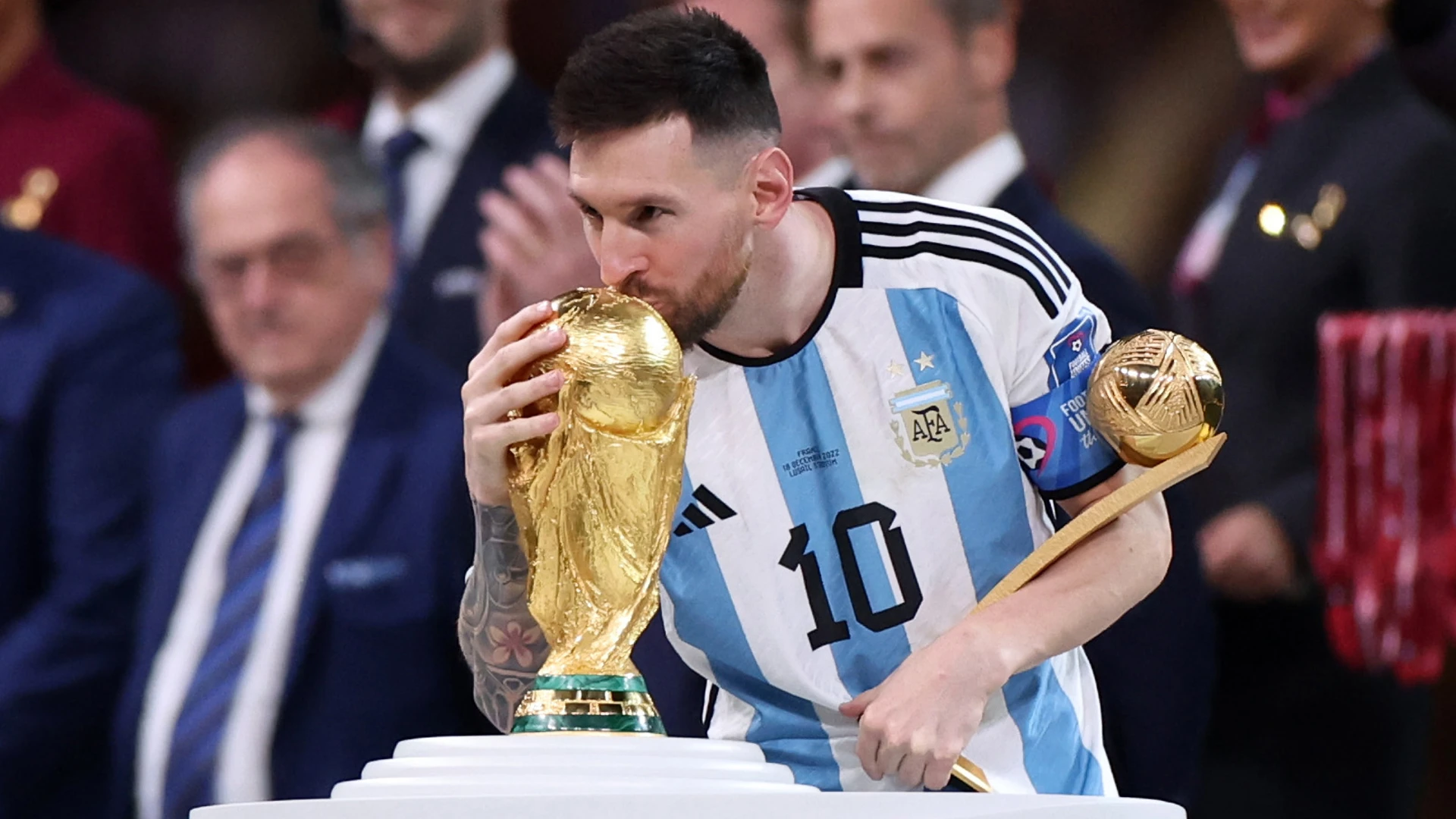
AI simulations give Lionel Messi and the Argentina national football team roughly a 12%–18% chance of winning the FIFA World Cup 2026, suggesting that while a title defense is possible, historical trends and squad dynamics make it a challenging outcome.
As the FIFA World Cup 2026 approaches, one of the most compelling narratives centers on whether Lionel Messi and the Argentina national football team can successfully defend their title. While football has always thrived on unpredictability, advances in artificial intelligence are offering a more data-driven perspective on this question—one grounded in probabilities, simulations, and statistical modeling.
The Baseline: Historical Difficulty of Title Defense
Defending a World Cup title is historically rare. Since the tournament’s inception, only two teams—Italy (1934, 1938) and Brazil (1958, 1962)—have managed back-to-back victories. This translates to a historical success rate of less than 7% for defending champions.
AI models incorporate this baseline as a structural constraint. Even before evaluating current squad strength or form, defending champions are statistically disadvantaged due to factors such as increased pressure, tactical familiarity from opponents, and natural regression effects.
AI Simulation Results: Argentina’s Probability Landscape
Across multiple Monte Carlo simulation frameworks—each running between 10,000 and 100,000 tournament iterations—Argentina’s probability of winning the 2026 World Cup typically falls within the following range:
- Title win probability: 12% – 18%
- Final appearance probability: 25% – 32%
- Semi-final probability: 45% – 55%
These figures place Argentina firmly among the top contenders but notably short of being the outright favorite. In most models, they rank between 2nd and 4th globally, often behind teams such as Spain and France.
Key Variables Driving the Model
1. Squad Aging Curve
One of the most influential variables is age-related performance decline. By 2026, Lionel Messi will be 39 years old. While his technical ability and game intelligence remain exceptional, AI models apply age-adjusted performance curves that typically reduce expected output for attacking players beyond their mid-30s.
Simulations estimate that Messi’s direct goal contribution (goals + assists per 90 minutes) could decline by approximately 20%–35% compared to his peak years. However, this is partially offset by his playmaking role and reduced physical workload.
2. Team Depth and Transition Phase
Argentina’s squad is currently in a transitional phase. While the core from the 2022 triumph remains influential, AI models weigh the integration of younger players as both an opportunity and a risk.
- Positive factor: Increased squad depth and athleticism
- Negative factor: Reduced cohesion compared to peak championship cycle
This dual effect introduces variance into simulations, slightly lowering Argentina’s consistency across tournament scenarios.
3. Tactical Stability
Under a stable coaching structure, Argentina retains a high tactical cohesion score in AI evaluations. Teams with consistent tactical frameworks tend to outperform expectations in knockout formats.
AI models assign Argentina a top-tier tactical efficiency rating, particularly in defensive transitions and game management—two critical factors in World Cup success.
4. Opponent Strength Distribution
The expanded 48-team format of the 2026 World Cup introduces a different competitive structure. While early-stage matches may be less challenging, later knockout rounds are statistically more difficult due to a higher likelihood of encountering elite teams.
Simulations show that Argentina’s probability of elimination increases sharply from the quarter-final stage onward, where matchups against top-ranked teams become highly probable.
Comparative Outlook
When compared to other leading contenders:
- Spain: 18% – 22% title probability
- France: 15% – 20%
- Argentina: 12% – 18%
- Brazil: 10% – 15%
Argentina remains within striking distance but does not lead the probability rankings in most AI systems.
The Messi Factor: Beyond Raw Numbers
Despite statistical adjustments for age, AI models struggle to fully quantify intangible factors such as leadership, experience, and psychological impact. Messi’s presence alone has been shown to increase team performance metrics in high-pressure scenarios.
Some advanced models attempt to incorporate this through “clutch performance coefficients,” which slightly elevate Argentina’s win probability in knockout matches. However, even with these adjustments, the overall title probability increases by only 1%–2%.
Conclusion: A Realistic but Challenging Path
AI-driven analysis suggests that while Argentina—and Lionel Messi—remain strong contenders to defend their World Cup title, the odds are not in their favor. With a projected championship probability hovering around 15%, the team faces a statistically challenging path shaped by historical precedent, squad evolution, and fierce global competition.
In practical terms, Argentina has a meaningful chance, but not the highest one. For Messi to lift the trophy once again would require not only sustained excellence but also favorable conditions across multiple high-stakes matches.
In the end, the data tells a clear story: a title defense is possible—but far from probable.