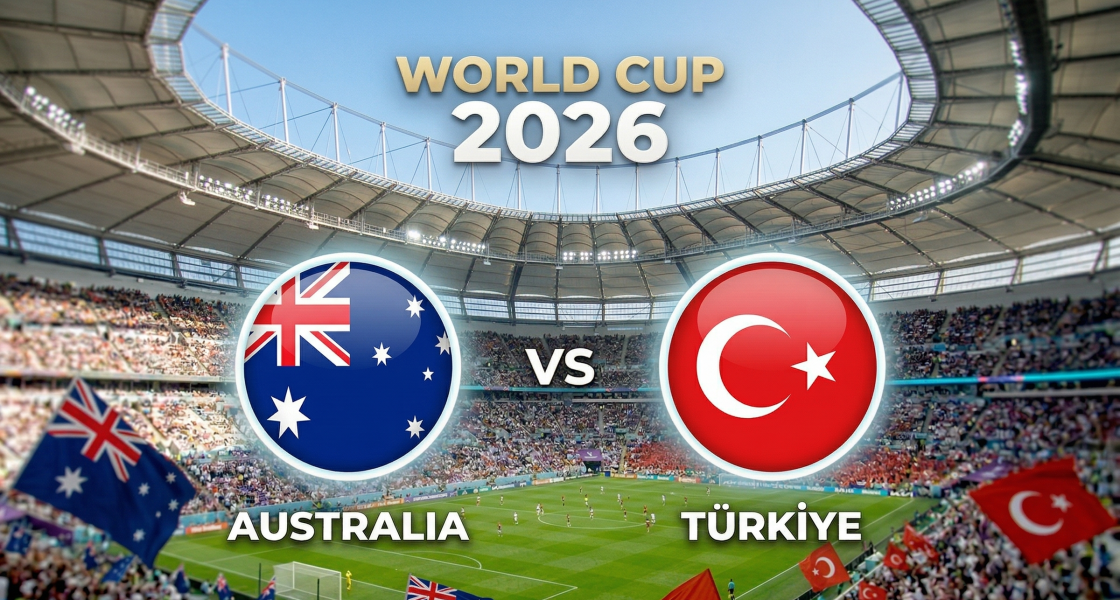
World Cup 2026
Australia vs Türkiye: World Cup 2026 Group D Preview — The Clash at BC Place That Will Define Both Sides' Tournament
Australia and Türkiye meet at BC Place, Vancouver in a pivotal 2026 FIFA World Cup Group D opener on June 13. Both nations need points against the USA and Paraguay — making this Group D curtain-raiser far more consequential than it might first appear. Here’s the full tactical breakdown, key players, head-to-head history, and what the AI models say.
When the 2026 FIFA World Cup draw was made, football fans in Australia and Turkey circled June 13 immediately. Placed together in Group D alongside the United States and Paraguay, both the Socceroos and the Crescent Stars knew they were in the same bracket as the tournament's co-host — and that meant their head-to-head encounter could decide everything. At BC Place in Vancouver, Canada, under the stadium's iconic retractable roof, two nations with vastly different footballing histories and equally desperate ambitions will meet in a match that promises to be one of the most tactically absorbing group-stage contests of the entire tournament.
The Group D Stakes: Why This Match Matters
Group D is widely regarded as one of the 2026 World Cup's most intriguing pools. The United States, buoyed by home-soil advantage and a footballing infrastructure that has grown exponentially over the past decade, enter as nominal favorites. Paraguay, the tournament's dark horses from South America, bring pragmatism and physicality. That leaves Australia and Turkey fighting for what could realistically be a single remaining qualification berth — or, if results break kindly, both could scrape through as one of the eight best third-placed teams in the expanded 48-team format.
The mathematics are straightforward but the pressure is immense. A win here effectively ends the loser's realistic hopes of progression. A draw keeps both alive but hands the initiative to the team that recovers better in subsequent fixtures. Neither side can afford to approach this match passively, yet both will be acutely aware that recklessness — a red card, a defensive lapse — could unravel their entire tournament.
The Venue: BC Place and Its World Cup Legacy
The match will be played at BC Place, a magnificent 54,500-capacity multipurpose stadium situated on the north side of False Creek in downtown Vancouver. Opened in 1983, the venue gained global recognition as the main stadium for the 2010 Winter Olympics and Paralympics, and has hosted the 2015 FIFA Women's World Cup Final among numerous other marquee events. Its retractable roof — the largest of its type when installed — makes it one of the most distinctive arenas in North America.
For the 2026 World Cup, BC Place will also host several other group-stage fixtures including Canada matches, meaning the atmosphere will be electric and well-rehearsed by the time Australia and Turkey take the pitch. The venue's intimate bowl design and superb acoustics create an environment that amplifies crowd noise in ways that can unsettle even experienced international sides.
Head-to-Head History: Turkey's Perfect Record
The historical ledger between these two nations is short but conclusive in Turkey's favor. The sides have met just twice, both occasions coming in May 2004 friendlies — and Turkey won both matches. While pre-tournament friendlies from over two decades ago carry limited tactical weight, the psychological significance of entering a World Cup fixture without ever having beaten your opponent should not be entirely dismissed. Australia will be eager to rewrite that record; Turkey will be equally motivated to maintain it.
More telling, perhaps, is the trajectory each team has taken since those 2004 encounters. Australia made their greatest-ever World Cup run in 2006 — losing only to Italy in the Round of 16 through a controversial late penalty — and then matched that feat at Qatar 2022 under Graham Arnold, beating Denmark to reach the last 16 before falling to Argentina. Turkey, meanwhile, famously finished third at the 2002 World Cup in South Korea and Japan under Şenol Güneş, and qualified for this tournament via the UEFA playoff route, confirming their status as a genuine force in continental football.
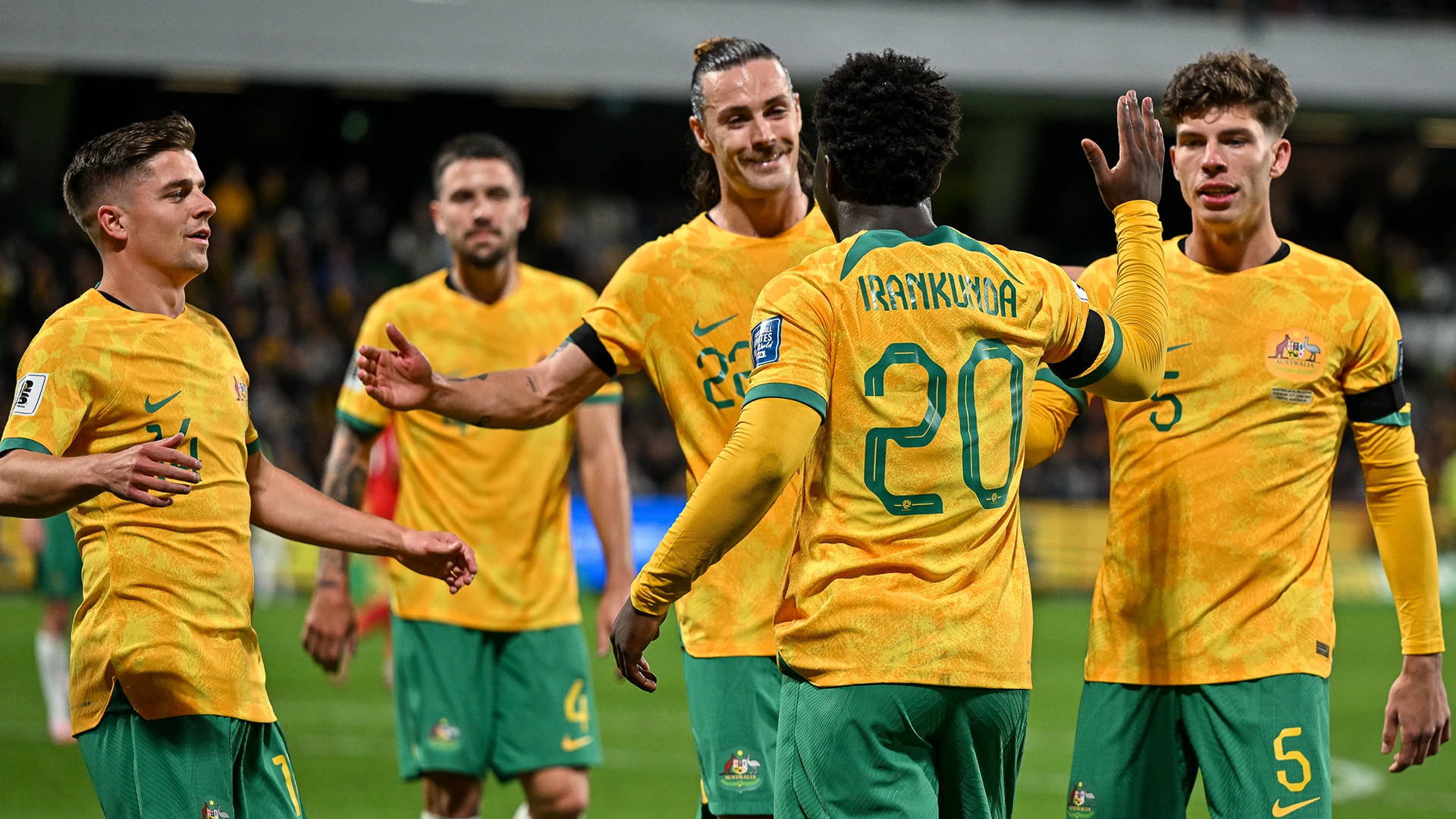
Australia — The Socceroos' Road to Vancouver
Australia's journey to the 2026 World Cup was one that demanded patience and resilience. They qualified from the AFC third round as Group C runners-up, confirming their berth on June 10, 2025. The Socceroos have grown as a footballing nation since switching from the Oceania Football Confederation to the AFC in 2006 — a move that has forced them to compete against the continent's very best and, in doing so, raised the standard of the entire domestic and representative program.
Recent form heading into the tournament has been mixed — encouraging on the attacking end, concerning on the defensive side. In their last five matches, Australia recorded wins over Curaçao (5-1) and Cameroon (1-0), but suffered defeats against Colombia (3-0), Venezuela (1-0), and the United States (2-1). Seven goals scored and seven conceded across five games tells the story of a team with genuine attacking intent but defensive vulnerabilities that a technically sharp opponent will look to exploit.
What defines this Australian side is a blend of experienced A-League and overseas-based professionals who have been schooled in the tactical DNA of European football. The Socceroos are typically disciplined in a mid-block, quick to transition and dangerous from set pieces. They are physical, organized, and supremely fit — qualities that served them extraordinarily well in Qatar 2022, where their Round of 16 run captured the imagination of a nation and the wider football world alike.
Their FIFA ranking of 26 places them in a competitive bracket, and the squad drawn for 2026 reflects the depth of talent now available to Australian football. Players earning regular minutes at European clubs bring a quality of execution that was not always available to previous Socceroos generations.
Türkiye — The Crescent Stars Rise Again
Turkey's qualification via the UEFA second round Path C playoff speaks to the treacherous nature of European qualification, where even strong nations can find themselves in jeopardy. Seeded into Pot 4 for the final draw due to the late confirmation of their berth, Turkey arrive at the 2026 World Cup with something to prove — and with the ammunition to prove it.
Their pre-tournament form has been outstanding. In their last five fixtures, Turkey won four and drew one: Kosovo (0-1 W), Romania (1-0 W), a 2-2 draw with Spain — an astonishing result against the reigning European Champions — Bulgaria (2-0 W), and Georgia (4-1 W). Ten goals scored and just three conceded across those five games represent the kind of form that should give every Group D opponent serious pause. The draw with Spain, in particular, demonstrated that Turkey can match technically superior opponents across ninety minutes.
The Turkish football revolution is symbolized above all by one name: Arda Güler. Born on February 25, 2005, the Real Madrid attacking midfielder is already widely considered one of the most gifted young players on the planet. His combination of close control, vision, dribbling intelligence, and lethal finishing makes him arguably the most dangerous player in Group D. Güler played a central role in Turkey's run to the quarter-finals of UEFA Euro 2024, showcasing his ability to operate under tournament pressure at the highest level.
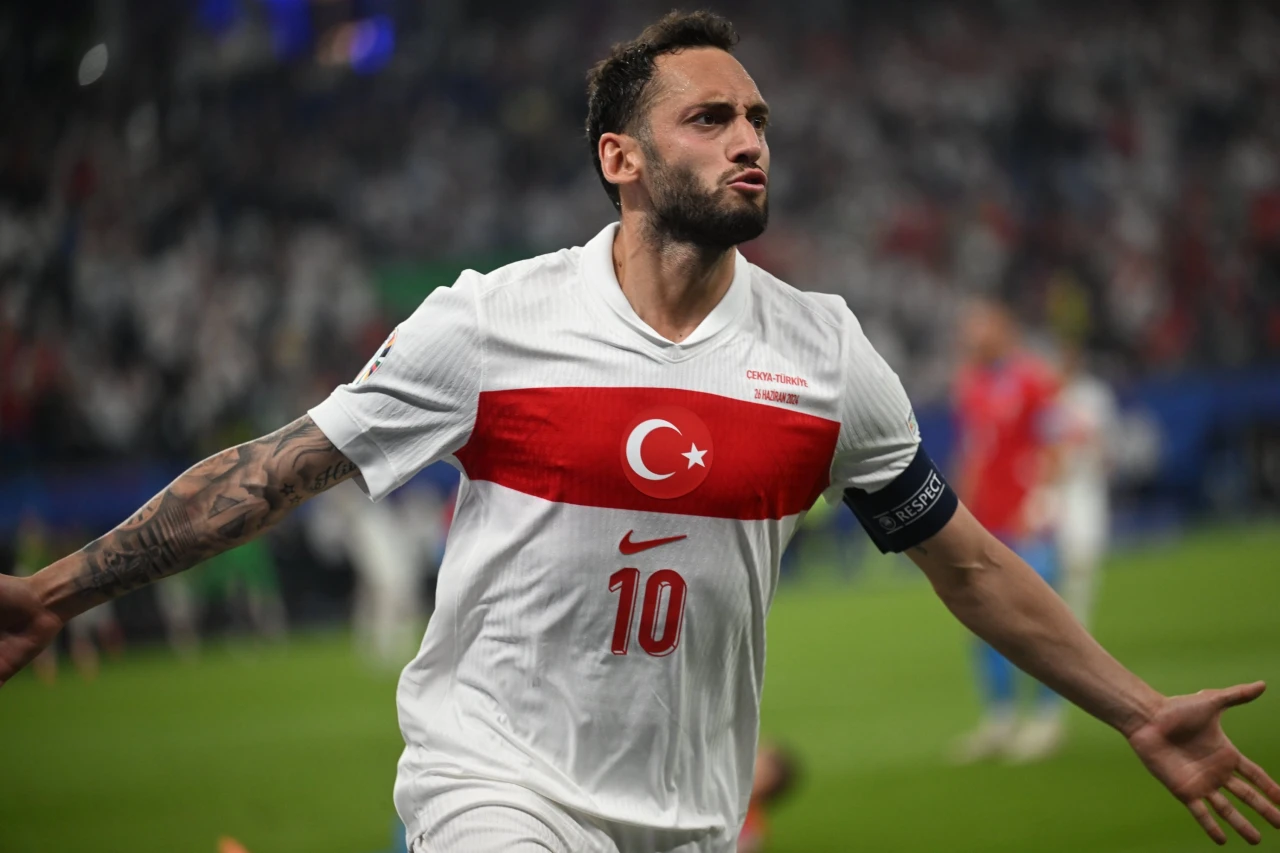
Alongside Güler, Turkey's squad carries enviable depth. Hakan Çalhanoğlu — the Inter Milan midfield metronome — provides the tactical intelligence and set-piece quality that binds the team's attacking play. Kerem Aktürkoğlu, the tenacious winger who moved from Galatasaray to Benfica, adds width and directness. Turkey's ranked 25th in the world, one place above Australia in the FIFA rankings, making this a genuine 50-50 contest on paper — though their form coming in tilts the balance slightly toward the Crescent Stars.
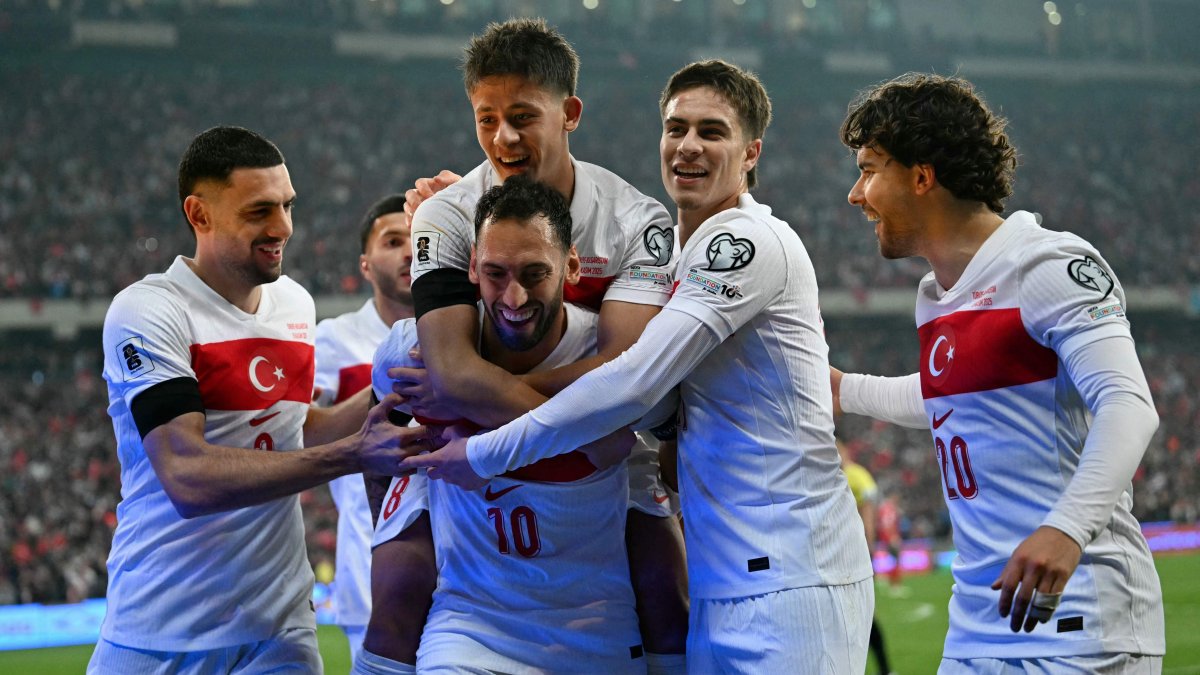
Tactical Preview: Two Systems, One Winner
The tactical clash at the heart of this fixture is one of the most fascinating of the group stage: Australia's organized defensive structure versus Turkey's technically superior attacking play.
Australia typically set up in a 4-3-3 or 4-2-3-1, with compact defensive lines and aggressive pressing triggers. They are built to absorb pressure, exploit transitions through direct vertical passes and the movement of their wide attackers, and capitalize on set-piece delivery. Their defensive record is historically solid when organized, though their pre-tournament defeats revealed a susceptibility to high-pressing, technically confident opponents.
Turkey, meanwhile, tend to operate in a 4-2-3-1 or 4-3-3 depending on the opponent. Their midfield triangle — with Çalhanoğlu anchoring and Güler floating behind the striker — creates unpredictability that is difficult to account for. Turkey are comfortable in possession, patient enough to circulate the ball until space opens, and incisive enough to exploit it rapidly when it does. They press high with intensity but are disciplined enough to drop into a 4-4-2 mid-block when circumstances demand it.
The key battle will be fought in the midfield. Australia must win the second ball, limit Çalhanoğlu's distribution channels, and crowd the spaces through which Güler likes to receive and turn. If the Socceroos allow Turkey's playmakers time and space, the technically superior visitors will create and convert enough chances to win comfortably. But if Australia can frustrate Turkey in the first third, force long balls, and trigger counter-attacks — their preferred mode of operating — this becomes a very different match.
Set pieces will be Australia's most potent weapon. Turkey's defensive organization from dead-ball situations has historically been a vulnerability, and Australia's physicality and aerial quality in the box could prove decisive in a match where open-play goals may be difficult to come by.
Key Players to Watch
Arda Güler (Türkiye)
The 21-year-old Real Madrid star is Turkey's most dangerous weapon and possibly the most exciting player in the entire Group D bracket. Güler's ability to receive in tight spaces, turn defenders, and produce moments of brilliance from nothing makes him a constant threat. He carries the ball with supreme confidence, has the vision to pick out runners in behind, and is clinical when presented with shooting opportunities. Australia will need to identify his areas of influence and neutralize him early — easier said than done against a player of this caliber.
Hakan Çalhanoğlu (Türkiye)
The Inter Milan pivot is Turkey's engine. Çalhanoğlu reads the game at the highest level, winning possession back with intelligent positioning and immediately launching attacks with progressive passes that bypass the opponent's first line of pressure. His set-piece delivery is among the best in European football and represents a direct threat from dead-ball situations. If Turkey dominate the midfield, it will largely be because Çalhanoğlu controls the tempo.
Australia's Key Players
Australia's strength lies not in one standout individual but in their collective cohesion and the sum of its well-drilled parts. Their goalkeeper and defensive unit are the foundation upon which counter-attacking ambitions are built. In the middle of the park, the Socceroos have players capable of winning duels, breaking up opposition play, and distributing quickly to trigger vertical transitions. Up front, they carry pace and aerial presence, representing a constant threat from crosses and set pieces.
The collective identity built under previous management and refined by subsequent coaches is the Socceroos' greatest asset entering this tournament. Every player knows their role. Every defensive shape is rehearsed to automaticity. Turkey may have more technically gifted individuals, but Australia have a system — and at the World Cup, systems often trump talent.
Fascinating Facts: Two Nations, Two Footballing Cultures
Australia holds the world record for the largest winning margin in an international football match — a staggering 31-0 victory over American Samoa in a 2002 World Cup qualifier. The match, played under the Oceania confederation, is more a statistical curiosity than a benchmark for the Socceroos' quality, but it underlines the domination Australia once wielded in their former confederation. Since joining the AFC, they have been forced to compete at a much higher level — and the improvement has been dramatic.
Turkey, meanwhile, produced one of the most dramatic performances in World Cup history in 2002, finishing third on home soil in South Korea and Japan. Their run included a memorable third-place playoff victory over co-hosts South Korea, and the tournament introduced legendary striker Hakan Şükür to the global stage — scorer of the fastest goal in World Cup history, just 11 seconds into Turkey's match against South Korea in the semi-final.
Both nations also share the experience of building their footballing infrastructure substantially over the past two decades. Australia's national league, the A-League, has professionalized and grown. Turkey's Süper Lig has become one of Europe's most watched leagues, with Galatasaray and Fenerbahçe routinely contesting European football. The Galatasaray club in particular has a history of attracting global stars — including the legendary Didier Drogba and Wesley Sneijder — raising the standard of the domestic game and, by extension, the national team.
Match Prediction: What the Data and Experts Say
The analytical picture paints this match as an extremely close contest. With Australia playing at home in North America (drawing a significant crowd of Australian diaspora supporters), factoring in the neutral-venue dynamics, and considering both teams' ambitions in Group D, the betting and statistical markets broadly agree this could go either way.
Australia's combination of home-soil psychological comfort, physical discipline, and set-piece threat makes them genuinely competitive. Turkey's superior pre-tournament form, depth of individual quality, and recent momentum against top-tier European opposition marks them as a slight technical favorite. The expected goals model derived from both teams' scoring patterns suggests a low-scoring encounter — with both sides likely to score but neither finding it easy to break down a well-organized backline.
AI Model Consensus: What Ten Systems Think Will Happen
TuringStats ran this fixture through ten leading AI language models, and the consensus is revealing. Five of the ten systems predict a draw, three favor Australia, and two favor Turkey — giving implied probabilities of approximately 50% draw, 30% Australia win, and 20% Turkey win.
The mean predicted scoreline across all models is 1-1, with an aggregate mean confidence of 57% — a "medium" confidence band reflecting the genuine unpredictability of the contest. Five separate models independently landed on 1-1 as their specific scoreline prediction, representing a striking convergence that stands out compared to the wider distribution seen in most group-stage fixture panels.
The split in reasoning across models is itself instructive. GPT-4o cites the evenly-matched profiles and neutral venue as pointing toward a balanced draw. The Gemini model favors Turkey's technical quality but acknowledges Australia's organized resistance. Three models — Qwen, Cohere, and Grok — back Australia, citing home advantage at BC Place and recent defensive form. Claude Sonnet's assessment leans slightly toward Turkey, pointing to the depth of technical quality in players like Güler, Çalhanoğlu, and Aktürkoğlu.
The model-derived expected goals total sits at 1.90, suggesting a lean toward under-2.5 goals in the match. The "Both Teams to Score" implied probability registers at approximately 55% — elevated, but not dominant — before defensive adjustments are factored in.
What makes the AI panel's 1-1 draw verdict particularly credible is that it aligns with the observable tactical reality: two teams who both need points but cannot afford to overcommit, in a Group D context where every point earned or conceded carries enormous downstream consequences. A draw in this opener would set up genuinely dramatic final-game scenarios for both nations.
Final Word: A Match That Demands Your Attention
Australia vs Türkiye on June 13, 2026 at BC Place is not a glamour fixture in the traditional sense. It will not feature Mbappé or Messi. It will not be the match the global mainstream headlines gravitate toward on opening weekend. But for those who understand what this match means — two nations with histories etched in qualification pain and World Cup heartbreak, finally meeting on football's grandest stage with their tournament lives potentially on the line — it will be unmissable.
The Socceroos bring everything that has defined Australian football's modern rise: organisation, resilience, set-piece menace, and the belief that no opponent is unbeatable. The Crescent Stars bring Güler's genius, Çalhanoğlu's intelligence, a 4-1 form run of outstanding consistency, and the memory of a 2002 third-place finish that reminds them — and the world — that Turkish football, at its best, can compete with anyone.
Whatever happens at BC Place on June 13, this match will send a clear message about who can truly compete in Group D. And that message will resonate all the way to the final day of the group stage.
Match details: Australia vs Türkiye | Group D, Match 6 | June 13, 2026 | 21:00 local (UTC-7) | BC Place, Vancouver, Canada