Insights
6 Reasons Why England Could Win the 2026 World Cup
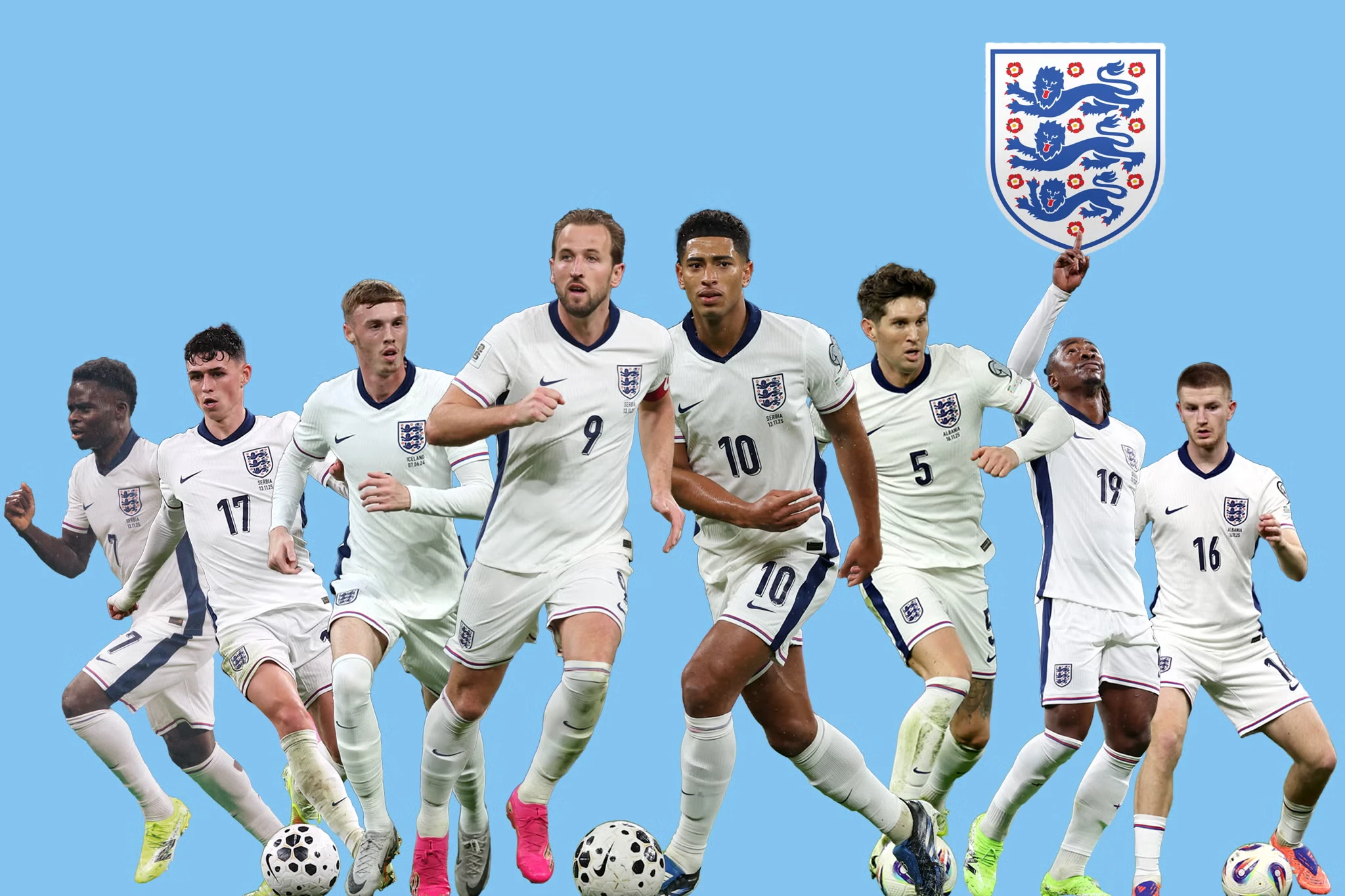
From the knockout pedigree of Thomas Tuchel to their growing dominance in set-piece situations, England have multiple reasons to believe they can finally end their long wait for World Cup glory in North America.
England head into the FIFA World Cup 2026 with a clear mission: to add a second star to their shirt and win their first World Cup since the iconic 1966 FIFA World Cup. The men’s national team has endured decades without a major trophy, including painful defeats in their last two European Championship finals.
A recent loss to Japan may have served as a wake-up call, but England will travel to North America with a squad brimming with talent—and a head coach whose track record in elite competitions demands respect.
Here are six compelling reasons why England could go all the way in 2026.
1. Tuchel’s Proven Knockout Expertise
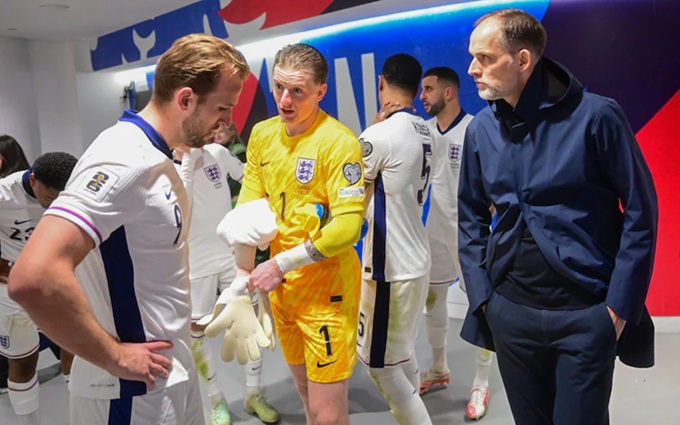
Few managers are better equipped for tournament football than Thomas Tuchel. The German tactician guided Paris Saint-Germain to their first-ever Champions League final before winning the competition with Chelsea FC in 2021—despite not being among the pre-tournament favorites.
Tuchel’s résumé also includes domestic cup triumphs in Germany and France, as well as victories in the FIFA Club World Cup and UEFA Super Cup. While his league consistency and man-management have occasionally been questioned, those concerns are largely irrelevant in a short, high-stakes tournament.
In knockout football, Tuchel thrives. His tactical flexibility and game-by-game adaptability could prove decisive over a five-week World Cup campaign.
2. A Squad at Its Peak: Experience Meets Balance
International tournaments are rarely won by teenagers alone. While prodigies like Wayne Rooney or Lamine Yamal have made headlines early in their careers, history shows that successful teams are typically built around experienced cores.
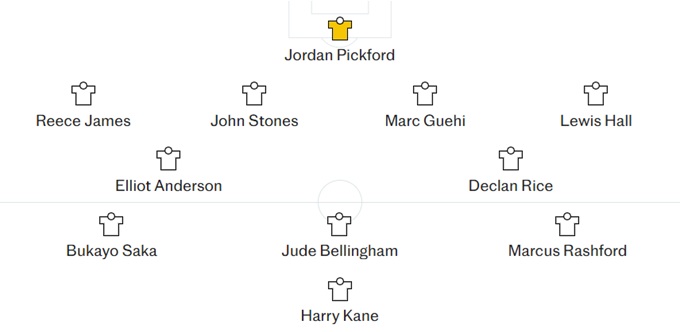
England’s projected starting XI for 2026 has an average age of around 26.5—right in the optimal range observed among major tournament winners since 2010.
The squad combines maturity with physical prime years. Veterans like Harry Kane, John Stones, and Jordan Pickford provide leadership, while younger players such as Lewis Hall inject energy without dragging down the overall experience level.
Notably, England’s squad averages over 50 international caps per player—higher than any World Cup-winning team in the past decade. Many players also carry valuable experience from recent deep tournament runs and Champions League knockout stages.
3. Set-Piece Superiority
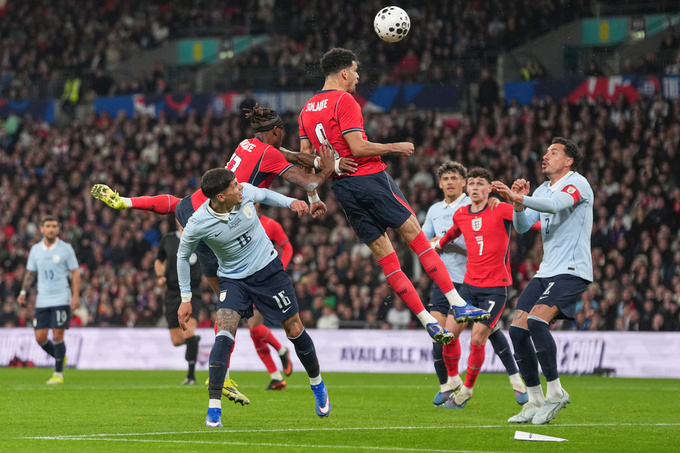
Set pieces have long been a traditional strength of England—from David Beckham’s pinpoint deliveries to the aerial threat posed by Harry Maguire.
In modern football, their importance has only increased. In the latest Premier League season, over 27% of goals (excluding penalties) came from set-piece situations.
At international level, where preparation time is limited and matches are often tight, dead-ball scenarios become even more crucial. England demonstrated this perfectly at the 2018 FIFA World Cup, where nine of their 12 goals came from set plays.
Under Tuchel, this focus is expected to intensify. With elite delivery from Declan Rice, Bukayo Saka, and Reece James, England could once again turn set pieces into a decisive weapon.
4. Addressing Tactical Weaknesses
England’s campaign at UEFA Euro 2024 exposed two key weaknesses: the lack of a natural left-back and the absence of a consistent midfield partner for Declan Rice.
Those issues now appear to be resolved.
At left-back, options such as Luke Shaw, Lewis Hall, and emerging talent Nico O'Reilly provide balance and attacking support—something England lacked when relying on right-footed alternatives.
In midfield, players like Elliot Anderson and Adam Wharton offer composure, ball progression, and tactical intelligence, complementing Rice’s defensive strengths.
With these gaps filled, England look far more structurally complete.

5. A More Clinical Harry Kane
Harry Kane is enjoying one of the most prolific seasons of his career with FC Bayern Munich, scoring at an extraordinary rate.
Beyond his goal-scoring, Kane has evolved into a complete forward—dropping deep to orchestrate attacks and delivering incisive long passes to wide players like Luis Díaz and Michael Olise.
There were previous concerns that Kane’s deeper positioning disrupted England’s attacking balance. However, when paired with pacey wingers such as Marcus Rashford, the system becomes far more dynamic.
Importantly, the Bundesliga’s schedule—with fewer matches and a winter break—could leave Kane fresher than ever heading into the World Cup.
6. An Explosion of Creative Talent
For years, England were criticized for lacking creativity in tight spaces. That is no longer the case.
The current generation is overflowing with attacking talent capable of producing moments of brilliance. Players like Jude Bellingham, Cole Palmer, Phil Foden, Morgan Rogers, and Eberechi Eze all offer unique qualities—from long-range shooting to intricate dribbling and defense-splitting passes.
In knockout tournaments, individual brilliance often makes the difference. England have no shortage of players capable of delivering those decisive moments—just as Bellingham famously did with a stunning overhead kick against Slovakia in a previous tournament.
7. AI Predictions: What Do the Models Say About England’s Chances?
In modern football analysis, AI-driven prediction models are increasingly used to evaluate tournament outcomes. Platforms such as Opta and FiveThirtyEight simulate tournaments thousands of times using data on squad strength, player performance, and historical trends.
While projections vary depending on methodology, there is a consistent consensus: England are among the leading contenders for the FIFA World Cup 2026.
England’s Estimated Title Probability
- Win World Cup: approximately 14% to 18%
- Reach Final: approximately 25% to 30%
- Reach Semi-finals: above 40%
These figures typically place England alongside other major contenders such as the France national football team, Brazil national football team, and Argentina national football team.
Why AI Models Rate England Highly
Data-driven models highlight several structural advantages:
- Strong squad depth across all positions
- An optimal age profile, with most players in their peak years
- Consistent performance in recent international tournaments
- High expected goals (xG) metrics combined with defensive stability
- Proven efficiency in set-piece situations
Interpreting the Probabilities
A title probability in the range of 15% is considered significant in a tournament featuring 48 teams. Historically, World Cup winners rarely begin with probabilities exceeding 20 percent.
This suggests that England do not need to dominate the field. Instead, success will depend on marginal advantages in key moments, particularly in knockout matches.
Final Verdict: Data Supports the Belief
With tactical leadership from Thomas Tuchel, a balanced and experienced squad, and strong AI-based projections, England enter the 2026 World Cup as genuine title contenders.
The numbers indicate that England have roughly a 15 percent chance of winning the tournament, placing them firmly among the top tier of favorites.
If key players maintain fitness and Tuchel’s tactical decisions prove effective in decisive matches, England have a realistic opportunity to end their long wait for World Cup success.
Conclusion
England’s blend of elite coaching, tactical balance, set-piece strength, and attacking depth makes them one of the strongest contenders for the 2026 World Cup.
For the first time in decades, belief is no longer based on hope alone—it is grounded in structure, experience, and genuine world-class quality.
If Tuchel can harness these strengths at the right moments, England may finally end their long wait for global supremacy.