NHL
Boston Bruins vs Chicago Blackhawks Prediction: Unanimous AI Panel Backs Bruins
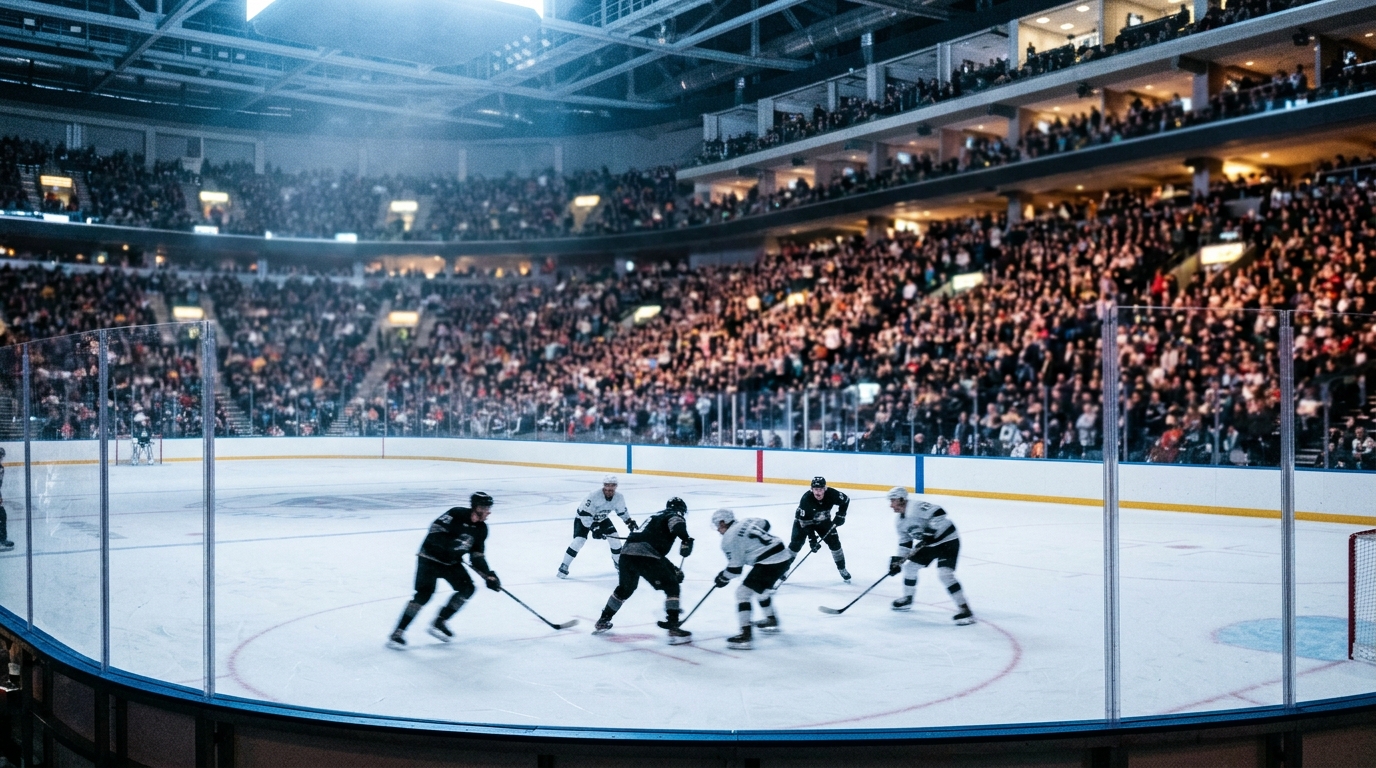
Boston Bruins vs Chicago Blackhawks prediction: the AI panel unanimously backs Boston in this NHL clash, with a 4-2 scoreline the most common pick.
When the Boston Bruins host the Chicago Blackhawks in NHL action on Saturday, 31 October 2026, the AI panel sees little room for debate. All ten models surveyed by TuringStats back a Boston win, with an average confidence of 62% and a most common predicted score of 4–2.
The unanimity is striking even by the panel's standards. Not a single model picked Chicago, and the scoreline consensus was nearly as tight: nine of the ten models landed on 4–2, with only MiMo V2.6 Pro opting for a narrower 3–2. The headline verdict is clear: Boston wins, likely by two goals.
Match context
The game is an NHL regular-season fixture scheduled for Saturday, 31 October 2026 at 17:00 UTC. The venue is not specified in the dossier, but the panel consistently refers to Boston's home-ice advantage, implying the Bruins are the hosts.
Recent head-to-head form is the dominant contextual thread. Multiple models cite Boston having won four of the last five meetings between the sides, including a 5–2 road victory in January 2026. That result appears repeatedly across the reasoning lines, and Claude Sonnet 5.5, Grok 4.7 and DeepSeek V4 Pro all lean on it as the foundation of their picks. Kimi K3 frames it slightly differently, noting Boston has won three of the last four, but reaches the same conclusion.
Beyond the head-to-head record, the panel's context is built around roster quality. Gemini 3.8 Flash and Qwen 3.8 Max both describe Chicago as a rebuilding side, and several models point to the Blackhawks' defensive struggles in recent meetings as a reason to expect a multi-goal margin. No injury news, line combinations or standings information is available in the dossier, so the panel's case rests on the head-to-head record and the perceived gap in depth.
What the AI panel says
The consensus is as one-sided as it gets: Boston Bruins 100%, Chicago Blackhawks 0%. Average confidence sits at 62%, which the panel classifies as a strong tier. The most common predicted score is 4–2, chosen by nine of the ten models.
The split is not about the winner but about the margin and the degree of certainty. Qwen 3.8 Max is the most confident at 68%, while GLM 5.3 and MiMo V2.6 Pro sit lowest at 58%. MiMo V2.6 Pro is also the only model to deviate from the 4–2 scoreline, predicting a 3–2 Boston win and describing a competitive, moderately paced game decided by Boston's depth.
Among the models aligning on 4–2:
- GPT-6 Luna (64%): cites Boston's four wins in the last five meetings, including the 5–2 road victory in January 2026, plus home advantage, for a controlled multi-goal win.
- Claude Sonnet 5.5 (60%): points to the same head-to-head edge and adds that home ice provides further support.
- Gemini 3.8 Flash (64%): highlights Boston's home-ice advantage and superior defensive depth against Chicago's rebuilding roster.
- Grok 4.7 (62%): calls a two-goal Boston win the best-supported line given the head-to-head record and home ice.
- DeepSeek V4 Pro (62%): notes Chicago's defensive struggles in those matchups as the basis for a multi-goal Bruins win.
Key factors
Head-to-head control
The single most repeated factor across the panel is Boston's recent record in this matchup. Four wins in the last five meetings, including a 5–2 road win in January 2026, forms the backbone of nearly every reasoning line. Several models treat that road result as particularly telling, since it came away from home; repeating it on home ice is seen as the natural extension.
Home-ice advantage
Every model that mentions venue frames it as a Boston edge. GPT-6 Luna, Claude Sonnet 5.5, Gemini 3.8 Flash, Grok 4.7, DeepSeek V4 Pro and Qwen 3.8 Max all reference home ice as a supporting factor rather than the primary one. The panel treats it as a multiplier on an existing head-to-head edge, not the source of it.
Depth and defensive structure
Gemini 3.8 Flash cites Boston's superior defensive depth, while Qwen 3.8 Max and Kimi K3 point to a clear roster edge over a rebuilding Chicago side. MiMo V2.6 Pro, the lone 3–2 outlier, still credits Boston's depth as the deciding factor but expects a tighter, more competitive game. The panel's view is that Boston's advantage is structural rather than purely situational.
Chicago's limitations
GLM 5.3 expects the Blackhawks' offence to stay limited, and Mistral Medium 3.5 references Chicago's inconsistent form. DeepSeek V4 Pro goes further, citing defensive struggles in the recent head-to-head meetings. The panel does not forecast a shutout — every model gives Chicago at least two goals — but it consistently sees the Blackhawks' output as capped.
Boston Bruins vs Chicago Blackhawks prediction
The predicted winner is the Boston Bruins, with a predicted score of 4–2. That scoreline matches the panel's most common prediction, chosen by nine of the ten models, and it reflects the average confidence of 62%. In plain terms, the panel is strongly aligned on the outcome but not overwhelming on the margin: a 62% average confidence is best read as a firm lean rather than a near-certainty. The models see Boston's head-to-head record and home ice as decisive, while acknowledging that Chicago has scored in these matchups and that a one-goal game is plausible — MiMo V2.6 Pro's 3–2 pick is the panel's reminder of that possibility.
The unanimity on the winner is the standout feature. A 10–0 split is rare, and it places this fixture in the panel's strong tier. The variation sits in the margin, where confidence ranges from 58% to 68% and one model breaks from the 4–2 consensus. Readers should treat the 4–2 scoreline as the panel's central estimate, not a guarantee of a two-goal gap.
For the complete model-by-model reasoning, including every confidence figure and scoreline, see the full model breakdown on TuringStats.
See every model's pick, confidence and reasoning for Boston Bruins vs Chicago Blackhawks, or browse all upcoming Hockey predictions. Forecasts are informational only and are settled against the final result after the game.